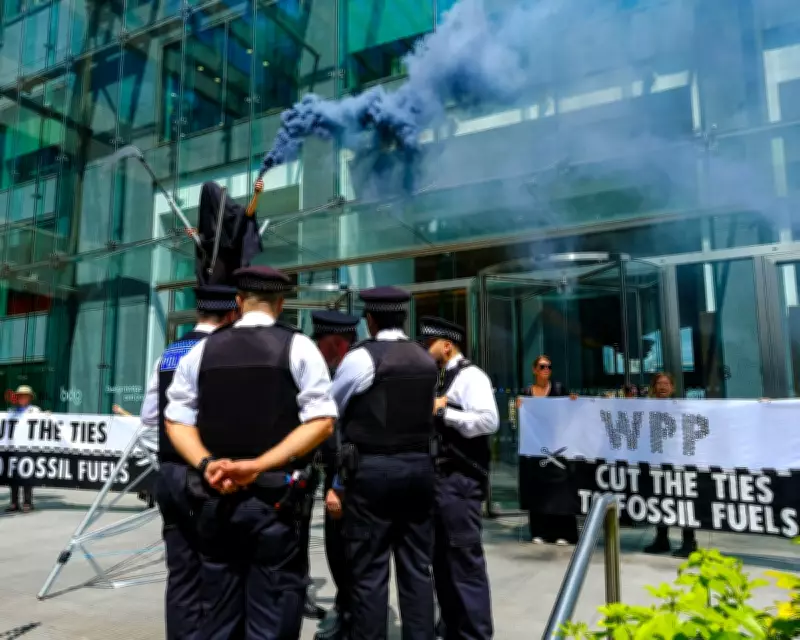
British advertising conglomerate WPP has been accused of helping oil companies ExxonMobil, Chevron, Shell, and BP spend an estimated $1.5bn (£1.1bn) on adverts in the United States since the 2015 Paris Agreement, according to a report by the climate investigations platform DeSmog. The London-based firm was the leading advertising group serving the US oil industry over the past decade, nearly doubling the amounts linked to its US rivals Omnicom and Interpublic Group, which merged in November.
Deceptive Communications Strategies
During this period, the four oil majors employed deceptive and misleading communications strategies designed to thwart policies aimed at curbing fossil fuel use, as concluded by a US congressional investigation in April 2024. WPP’s services—ranging from ad concept development and logo design to securing ad space and analyzing target audiences—were crucial in maintaining the oil industry’s public image, according to current and former WPP employees. The firm is estimated to have earned millions of dollars annually from this work.
Criticism from Experts
Victoria Harvey, who holds a PhD on the advertising industry’s response to the climate crisis from the University of East Anglia and reviewed DeSmog’s methodology, stated: “The UK prides itself on climate leadership and yet WPP, the supposed jewel of the British advertising industry, is facilitating dangerously misleading advertising in the US. By creatively articulating the deception from big oil and gas, WPP has set the climate agenda back and continues to do so.”

Extent of Advertising Spend
ExxonMobil, Chevron, Shell, and BP spent a combined total of $1.5bn on buying US ad space—including television and social media—since the Paris Agreement. This amount is roughly equivalent to running ads on every billboard in New York’s Times Square every day for the last decade. WPP’s global network of subsidiary agencies made an estimated two-thirds of those ads, and it was the only major ad company to partner with all four oil firms on advertising projects during this time.
Breach of Climate Policy
Current and former employees said the work appeared to breach a policy WPP adopted in 2022 not to accept projects that may “frustrate” the goals of the Paris Agreement, since the oil majors were committed to increasing oil and gas production and promoting speculative climate solutions. WPP’s agencies Ogilvy and Wavemaker worked on US campaigns for BP and Chevron respectively, which received complaints of misleading advertising for taglines such as: “We see possibilities in planes that fly on garbage.” Neither complaint was taken forward, but BP voluntarily withdrew its ads.
Greenwashing Examples
A 2022 US congressional committee report cited several ExxonMobil ads made by WPP’s Group SJR as examples of greenwashing, including one that compared fossil gas paired with renewable energy to “a peanut butter and jelly sandwich.” Staff who raised concerns were told by seniors that they were helping clients communicate about their shift to cleaner business models, but many fear the work serves primarily to deflect criticism from polluters.
Weakening Climate Targets
BP and Shell have weakened climate targets in the past three years, while their advertising output has pivoted to promoting the necessity of fossil fuels, according to a March report by Clean Creatives. A former employee who worked on BP projects at WPP’s branding agency Landor said: “We heard that a lot internally, that we were influencing them in the right direction. In reality, whatever BP decides to do, we would just deliver it.”
Industry Response
WPP and the other ad agencies mentioned did not respond to requests for comment. Shell declined to comment, while BP, ExxonMobil, and Chevron did not respond. Advertising companies do not publish details about client spending on ad space and increasingly avoid publicising fossil fuel contracts.

Methodology
To generate its estimates, DeSmog mapped dozens of ad agencies that have worked for the four oil companies using public sources, confidential employee information, and previous research. These contracts were cross-referenced with ad spend estimates from MediaRadar by the University of Oxford’s Climate Litigation Lab. Most of the oil majors’ US ad spend was channelled via subsidiaries of a handful of holding companies: after WPP, Omnicom and IPG ranked next, followed by Dentsu ($255m) and Havas ($230m).
Slowing Climate Initiatives
Advertising industry insiders say momentum around climate initiatives has slowed over the past few years as competition from big tech and AI has squeezed margins. WPP’s new CEO, Cindy Rose, is due to present her strategy to reverse declining profits at the annual general meeting on 8 May, with a preview in February not mentioning sustainability. Under previous CEO Mark Read, WPP committed to reduce carbon emissions and prevent greenwashing, including via the 2022 policy, but employees claim these moves have changed little.
Policy Breach Concerns
Six current and former employees, speaking anonymously for fear of professional repercussions, expressed concerns that WPP’s ongoing work with Shell, BP, and Chevron may breach the policy because many ads have distracted from or sought to justify fossil fuel expansion. New fossil fuel projects planned by these companies are incompatible with the Paris goal to limit global temperature rise to 1.5C. “I don’t think there’s anything that WPP could possibly be saying for BP or Shell that would adhere to the policy,” said a former director at two WPP agencies in New York.
International Pressure
UN Secretary General António Guterres has urged ad agencies to drop fossil fuel clients, calling ad executives “Mad Men fuelling the madness.” The OECD is considering a complaint about WPP filed by climate and human rights campaigners in February last year. At the time, a WPP spokesperson said: “Contrary to the claims being made, we adhere to the highest regulatory standards in our work for clients.” Protesters have since targeted WPP’s Thames-front offices in London with banners reading “climate criminals.”