
An intense heatwave is sweeping across Europe, with multiple countries issuing red warnings for dangerous temperatures that have reached 40.5C in some areas. Authorities are urging residents to stay indoors during the hottest hours as the heat dome moves eastward.
Record-Breaking Temperatures
On Monday, June 29, temperature records were broken as a heat dome affected central, eastern, and southern Europe. A southern town in Slovakia recorded a new high of 40.5C, surpassing its previous record of 40.3C set in 2007. Belgrade, Serbia, and Bucharest, Romania, reached 38C and 37C respectively.
Red Warnings and Safety Measures
Red warnings for extreme heat have been issued for June 30 in Croatia, Poland, Hungary, Romania, Bosnia and Herzegovina, Serbia, and Slovakia, according to The Guardian. Authorities in these countries are urging people to remain indoors during peak heat hours. In Hungary, Prime Minister Péter Magyar called on citizens to "look out for each other" as Budapest is predicted to exceed 40C. The government has published a list of over 2,000 air-conditioned cooling centres across the country for those struggling with heat at home.
Disruptions and Wildfires
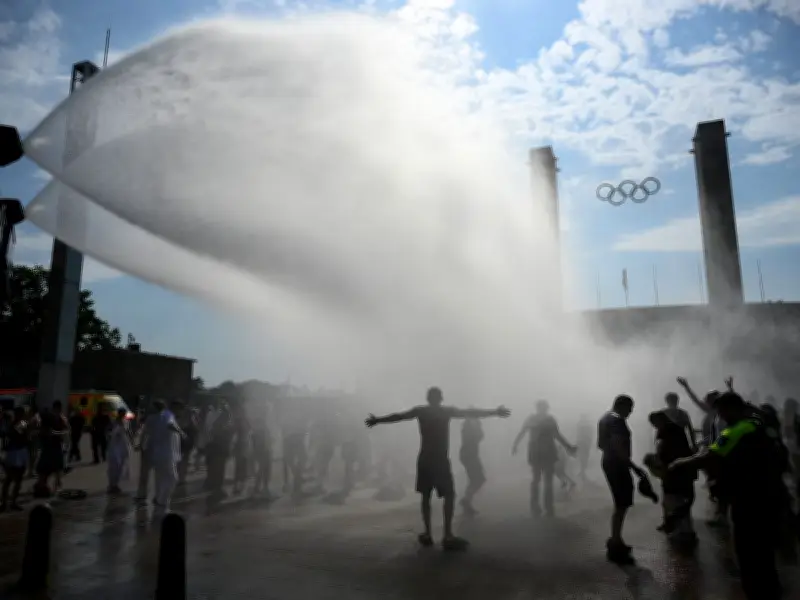
The extreme heat has caused significant disruptions. In Germany, Berlin police deployed a water cannon to cool crowds, and tram tracks warped in several cities, disrupting transport. On the Croatian island of Vis, dozens of firefighters and four aircraft battled a wildfire in pine forests triggered by the heat.
Excess Deaths in Western Europe
While the worst heat has eased in western Europe, officials in France reported over 1,000 excess deaths linked to the extreme heat, and Spain's institute of health recorded more than 800 additional deaths. Scientists attribute the severity of the heatwave to the climate crisis, noting that such an event would not have been possible without climate change.
Climate Crisis Link
Dr. Theodore Keeping, extreme weather research associate at Imperial College London and part of the World Weather Attribution team, stated: "We found that in the last 50 years, during which time the planet has warmed by 1.1C, the chance of a heatwave like this has changed immensely. This event would not have been possible in June without climate change." He warned that if urgent action is not taken, future heat conditions could become even more extreme, making current summers feel cool in retrospect.
Storms and Flooding
In addition to the heat, extreme weather brought storms to Italy's Alto Adige region, where flash floods and landslides were triggered by torrential rain. Up to 50mm of rain fell in one hour, leading to evacuations of several locals from their homes.




