Record US Drought Fuels Fears Over Wildfires, Water Shortages and Food Inflation
According to the latest meteorological data, the contiguous United States is grappling with record-breaking drought conditions for this time of year. Experts warn that this alarming situation poses significant threats to the upcoming wildfire season, water resources in western regions, and agricultural stability, which could drive up food prices.
Unprecedented Drought Levels Across the Nation
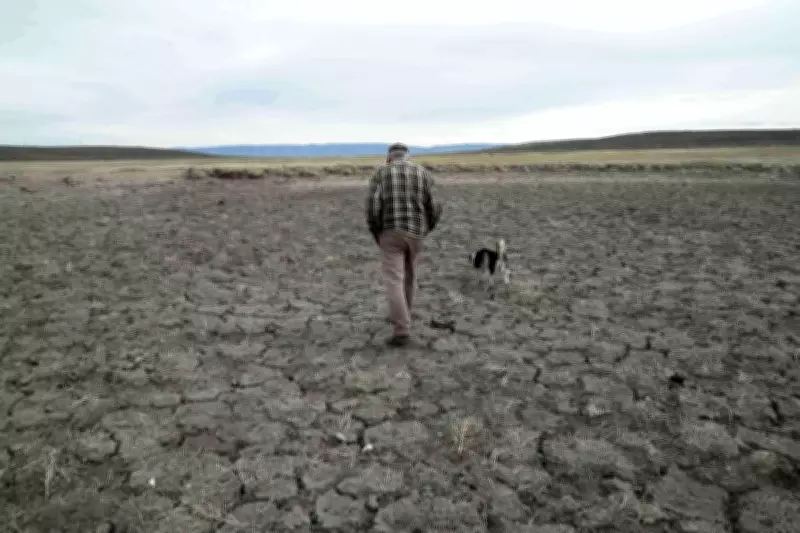
The U.S. Drought Monitor reports that over 61% of the Lower 48 states are currently experiencing moderate to exceptional drought. This includes a staggering 97% of the Southeast and two-thirds of the West, marking the highest levels recorded for this period since the monitor's inception in 2000.
Further compounding concerns, the National Oceanic and Atmospheric Administration's comprehensive Palmer Drought Severity Index reached its highest March level since records began in 1895. Last month also ranked as the third-driest month ever recorded, trailing only the infamous Dust Bowl months of July and August 1934.

Critical Water Shortages and Atmospheric Conditions
Record heat has led to exceptionally low snow levels in the West during the early months of the year, severely impacting the region's usual water storage for summer. Brian Fuchs, a climatologist with the National Drought Mitigation Center, explained that a separate drought, linked to the jet stream pushing storms northward, has affected the South from Texas to the East Coast, coinciding with the Western crisis.
NOAA calculations indicate that breaking the drought in eastern Texas would require 19 inches of rain in a single month, while most of the Southeast needs over a foot of rain to address the deficit. "Right now 61% of the country is in drought and that’s steadily been going up for the calendar year," Fuchs noted. "We just haven’t seen too many springs where this amount of the country has been in this kind of shape."
A key measurement of atmospheric "sponginess," known as vapor pressure deficit, has reached 77% above normal in the West—more than 25% higher than the previous record for January through March. Park Williams, a UCLA hydroclimatologist, stated that this level of moisture-sucking from the ground "wouldn't have appeared possible" before now.
Wildfire Risks and Agricultural Impacts
Drought typically peaks in summer, not spring, heightening meteorologists' concerns. Williams emphasized that "fire tends to respond to heat and drought in an exponential manner," meaning each degree of warming intensifies wildfire risks more than the previous one.
In Arizona, cacti are blooming months early, and water worries are already mounting. Kathy Jacobs, director of the Center for Climate Adaptation Science and Solutions at the University of Arizona, expressed concern over the Colorado River's uncertain future amid what may be the worst drought year experienced. "We have lots of reservoirs that are not full," she added.
Jeff Masters, a meteorologist with Yale Climate Connections, highlighted that the drought's impact on agriculture and subsequent food prices is a major worry. A poor crop year in the U.S. could become a global issue, especially with a predicted strong El Niño weather oscillation that often reduces crop yields in regions like India.
Climate Change and Natural Variability
Williams attributed the drought and hotter weather to a combination of natural variability and human-caused climate change, with randomness playing a slightly larger role. Jacobs reinforced this, stating, "All weather is now affected by climate change. There is no such thing as weather that's divorced from climate trends. But this extreme event is extreme in the way that we’ve been expecting: extreme heat waves, intense drought."
The Associated Press’ climate and environmental coverage receives financial support from multiple private foundations. AP is solely responsible for all content.