
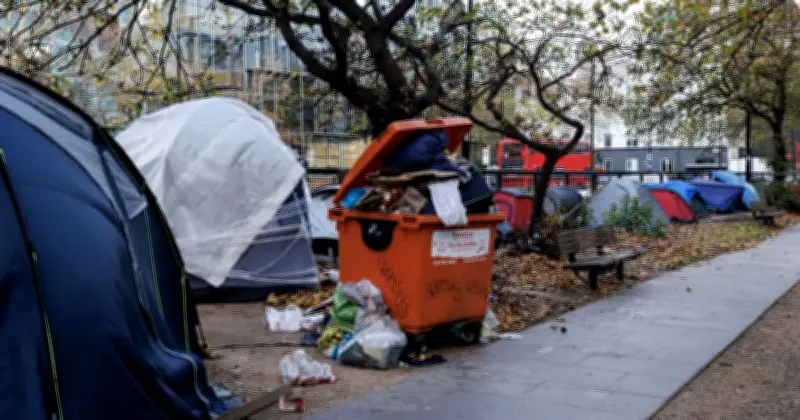
More than half of London's rough sleepers with confirmed nationalities are not British citizens, according to new analysis of official figures released today by the Centre for Social Justice (CSJ). The think tank found that 51% of those seen sleeping rough in the capital in 2025/26 were non-UK nationals — 5,667 people compared with 5,475 UK nationals.
When individuals of unknown nationality are included, the proportion of confirmed British rough sleepers falls to just 42%. The number of rough sleepers with unknown nationalities has soared by 127% since 2021/22 and rose a further 8% on last year, the CSJ said in its latest Rough Sleeping Tracker report.
Rising numbers among British rough sleepers
Total rough sleeping in London fell by just 2% from last year's record high, while the number of British rough sleepers rose by 13 this year — and by 38% (1,521 people) since 2021/22. The CSJ warned that long-term rough sleeping is becoming entrenched, with one in four (25%) of those seen on the streets spotted for at least two years in a row, up from 20% two years ago. Only 16% moved into long-term housing last year.
Migrant homelessness crisis deepens
The think tank pointed to a deepening “migrant homelessness crisis”, with over 1,000 new rough sleepers last year having come from asylum accommodation — a 10% increase — and an estimated 946 undocumented migrants sleeping rough. It argues that uncontrolled immigration and failures to tackle the asylum system have overwhelmed services.
Josh Nicholson, Head of Housing and Communities at the CSJ, said: “Falling numbers of European nationals sleeping rough since Brexit has masked an underlying failure to tackle rough sleeping in London. Whoever walks into Number 10 should take this opportunity to reset the dial on rough sleeping and deliver a visible and meaningful change by the end of the Parliament. Tackling the scourge of homelessness is central to fixing broken Britain.”
Political reactions and policy recommendations
Margaret Mullane, Labour MP for Dagenham and Rainham, said: “Not a day passes without rough sleepers outside our stations and on our high streets. It is one of the starkest signs of a system that is not working.”
The CSJ called for ministers and Mayor of London Sir Sadiq Khan to work together on stronger return policies for non-UK nationals, including “Dutch-style” reconnection services run by frontline charities to help people return home. It also urged scaling up the successful Housing First model for British rough sleepers.
Mr Nicholson said the next Prime Minister will inherit a homelessness system “on the brink”. The report recommends a new target for returns of non-UK national rough sleepers, extending voluntary returns and ensuring illegal migrants are removed. It proposes rolling out Housing First to house 5,600 of the most vulnerable Britons by the end of the Parliament, funded by cutting civil service relocation expenses.
Speaking in Manchester yesterday, Greater Manchester Mayor Andy Burnham pledged to “adopt a national Housing First philosophy”. Mr Burnham has previously described it as “a long-term, ambitious, and transformational policy that works to end homelessness for the vast majority of people supported by it.”
Unachievable targets without addressing migrant element
The CSJ said both the government’s target to halve long-term rough sleeping and Sir Sadiq Khan’s pledge to end it by 2030 are unachievable without addressing the migrant element of the crisis. The analysis is based on the Greater London Authority’s Combined Homelessness and Information Network (CHAIN) 2025/26 annual report.




