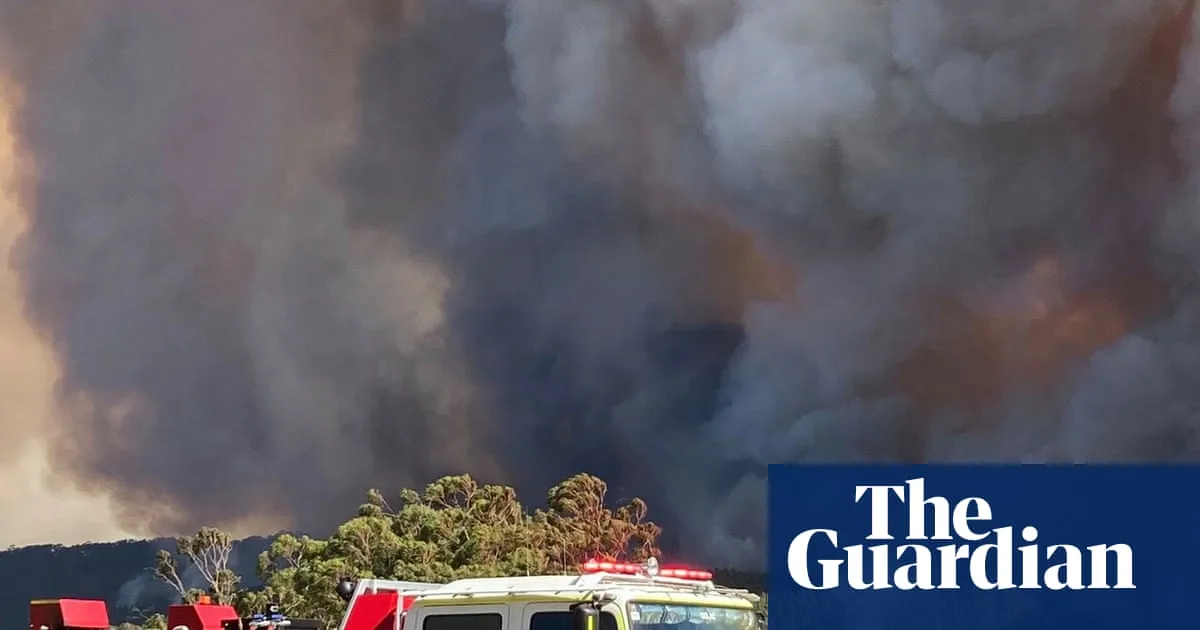
Residents of more than 1,000 homes in Victoria's Otways region have been urged to evacuate before sunset as a massive bushfire threatens to spread east towards Lorne amid an approaching severe heatwave. The fire, which has already burned approximately 9,400 hectares, breached containment lines on Saturday afternoon, prompting authorities to issue evacuation warnings for towns including Gellibrand, Kawarren, Beech Forest, Forrest, and Barongarook.
State Control Centre spokesperson Reegan Key said on Monday that six aircraft and more than 300 firefighters were battling the blaze, but extreme fire danger was expected on Tuesday due to strong winds and very warm temperatures. “We’re really concerned about the potential of that fire to take a big run and impact communities into upper Gellibrand, Forrest, Barongarook, and potentially, if it’s very bad, even as far as Lorne or Aireys Inlet tomorrow,” Key said.
Local resident Rob Murphy, helping out at the Gellibrand River Hotel Pub while his farm was under threat, described the situation: “The fire is very close to our property, and depending on the winds, will likely impact our farm. At the moment, the house is probably OK, but who knows what tomorrow brings.” He said the town had been covered in a thick blanket of smoke overnight, with the fire coming within 1km of the pub.
Victoria Police and State Emergency Service crews began doorknocking homes on Monday, strongly recommending immediate evacuation. A statewide total fire ban has been issued for Tuesday, and all visitor sites in the Great Otway National Park and State Forests are closed. Fire conditions are forecast to be extreme in five districts, with temperatures in north-west Victoria expected to reach 49C. Key noted that the state had not experienced such intense heat since 2009.
Six major fires were burning across the state on Monday, including blazes near Walwa and in the Alpine National Park. Residents near the Murray River in Nariel Valley were also told to leave as a fire spread through a wilderness park. Australia experienced its fourth-warmest year on record in 2025, with the climate crisis increasing the frequency and severity of extreme weather events.