
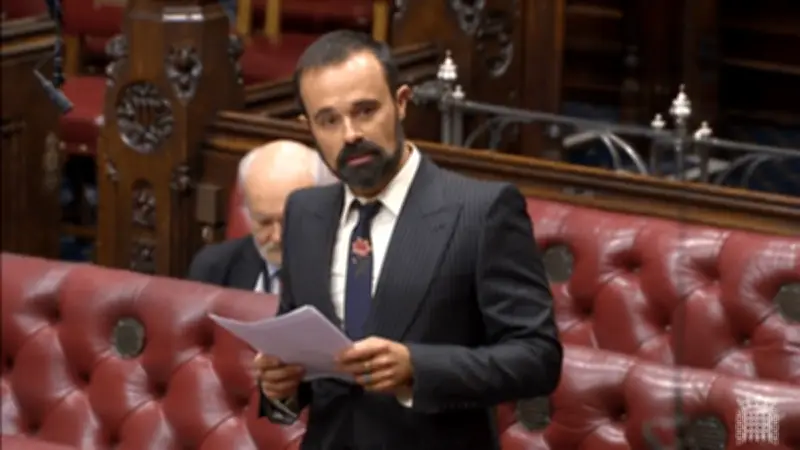
Lord Lebedev warned peers that mankind was “laying waste to the planet which is our only home” as he backed a landmark attempt to give nature new legal rights. The Evening Standard proprietor intervened in the House of Lords on Friday as peers gave a Second Reading to Baroness Bennett of Manor Castle’s Nature’s Rights Bill, sending it on to a Committee of the Whole House for further scrutiny.
What the Nature's Rights Bill Proposes
The Private Member’s Bill would recognise nature as a legal subject and create new duties on public bodies, businesses and individuals to protect and restore it. It would also establish a Nature Guardianship Council, bioregional councils and a Nature’s Rights Tribunal.
Lord Lebedev said the Bill addressed “one of the greatest crises of our times”, citing deforestation, habitat loss, the illegal wildlife trade, unsustainable farming, mining, plastics and river pollution. He said the UK was “one of the most depleted nations in the world” and argued that polluted rivers and lost habitats showed the need for greater urgency.
Personal Connection to Environmental Issues
He told peers the issue was personal because his grandfather, Professor Vladimir Sokolov, was a pioneering zoologist and ecologist who served on the Brundtland Commission, which helped shape modern thinking on sustainable development. Lord Lebedev said he had tried to continue that work by campaigning against the illegal wildlife trade and supporting indigenous communities.
He accepted that some peers would oppose the Bill’s expansive legal framework, but said it could be improved through debate. “We need to recast the language of rights and duties to arrest and transcend the destruction of the natural world,” he said.
Support and Criticism in the Lords
Opening the debate, Baroness Bennett said existing environmental laws had failed to halt decline and described her Bill as a “green Magna Carta”. She said it drew on international examples including New Zealand’s Whanganui River and Ecuador’s constitutional recognition of nature’s rights. Support also came from Baroness Smith of Llanfaes, who said the Bill asked whether the law should continue to treat nature mainly as a possession or resource. Baroness Helic welcomed its emphasis on stewardship and used the debate to press for a closed season for hares in England and Wales.
Baroness Miller of Chilthorne Domer said she supported the principle of rights for nature, but argued that stronger foundations would come from local action, citizen science and better enforcement of existing protections. The need for the Bill was questioned. Baroness Coffey said existing legislation already covered much of what the Bill sought to achieve and questioned its definitions and powers. Lord Frost called it “philosophically incoherent”, while the Earl of Effingham said the Opposition feared it could override democratic decision-making and slow housing, infrastructure and energy projects.
Government Position on the Bill
For the Government, environment minister Baroness Hayman of Ullock said ministers shared the ambition to restore nature but could not support the Bill. She said the Environment Act 2021 and Environmental Improvement Plan 2025 already provided a legally binding framework and warned the Bill could create uncertainty and divert resources into litigation.




