
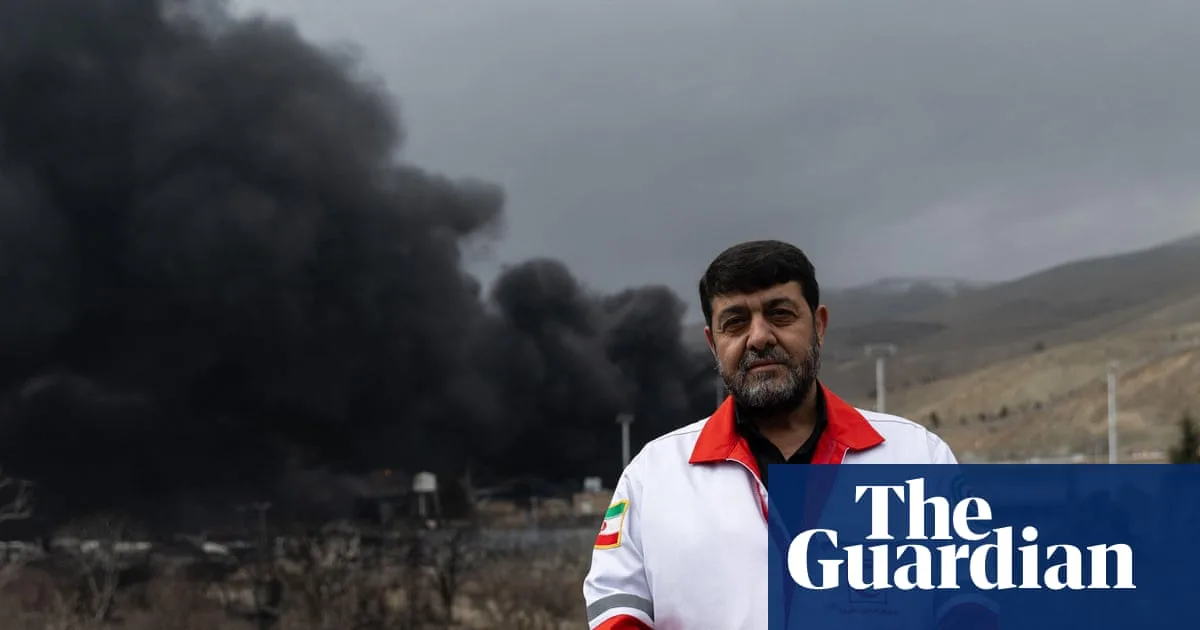
Experts have warned that Israel's bombing of Iran's oil infrastructure will have major long-term environmental repercussions, as monitors admit they are struggling to keep track of the environmental disasters arising from the widening war. Even as Iranians marked the appointment of a new supreme leader, the Shahran oil depot north-east of Tehran and the Shahr-e fuel depot to its south continued to burn on Monday, two days after being bombed by Israeli warplanes.
In the immediate aftermath, Iran's environmental agency and Red Crescent Society warned Tehran residents to stay at home, citing toxic chemicals from airstrikes on five fossil fuel installations that could cause acid rain and damage skin and lungs. The World Health Organization's head, Tedros Adhanom Ghebreyesus, said damage to petroleum facilities risks contaminating food, water and air, with severe health impacts especially for children, older people, and those with pre-existing conditions. Iran's deputy health minister, Ali Jafarian, told Al Jazeera that soil and water supplies around Tehran were already beginning to be contaminated.
Dr Akshay Deoras, a research scientist at the University of Reading, explained that the black rain falling across Tehran was a mixture of soot, fine particulate matter, and rain from a storm. He noted that oil fires produce sulphur and nitrogen compounds that could form acids if dissolved in rainwater, posing risks from inhaling or touching smoke and particles. Immediate impacts include headaches, eye and skin irritation, and difficulty breathing, particularly for vulnerable groups.
Prof Andrea Sella, professor of inorganic chemistry at University College London, warned that the explosions exposed the local population to a cocktail of toxic chemicals, including aromatic compounds linked to cancers. He added that destroyed containment would allow harmful material to permeate soil and coat everything, potentially contaminating drinking water supplies. Meanwhile, fears grow of a tit-for-tat cycle of retaliation, with Iran's Revolutionary Guards warning of similar actions against oil infrastructure in the region. Bahrain declared force majeure after an Iranian attack on its only oil refinery, and Saudi Arabia reported intercepting Iranian drones targeting its Shaybah oil field.




