
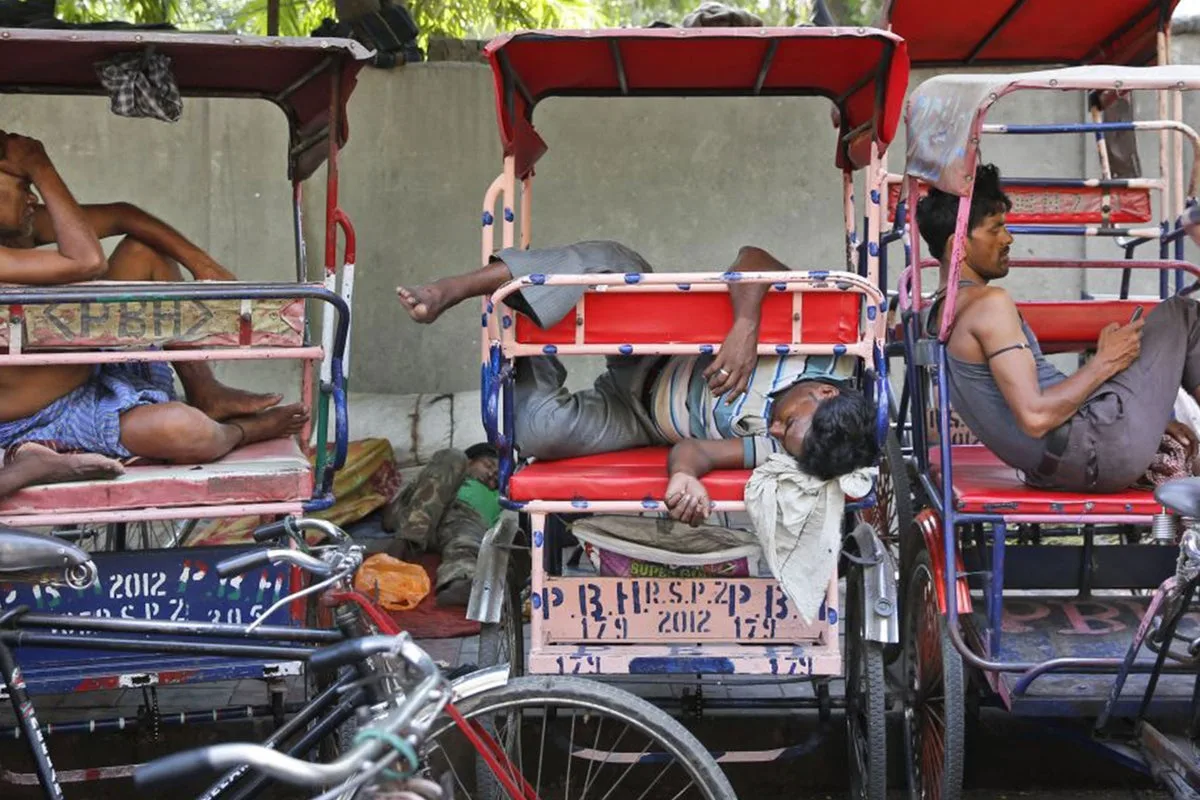
On 27 April, every one of the world's 50 hottest cities was located in India, according to air-quality monitoring platform AQI, which said there was "no modern precedent" for the occurrence. The platform described the event as "not normal" and called for a "serious, data-grounded reckoning" with the country's worsening heat.
The average peak temperature across the 50 cities was 44.7C. Even the coolest maximum, Solapur at 41.9C, would be considered a public health emergency anywhere in Europe, AQI noted. Banda in Uttar Pradesh recorded the world's highest temperature for the day at 46.2C, while night-time temperatures remained dangerously high. Most of the cities were concentrated in India's "interior heat belt", spanning Uttar Pradesh, Madhya Pradesh, Maharashtra and Rajasthan.
Climatologist and weather historian Maximiliano Herrera said the extreme heatwave was "among the top if not the top harshest for April", which is usually not the hottest month of the year. He told CNN that dozens, "if not hundreds", of April heat records had been shattered.
Scientists link the intensifying heat to the climate crisis, noting that Indian summers are arriving earlier and becoming more severe. Experts warn that by 2050, parts of India could experience heat beyond the survivability limit for humans. AQI said that when 50 cities share average temperatures above 37.5C, the core human body temperature, entire regions face a mass public health risk from heat-related illness.
Concerns are growing that the coming summer could be worse. India is also facing fuel shortages because of supply-chain disruption caused by the US-Israeli war on Iran, making it harder to meet rising cooling demands. The Indian Meteorological Department has predicted below-average monsoon rains this year, increasing the likelihood of drought.




