
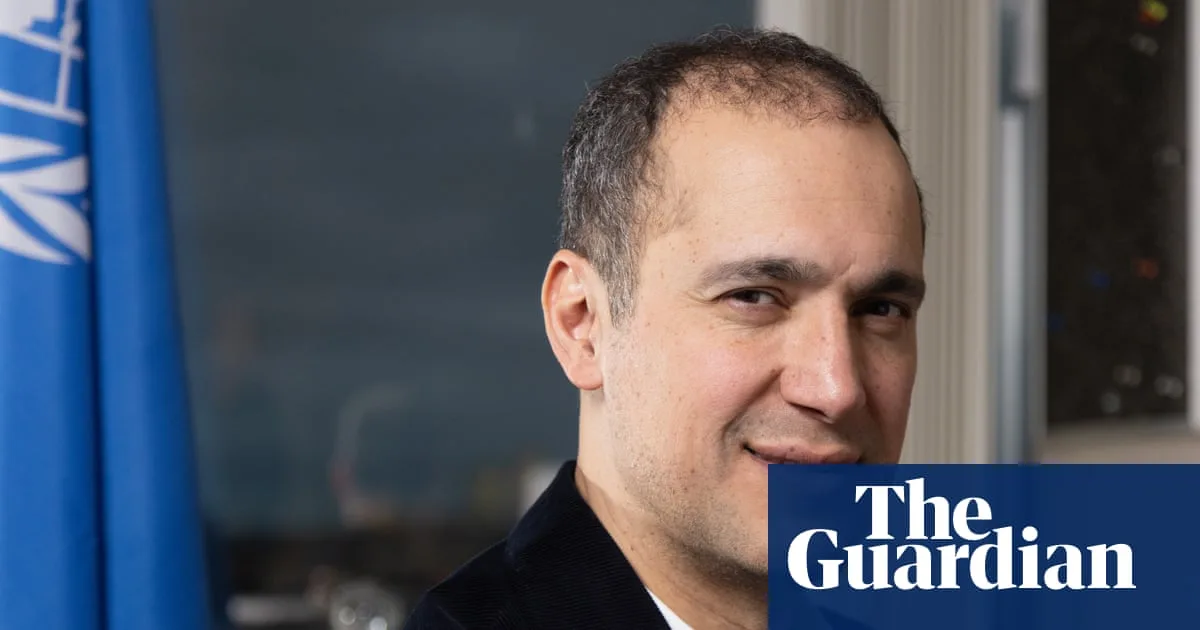
Professor Kaveh Madani, an exiled Iranian scientist, has been awarded the Stockholm Water Prize, the world's most prestigious award for water management. The prize recognises his groundbreaking research on water management combined with policy, diplomacy and global outreach, often undertaken under personal risk and political complexity.
Madani's journey to the award was fraught with danger. In 2017, he was invited by the Iranian government to return from London and take up a cabinet-level position as deputy head of the environment department. However, upon arrival at Tehran airport, he was arrested by the Revolutionary Guards, accused of being a spy for the CIA, MI6 or Mossad. He was interrogated and his computers and phone were confiscated.
Despite the accusations, Madani continued his work in government, pushing for reforms such as appointing women to senior positions and addressing water mismanagement directly with the cabinet. Hardliners labelled him an 'infiltrator', a 'water terrorist' and even a 'bioterrorist', claiming his work on water scarcity was sabotage aimed at weakening Iran.
Madani's research applied game theory to water management, arguing that conventional models failed because they assumed cooperation. He concluded that water crises in Iran and other countries were the result of mismanagement rather than solely climate change. He coined the term 'water bankruptcy' to describe aquifers and rivers drained beyond recovery, rejecting the word 'crisis' as implying a temporary shock.
Now in exile, Madani says the award is bittersweet. He worries that his compatriots in Iran may not be able to celebrate with him due to internet disconnections. 'The sad part is that I don't know if my compatriots will be celebrating it with me,' he said.




