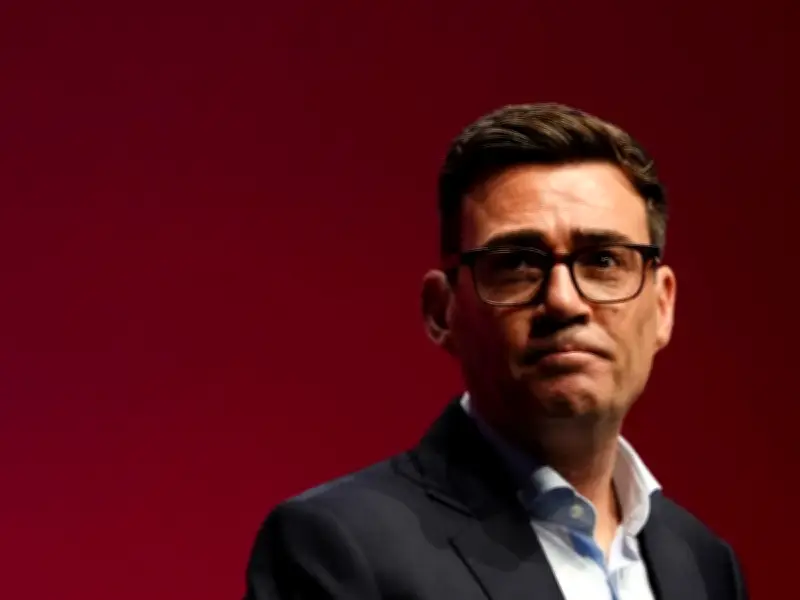
Prime Minister Andy Burnham has announced that dementia research will become a national priority, backed by a £48 million partnership, just weeks after his father Roy died following a battle with Alzheimer's disease. Mr Burnham said he wants the UK to be the country that "delivers the cure for dementia the world has been waiting for".
Mr Burnham lost his father Roy, 85, to the disease in September. He had previously spoken about how his father, who lived in a care home, was unaware that he had become prime minister in the weeks before his death. During his speech to the Labour Party Conference last week, Mr Burnham became emotional before paying tribute to his dad, telling the audience that "the UK my dad represented is the one I believe in".
£48 million partnership to speed up clinical trials
The new partnership aims to make it easier for people to join clinical trials, tackling one of the biggest barriers to dementia research. According to the government, nearly one million people are living with dementia in the UK today, and around one in two people will be affected by dementia in their lifetime, either living with the condition, being a carer or both.
Mr Burnham said: "Dementia is a devastatingly cruel disease, not only for those who live with it, but for the families who care for them. For too long, we have accepted dementia as something to be managed later in life, rather than a disease we can defeat. I don't accept that. In fact, I have real hope that we can come together and do exactly that."
He added: "I want Britain to be the country that makes the breakthrough and delivers the cure for dementia the world has been waiting for. That is why I am making dementia research a national priority - by backing the NHS, universities, researchers and industry to drive the breakthroughs we desperately need."
Investment supports BARBARA Alliance
The investment will support the work of The BARBARA Alliance, a UK-wide not-for-profit partnership bringing together government, industry, academia, charities and people with lived experience of dementia, launched in memory of the late EastEnders actress Dame Barbara Windsor. The government said it will invest £33 million through the Dame Barbara Windsor Dementia Goals programme, with additional funding coming from Bristol Myers Squibb, GSK and Gates Ventures.
The BARBARA Alliance's flagship programme will create a single, co-ordinated platform linking the UK's health data, research and clinical trial capabilities, making it easier for researchers to find participants and for people across the UK to take part in studies. The government said the programme will help speed up clinical trials and bring promising new treatments to patients faster.
Cost of dementia and new priorities
Dementia is estimated to cost the UK more than £42 billion a year, the government said, with the vast majority of costs falling on social care and unpaid care provided by family and friends, and the cost to the NHS at £7 billion. The government said: "Too few people currently take part in dementia research, compared to other diseases. Anybody over the age of 18 years old can sign up, with or without a dementia diagnosis or memory concerns through the NIHR’s Join Dementia Research service."
Dementia will also be made one of the top priorities of the new Health Data Research Service, backed by up to £600 million from the Government and the Wellcome Trust. Health and social care secretary Yvette Cooper said: "This cruel disease has done so much damage to families across our country, and for too long we have lacked the tools to fight back. This investment will help us turn the tide on dementia, helping us to speed up diagnosis, accelerate research and give more people the chance to take part in trials that could transform their futures."
Hilary Evans-Newton CBE, Chair of the Dame Barbara Windsor Dementia Goals programme and Chief Executive of Alzheimer’s Research UK, said: "We know that people affected by dementia want the opportunity to be part of the search for better treatments. More than 90 per cent we’ve surveyed told us they would like to take part in research, helping to shape a better future for everyone affected by the condition."