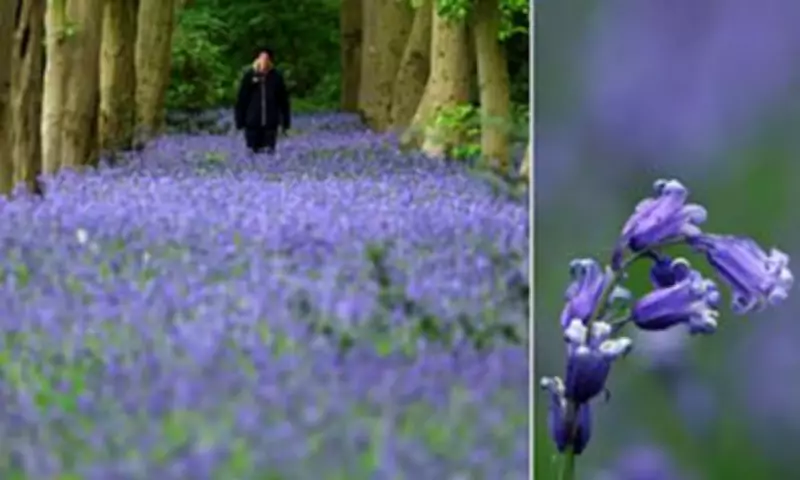
Britain's Bluebells Bloom Early Amid Record Spring Temperatures
Britain's iconic bluebells have burst into flower unusually early this year, with sightings across southern England showing blooms appearing up to two weeks ahead of schedule. This premature flowering is attributed to a combination of a wetter spring and exceptionally mild conditions, creating ideal growing environments for wildflowers and cultivated plants alike.
Record-Breaking Warmth Drives Early Displays
Temperature records have been shattered this spring, most notably with the hottest day since 1946 recorded on April 8 at Kew Gardens in London, where the mercury soared to 26.6°C. This warmth, coupled with ample rainfall and a notable absence of frosty mornings, has accelerated the growth cycles of numerous plant species. Residents from Kent to Surrey have reported bluebells sprouting in their gardens significantly earlier than typical years, with some gardens experiencing blooms up to four weeks ahead of normal.
Garden Experts Report Magnificent Early Displays
Edward Barham, owner of Hole Park Gardens in Kent, described this year's bluebell display as "magnificent, probably one of the best of recent years." Speaking to the BBC, he noted, "This is certainly the earliest we have seen the bluebells come into flower, at least two weeks ahead of schedule, brought on by the very warm weather around Easter Time." Similarly, at the nearby seven-acre Great Comp Garden in Kent, curator Williams Dyson observed that the garden is "at least four weeks ahead of ourselves this year," with snowdrops, daffodils, and magnolias all blooming prematurely.

Widespread Early Flowering Across Plant Species
The early blooming phenomenon extends far beyond bluebells. Other flowers, including tulips, cherry blossoms, and rhododendrons, have also flowered ahead of time across Britain. The Royal Horticultural Society (RHS) has noted distinct differences in blooming timings this year. Tim Upson, director of gardens and horticulture at the RHS, reported that cherry blossom at Wisley in Surrey had already finished blooming a few weeks early, while their tulips were nearly past their prime. David Knott, curator at the Royal Botanic Garden Edinburgh, highlighted that plants like rhododendrons and magnolias are now flowering up to two weeks earlier than usual.
Ecological and Agricultural Concerns Raised
Research from the University of Cambridge suggests that many plants are now flowering up to a month earlier due to rising temperatures, which shift natural plant cycles. This trend raises significant concerns for wildlife and ecosystems, as it can lead to ecological mismatches where species that synchronize their migration or hibernation with flower availability may find themselves without crucial resources. Additionally, farmers and gardeners face challenges in adapting to these altered growing seasons. Scientists warn that spring temperatures in the UK are rising faster than in other seasons, with averages increasing by 1.8°C since 1970 across all four nations, underscoring the broader implications of climate change on horticulture and biodiversity.