
Scientists Replicate 1976 Heatwave, Find 2026 Event More Dangerous
Climate scientists have recreated the notorious 1976 UK heatwave to compare it with last week's scorching temperatures. Their findings reveal that while the 1976 heatwave lasted longer, the 2026 event is far more dangerous due to the intensity of the heat, exacerbated by global warming.
The 1976 heatwave brought 15 consecutive days of heat from June 23 to July 7, with temperatures reaching 32.2°C (90°F) in parts of England. Tarmac melted on roads, grass turned white, and the year-long 'drought of the century' caused water shortages, wildfires, and crop failures costing farmers £500 million.
Global Warming Makes Heatwaves More Intense
Writing in The Conversation, climate science professors Ed Hawkins and Hayley J. Fowler explained that although the recent heatwave did not last as long, it was more hazardous because the heat was so intense. They stated: "The upward shift in temperature from global warming has created more dangerous heatwave conditions. Hot daytime temperatures, coupled with very warm nights, making it hard to sleep, would cause huge health issues for vulnerable people, and reduced productivity even for healthy people."
While global temperatures have risen by 1°C, the authors note that heatwaves intensify much faster. "Extreme heat is intensifying much faster than the average temperature, and since the 1960s, heatwaves in southern England have become 3°C or 4°C hotter in urban and rural areas alike," they wrote.
Peak Temperatures Today Would Reach 38-39°C
For a comparable event to the 1976 heatwave, peak temperatures in today's climate would be 38°C or 39°C. The professors warned: "What is 'normal' has already changed. The climate of the past no longer exists. Summers in the UK have become hotter, and 2025 was the warmest on record. For now."
They cautioned that last week was just the start. "With continued greenhouse gas emissions, UK summers will become hotter, with more frequent, more intense and longer heatwaves," they said. Met Office projections suggest the UK could experience temperatures of 45°C within the next three decades, with plausible heatwaves hitting 40°C for over a week.
Future Generations Will See 1976 as 'Cool'
"To put this into perspective, when a child born today becomes a parent, the average temperatures of summer 1976 will be normal. When they become a grandparent, they will look back and think that the summer of 1976, or even the summer of 2025, were remarkably cold," the authors wrote.
"UK society and the infrastructure on which it depends is built for a climate that no longer exists. It is urgent that it adapts to weather extremes happening already and those anticipated in the next few decades."
Heat-Related Deaths Projected to Soar
According to the UK Health Security Agency (UKHSA), an estimated 10,781 heat-associated deaths in England were recorded as a direct consequence of heatwaves between 2020 and 2024. Without urgent adaptation, this figure could rise to approximately 11,000 fatal cases every year by the 2050s.
British Weather Services senior meteorologist Jim Dale warned that Britain's all-time temperature record of 40.3°C, set in July 2022, could be broken, with forecasts indicating highs of 41°C within days. This follows the UK's hottest June day on record on June 26, when temperatures reached 37.7°C in Lingwood, near Norwich.
Infrastructure Unfit for Climate Change
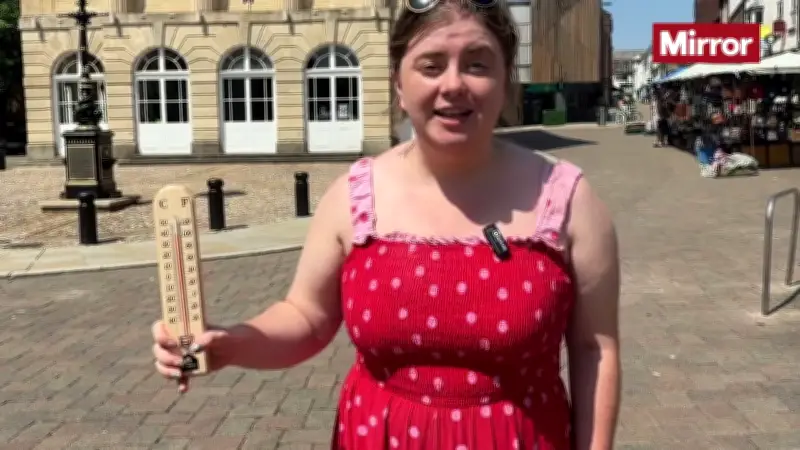
In Andover, Hampshire, where temperatures were due to reach 38°C, residents struggled to keep cool. Councillor Iris Anderson told the Mirror: "Things have got to change. Whether it's how businesses operate, our working hours, or how we keep the shops open during such a global change. We need to start thinking seriously about the shop workers - how long they work for and serve customers. We also need to think about our nurses and doctors. It's extremely hard in these hospitals, and they have to do their work and their duty."
Dale fears the world is on track to reach 2°C warming far sooner than anticipated. He explained: "The IPCC's 1.5C threshold is dead in the water. 2C warming is the next staging post, and at this rate, it could happen by 2030, well ahead of most scientific expectations. The global fallouts from that would be immense."




