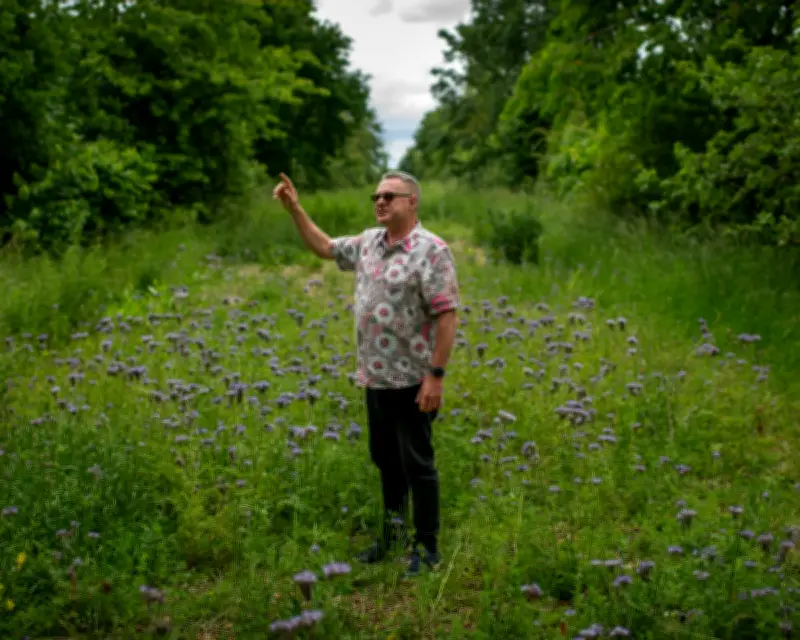
Wakelyns, a 56-acre agroforestry farm in Suffolk, is fighting for survival. The farm's owners, David Wolfe and Amanda Illing, need to raise £1.2m to convert it into a charitable community benefit society, or it will be sold on the open market.
A Living Laboratory Under Threat
Founded in 1992 by Martin and Ann Wolfe, Wakelyns was one of Europe's first agroforestry schemes. It transformed a former pig farm into a network of 56 narrow 'alleys' of crops between rows of trees, a method initially considered 'mad' by local farmers. Today, it is a model for sustainable agriculture, hailed as an 'oasis' of biodiversity in a region dominated by monoculture.
The farm's diverse tree crops include timber, apples, cherries, plums, and hazel, the latter coppiced on a seven-year cycle for high-quality stakes sold at £1.40 each. Between the trees, organic rotations of wheat, lentils, hemp, and vegetables are grown. Wakelyns pioneered commercial lentil growing in the UK and remains the country's only commercial black lentil grower.
Enterprise Stacking and Community
Since taking over in 2020, Wolfe and Illing have added 'enterprise stacking', hosting 10 micro-enterprises including a bakery, an educational charity, and a honeybee operation. These businesses interact symbiotically with the farm, creating a collaborative model that generates food, biodiversity, and community engagement.
“We are exploring how we can use the land to give us turtle doves and food and wellbeing and visitors and fun,” said David Wolfe. The farm hosts nature tours, events, and camping, with up to 30 beds available in the farmhouse and en suite pods that rotate with the herbal lays.
The Urgent Need for Funding
Wolfe is willing to donate his half of the farm to the community benefit society, but his brother needs to sell his half, requiring £1.2m. A community share offer has been launched to secure the farm's democratic future. If the target is not met, the farm will be sold on the open market.
“We want people to own something together,” said Wolfe, 61. “We are trying to avoid it being one or two people’s private project and give it resilience.”
Voices from the Community
Harry Read, a professional ornithologist, runs nature tours at Wakelyns, noting the abundance of birds like hobby and yellowhammer. “I’ve grown up surrounded by arable monocultures. Everyone uses the word ‘oasis’ for Wakelyns. It fills up my cup,” he said.
Chloe Webb, a chef at the Silva kitchen, said: “The fact we’re making plum jam today from the agroforestry is connecting all the dots.” The jam's 'food miles' are just 200 metres.
Kitty Wilson Brown of Contemporary Hempery, which uses Wakelyns' hemp crop, said: “Last year we had the best hemp crop in the UK. That productivity has got to be some of the Wakelyns magic.”
Carrie Phoenix, executive director of Natural Habitat charity, added: “Being able to share Wakelyns with children is incredible. They say: ‘Why isn’t every farm like this?’”
Government Policy Alignment
The UK government's carbon delivery plan aims to convert 10% of arable land into agroforestry by 2050, with financial incentives. Wakelyns serves as a pioneering example of this policy in action.