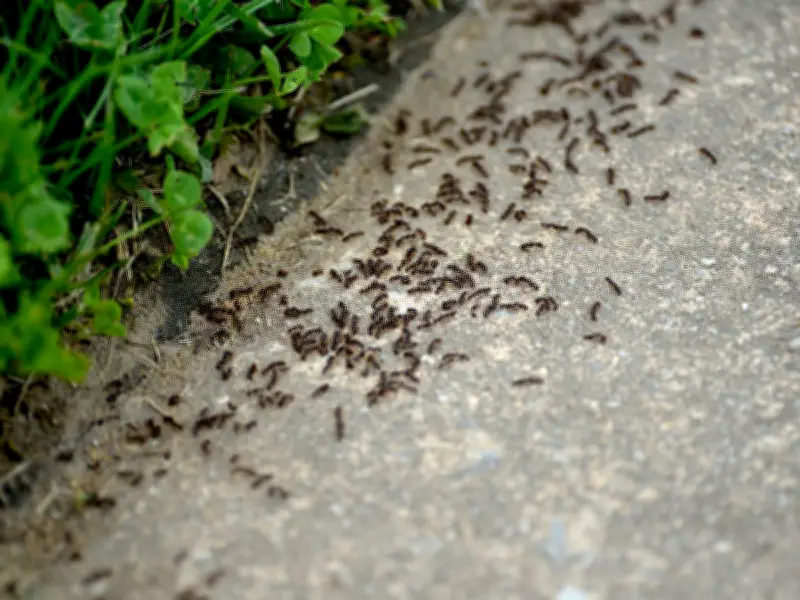
Gardener and social media star Jonny Hincks has revealed a straightforward method for removing ants from gardens during summer, using nothing more than a terracotta pot. The technique, shared on the RHS Roots YouTube channel, exploits ants' natural response to heat and sunlight deprivation to relocate the nest within days.
How the Terracotta Pot Method Works
Appearing on the RHS Roots YouTube channel with presenter Jo Whiley, Hincks demonstrated his approach after Whiley admired his pristine lawn and asked about potential issues. Whiley confessed she has "a big issue with ant hills," to which Hincks responded by outlining his simple solution.
"So, what I do is, I have a terracotta pot and I turn it upside down and I put it over the actual mound itself," Hincks explained. "Now, the heat and the lack of sunlight causes the ants to build the nest higher." He added: "Leave it for a few days and the heat, especially with this heat we've got at the minute, the heat draws the nest up. Take the terracotta pot off and then you can literally just shovel up the ants nest and move it somewhere else."
Ant Species and Behaviour in the UK
Ants become far more visible during warmer months as hotter temperatures increase their activity levels. Spring and summer represent their primary foraging and breeding periods, with gardens providing abundant food sources including nectar, seeds, insects, and the sweet honeydew created by aphids.
The most prevalent ant species in the UK is the black garden ant (Lasius niger). These ants typically establish nests under paving slabs, within soil, flower pots, compost heaps, and along lawn perimeters. They pose no threat to humans and do not sting. Another common species is the yellow meadow ant (Lasius flavus), which constructs small earth mounds in lawns and, due to its colour, is occasionally confused with red ants. According to Gardeners' World, both species are entirely harmless.
Additional Methods to Deter Ants
Gardeners' World states there are multiple methods to deter ants from establishing nests in plant pots if they are affecting your plants, beginning with consistent watering. The gardening website advises: "Move on ants by watering soil and pots regularly. Avoid completely flooding the pot, as this can kill the ants. But regular watering will let them know that the plant pot isn't the best place to make a nest – as they do best in dry environments – so they will move their eggs elsewhere."
The website also suggests companion planting: "Wormwood, Artemisia absinthium, is a strongly scented herb that can deter aphids, reducing food sources for ants. Lavender plants can be a great option too, as the scent repels ants."