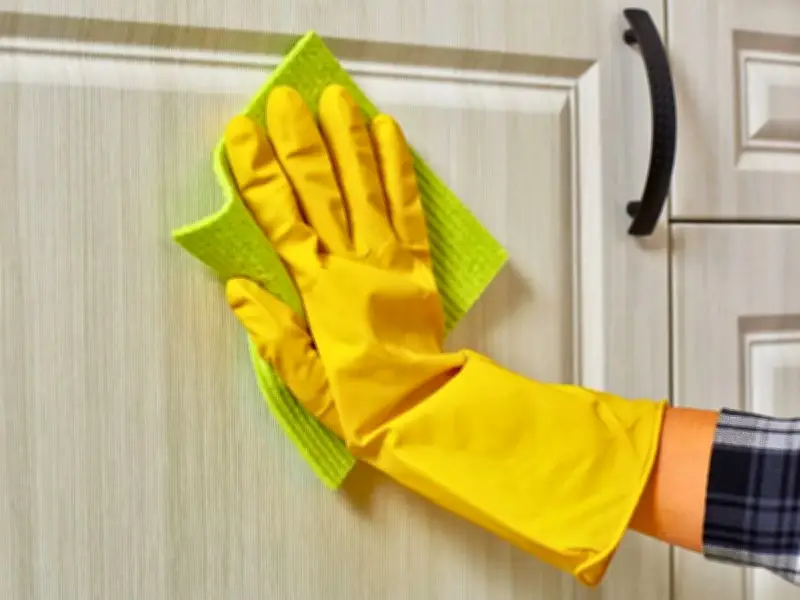
Kitchen cupboard doors are often overlooked during cleaning routines, save for the occasional dusting along the top, yet they are actually among the greasiest and most germ-laden spots in any kitchen. Cooking releases significant amounts of oil into the air, with steam carrying these particles throughout the kitchen where they settle on elevated surfaces.
Why cupboard doors get so dirty
Over time, cupboard doors accumulate considerable grease, even when they appear clean, creating a tacky layer that attracts dust and other particles. Without regular wiping, the finish risks becoming stained from moisture and dirt, while handles can become particularly unhygienic to the touch.
Tanya Cressey from kitchen manufacturer Cut My has revealed a straightforward method for properly cleaning cupboard doors, requiring nothing more than washing-up liquid. She said: "Mix mild dish soap with warm water in a bucket or basin. Avoid using abrasive cleaners or harsh chemicals as they may strip the paint or cause discolouration."
The right cleaning products matter
Selecting appropriate cleaning products for kitchen cupboards is crucial, as using unsuitable options risks degrading the finish. Applying incorrect products to cupboard doors can leave them looking lacklustre, while also causing their smooth surfaces to become scratched or marked, ultimately making a kitchen appear rather untidy.
Washing-up liquid ranks among the most effective solutions for tackling grimy cupboards, as it is specially formulated to cut through oil and fat on dishes, making it equally adept at stripping away kitchen grease. This household staple will effortlessly dissolve any oily build-up clinging to cupboard surfaces, all while being gentle enough not to cause any damage.
How to deep clean kitchen cupboards
Simply squeeze a small amount of washing-up liquid into a bucket or basin of warm water, then dip a soft cloth or sponge into the solution. Working methodically, wipe down the cupboard surfaces to shift any grease or dust, taking particular care around the tops of the doors and the handles.
Take care with any stubborn stains, working at them gently rather than scrubbing. Steer clear of scourers or any abrasive cleaning tools, as these could leave unsightly scratches on cupboard surfaces.
Once the surfaces look spotless, give them a rinse with warm water and dry them thoroughly. Avoid leaving them to air dry, as trapped moisture around the edges and joints could cause long-term damage to the fittings.
With just five minutes of effort, cupboards should be gleaming and completely free of dust. If you can spare a little extra time, it is well worth sorting out the insides of your cupboards too, as the colder months tend to drive pests indoors, where they can be lured in by stray food crumbs.