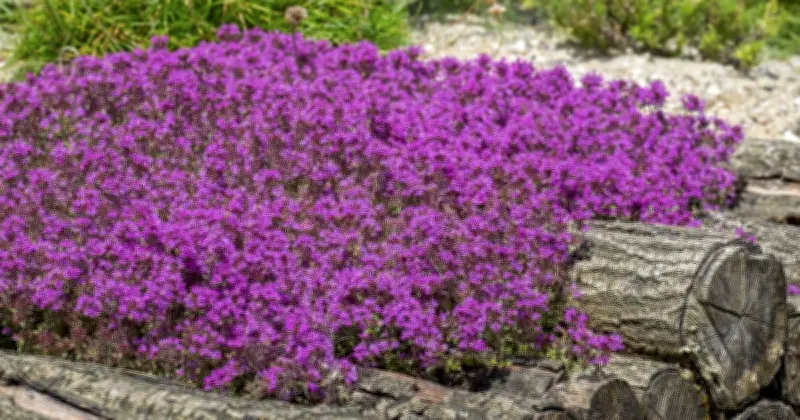
Alpines are small but offer wonderful charm for gardens. Linked to the high, rocky landscapes of the Alps to the Himalayas and beyond, they are used to growing in thin soil with bright light and sharp drainage. Their popularity in British gardens grew as plant hunters, travellers, and Victorian gardeners became fascinated, recreating their own mountain landscapes at home. Rock gardens, troughs, and stone crevices allowed them to enjoy these lovely plants on a domestic scale. Today, they’re an easy way for beginners to create a characterful, low-maintenance display, even in the smallest garden.
Best Alpines to Grow
One of the easiest alpines to grow is sempervivum, often called houseleeks. They grow in neat rosettes, available in green, red, purple, and even silvery tones. They also produce offsets, so one plant can slowly become a small colony. Another excellent choice is saxifrage. They form mats of foliage and offer dainty flowers in spring or early summer. They look particularly good when tucked between stones, where their compact habit looks at home.
Alpine pinks, or dwarf dianthus, are brilliant for colour and scent. They’re ideal for a sunny position and will reward you with neat, grassy foliage and pretty flowers. Many have a lovely clove-like fragrance, perfect when positioned near a path or patio. Small campanulas are also worth considering. They have bell-shaped blooms, offering a choice of blue, purple or white colour for rock gardens and containers. Choose compact varieties, as some campanulas can spread quite freely. Creeping thyme is another easy alpine-style plant. It works well spreading over gravel, around stones, or trailing over a container edge. It also offers aromatic foliage and pollinator-friendly flowers.
How to Plant Alpines
The key requirement for success is ample drainage. Alpines don’t enjoy wet compost, especially in the winter months. Use a shallow container with drainage holes, then add crocks or coarse grit at the base. Fill the container with gritty, free-draining compost. A 50-50 mix of peat-free compost and horticultural grit works well. It’s best to avoid rich, heavy composts. Plant alpines slightly proud of the surface, to ensure water drains away from their crowns. Then, top-dress with gravel or grit to protect the foliage and give a naturally finished look.
How to Care for Alpines
Water well after planting, then water sparingly once the plants are fully established. In hot July weather, containers still need checking, but soil should be moist, rather than sodden. Position your alpine display in good light, somewhere with plenty of sun. Remove flowers as they fade, keep an eye out for weeds, and trim tired growth after flowering.
Focus Plant - Phlox
For a superb perennial known to bring colour, scent, and fullness to the garden in July, consider phlox. By midsummer, tall border phlox, particularly Phlox paniculata, begins producing generous clusters of flowers in shades from pink to purple to white and even red. Many varieties are also lightly fragrant, making them a great choice for pathways, patios, and seating areas. It’s especially useful in mixed borders, where its upright stems add height without overwhelming plants nearby.
Phlox paniculata ‘David’ is a reliable, white-flowered choice with good mildew resistance. ‘Bright Eyes’ has soft pink flowers, with a deeper centre, whilst ‘Blue Paradise’ offers rich violet-blue tones that shift in different light. For stronger colour, ‘Starfire’ brings vivid reddish-pink flowers and darker stems for powerful contrast.
Phlox grows best in fertile, moisture-retentive but well-drained soil. It enjoys spots with full sun or light shade, although good airflow is important. Crowded plants, dry roots, and still air can encourage powdery mildew, so give plants space and water during dry spells. Care is simple. Deadhead faded flowers to keep plants tidy and encourage a longer display. Taller varieties may need support in exposed gardens. In autumn, cut stems back once flowering has finished, and divide congested clumps every few years in spring or autumn to encourage vigorous growth.
Fun fact: Many phlox flowers are more fragrant in the evenings, helping to attract night-flying pollinators like moths.
Gardening Jobs for July
- Sow turnips now for quick late-summer roots. Choose a sunny, open patch with fine, moist soil, and sow thinly in shallow drills. Keep seedlings watered in dry weather, then thin them early so the roots have space to swell. Harvest them young for the sweetest flavour and best texture.
- Prune cherry trees straight after harvesting, but only where needed. Early July is ideal, as cuts heal well in the summer. Remove dead, damaged, crossing, or crowded growth, and keep the centre open. Avoid heavy pruning unless the tree has become difficult to manage or too congested.
- Take summer cuttings from plants such as penstemon, pelargonium, fuchsia, salvia, rosemary and lavender. Choose healthy, non-flowering shoots in the morning, before they begin to wilt. Trim each cutting below a leaf joint, remove the lower leaves, then insert it into gritty compost. Keep cuttings somewhere bright, sheltered and moist, without letting them become waterlogged.
- Check pear trees for pear rust and pear leaf blister mite while the foliage is easy to inspect. Rust appears as bright orange spots, while blister mite causes raised patches that darken through the season. Remove badly affected leaves where practical, clear fallen foliage, and keep trees well-watered during dry spells.
- Lift shallots once the foliage turns yellow and flops, as this is a sign that the bulbs are ripening. Ease them from the soil carefully with a fork on a dry day. Lay them somewhere warm, airy, and sheltered to dry, then store only the firm and healthy bulbs for kitchen use.
Did You Know?
Lacecap hydrangeas have a clever flower display. The smaller fertile flowers sit in the centre, while the larger, showier sterile florets form an outer ring, helping make the whole flowerhead more visible to visiting pollinators. You can learn more about hydrangeas in episode 17 of Step-by-Step Gardening, available on my YouTube channel, @daviddomoney.
Tomato flowers are self-fertile, but under glass, a gentle tap can help with pollination. When flowers are fully open, a light shake moves pollen inside the flower, which can improve fruit set where wind and insects are limited.
Calendula has earned the nickname “poor man’s saffron” because its bright petals can be used to colour food. The edible petals add a peppery note to salads, soups and rice, as well as a cheerful golden colour.
In the UK, next year’s fig crop could already be waiting on the plant. Tiny embryonic figs form in late summer, overwinter as pea-sized fruitlets, then swell and ripen the following summer if protected from frost.