
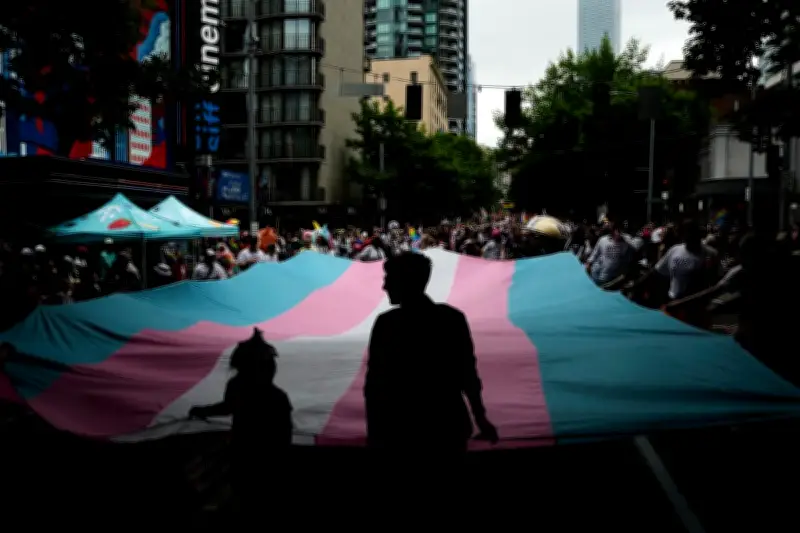
As the United States approaches its 250th anniversary on July 4, 2026, the LGBTQ+ community in New York City is grappling with a stark contrast between patriotic celebrations and escalating attacks on queer and trans rights. While Pride Month traditionally honors the 1969 Stonewall riots, many feel that the current political climate is reversing decades of progress.
Federal and State Attacks on Trans Healthcare
Since Donald Trump retook office in January 2025, multiple New York City hospitals have pre-emptively stopped providing gender-affirming care to transgender youth, fearing loss of federal funding. Between the 2024 election and October 2025, approximately 400,000 trans Americans moved from states like Texas and Florida to havens such as New York, according to community estimates. However, even in New York, protections are eroding.
Christen Clifford, a queer mother of two, told the Guardian that her 17-year-old child had gender-affirming care denied by NYU Langone hospital after the Trump administration threatened funding cuts. “We’re longtime New Yorkers. We thought we were safe here,” she said. The administration is also routing anti-trans efforts through federal courts in Texas, where judges have subpoenaed east coast hospitals for medical records of trans youth patients.
Pride March Controversy Over Hospital Participation
During the last week of Pride month, Clifford joined protests against the official NYC Pride march because hospitals that stopped providing gender-affirming care were set to walk in the parade. Four of the five 2026 Pride grand marshals—actor Dominique Jackson, drag queen Peppermint, Bowen Yang, and Jay Walker of Gays Against Guns—along with 15 former marshals including Michelle Visage, signed an open letter demanding NYC Pride bar such hospitals from participating until they change their policy.
“You can’t march in a Pride parade while you are damaging the lives of members of our community,” Walker told the independent trans news outlet Erin in the Morning.
Protests and Arrests Across the Country
At the Queer Liberation March and NYC Pride, protesters carried signs referencing the Prairieland case, where eight anti-ICE protesters—several of whom are trans or queer—were sentenced to a combined 450 years by a Texas federal court. The FBI’s evidence was largely based on community organizing and queer writings.
On June 27, the anti-establishment Dyke March saw protesters flood Fifth Avenue for almost 40 blocks, with signs condemning ICE and celebrating trans folks. Rightwing streamers attempted to harass marchers, while march marshals held them back. Later, NYPD officers arrested Pride-goers twerking in Washington Square Park.
Similar tensions erupted nationwide. In Philadelphia, police arrested 15 crowd members at Pride celebrations in early June. In San Francisco, at least five people were arrested at the Trans March on Friday, and 20 more at a Pride block party on Saturday, echoing the 1966 Compton’s Cafeteria riot.
Mixed Feelings on American Democracy
Clifford, who spent the week protesting, reflected on the broader meaning of democracy: “My understanding of what democracy is is not what the American experiment actually did or is currently doing, because of the history of slavery, because of white supremacy, because of the way the federal government is treating immigrants. Our freedoms are all intrinsically tied together, and so in an America that is celebrating its 250th anniversary, we deserve more.”
Despite the challenges, many queer and trans people came out to party, dance, and express solidarity. At Riis Beach, volunteers flyered for a campaign to protect the beach from developers. Their version of being American centered on fighting for rights and keeping the celebration alive.




