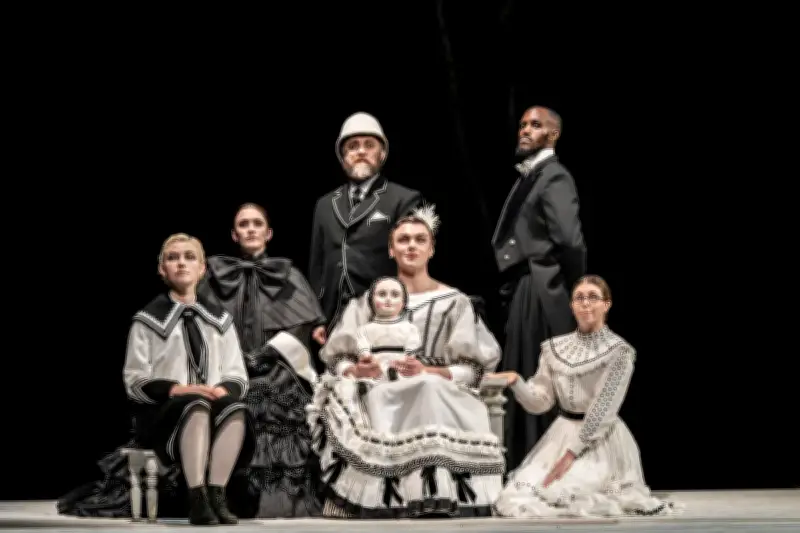
The National Theatre's revival of Caryl Churchill's 1979 comedy Cloud 9, directed by Dominic Cooke, delivers fluent performances but the play now resonates more for its historical significance than its contemporary appeal. The humour feels broad and coarse, and some aspects have not aged well.
A landmark work of its time
Churchill, aged 88, has a claim to be Britain's greatest living playwright and is certainly the most consistently bold and adventurous. New short works are due at the Almeida next year, and the National here revives the first of her works to receive serious attention.
Evolved through a series of workshops, Cloud 9 was revolutionary in structure, subject matter and staging for its time. The first half is a farce about a colonial Victorian family in Africa where transgressive sexual urges repeatedly erupt through the veneer of propriety. The second sees some of the same characters, aged by just 25 years but projected to a London park in the late 1970s, exploring new frontiers in sexuality, identity and modes of living.
Casting and themes under scrutiny
The then-bold cross-gender casting and symbolism no longer look so surprising or clever. The original portrayal of a black servant by a white actor is impossible to countenance today, so the paired roles of the African "boy" Joshua and the promiscuous cruiser Gerry are played by black actor Eloka Ivo.
One of the key jokes in the first half is that Clive (Sam Troughton), an administrator ruthlessly oppressing the local population, idolises his explorer friend Harry Bagley (Tom Mothersdale), without realising Harry has already seduced his wife Betty, his son Edward and Joshua too. That the pederasty and the sexual exploitation of a native underclass is still played for laughs feels distinctly uncomfortable, particularly with celebrity predators currently all over the headlines.
Strong performances across the cast
Ellen Robertson, who plays Edward in the first half, is very funny as the older Betty in the second, divorcing from Clive and exploring the new wonders of working life and self-love. Rebecca Humphries, who is both Ellen and a dreadnought widow in the first half, excels in the second as lesbian Lin.
The performances are spot on. It's good to re-evaluate a landmark work by a giant of a writer, even if it now feels like a historical artefact rather than a work that speaks to today.
The production runs until 13 January at the National Theatre.