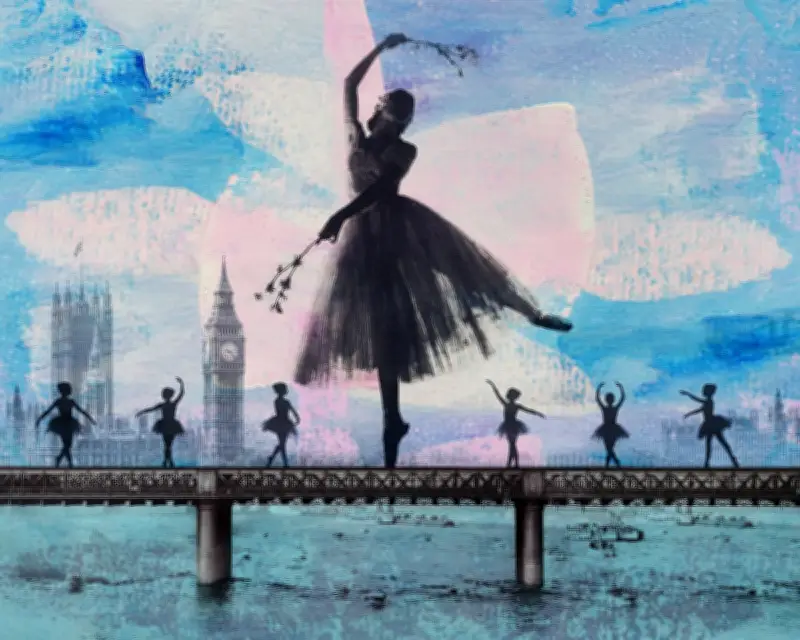
When I was a young girl living in suburban London in the early 1960s, I was looking for ways to find excitement. The first time my mother took me to see the London Festival Ballet (now the English National Ballet), I felt a sense of rapture as I realised that the body could say things words could not.
Discovering a New Language Through Ballet
I was yearning for more, and that night at the Royal Festival Hall, I saw glimmers of the world out there waiting for me. Watching the dancers, I felt something shift in me. It was like discovering a new language, one that I immediately wanted to speak. At least twice a year after that, we travelled by train from Wimbledon to the South Bank. I began to see the iron girders of Hungerford Bridge as the passageway from one world to another. From our usual seats in the balcony, I watched dancers perform The Nutcracker, Swan Lake, Les Sylphides, Giselle. I loved the anticipation of it; the audience's fidgety excitement and the arrival of the orchestra as they settled into place. Then how out of the darkness came illumination, colour, sound and movement.
Dancing Alone: A Liberating Expression
Often, when my parents were out, I would play the LP bought for our new record player: An Album of Ballet Melodies by Mantovani and His Orchestra. Hearing the opening bars of Tchaikovsky's Waltz of the Flowers from The Nutcracker, I found my body responding to the rise and fall of the music, the call and response of melodies. I remember being surprised: it felt so natural, as though I were channelling something that had been inside me, waiting to come out. It was liberating. I was shy, but dancing alone in the living room I felt completely myself.
As a girl, dancing became a way of expressing my inner world, the restlessness and longing that came with growing up. I had attended ballet and tap classes when I was very young, but now I was enjoying it with a new sense of autonomy. In my teens, it was how I felt free, dancing to jazz and rock music in clubs. Later, as a mother, it was something joyful I shared at home with my children. In my 50s, I set up a dance group for women over 50, where we could express ourselves through movement without feeling self-conscious.
Dance in My Eighties: A Lifelong Companion
Now, in my eighth decade, dance is how I return to myself: me as I have always been, unchanged throughout the years. Every couple of weeks, I put on music and dance alone in my living room, just as I did then. It is one of my greatest pleasures, the best thing I know for my mind and body. Recently, when I started thinking about ballet's lifelong effect on my life, I took out that old LP for the first time in years. The cover – pointed feet in pink ballet shoes – is torn now, but after I set the needle down and heard the first few notes, I responded with the same gestures and movements as I always had. It was as if I was remembering a language.
Though I no longer leap or jump, when I listen and move to that music, I feel something rise up – like sap in spring, an irrepressible urge towards life. I feel that young girl's energy, twirling, stretching and jumping in my parents' living room, discovering what it means to feel alive in my own body.