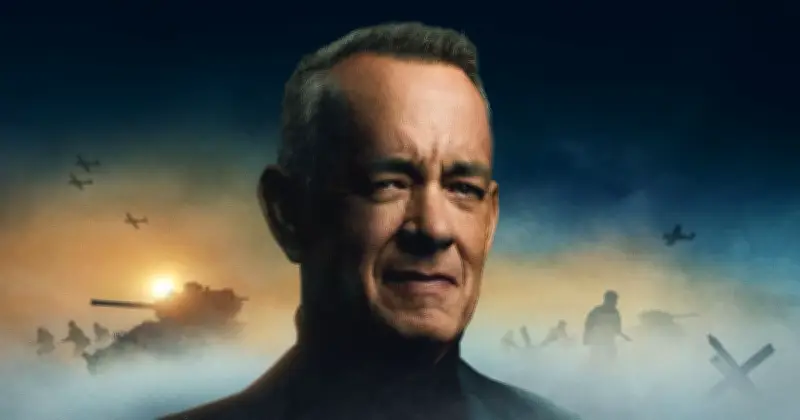
Tom Hanks' 20-episode World War II docuseries launched in May, offering the most epic television exploration of the conflict since Laurence Olivier narrated The World at War in the early 1970s. Producers have said it was consciously developed as a modern, updated equivalent to the 1973 classic. Good intention though it is, updated does not always mean better.
The original series, all 26 episodes and 22.5 hours long, still holds up as a fantastic and informative watch. It may be more than 50 years old, and its aspect ratio can look off-kilter on modern televisions, while the film grain is more noticeable than today's viewers are used to. But it remains mesmerising.
A landmark in British television
The World at War achieved widespread acclaim and is regarded as a landmark in British television history. It continues to receive universally glowing reviews as new viewers discover it. A key reason is the timing: the series was made less than 30 years after the war ended, and most adults involved still carried emotional scars. It was living memory.

That allowed the production to secure interviews with major figures from the Allied and Axis campaigns, including civilians, enlisted men, officers and politicians. Their testimonies, often delivered with visible emotion, carry more power than anything written in history books.
A chilling first-person account
One of the most striking interviews is with Karl Wolff, Heinrich Himmler's adjutant, who glibly admitted to witnessing a mass execution in Himmler's presence. The interview remains a subject of study for historians and still sends a shiver down the spine.
Hanks' series takes a different approach
The new series follows a similar trajectory, covering the war from the rise of fascism in Europe in 1939 to the fall of Berlin, and concluding in the Pacific Theatre with the atomic bombings of Hiroshima and the subsequent peace. It uses archive footage and contemporary talking heads, and runs for 20 hour-long episodes.
Yet it lacks what made the original unique. For obvious reasons, there are no actual eyewitnesses. Instead, viewers get a plethora of experts offering opinions, which remains rather academic. Furthermore, Hanks inserts himself into the episodes and puts his name on the show, whereas Olivier was happy to lend just his voice and not impose on the story.
Try as it might, Hanks' show cannot deliver the living first-person testimony that The World at War captured. It will always be a rather broad retelling of a story we have heard before, rather than an enduring must-watch classic like its 1973 predecessor.