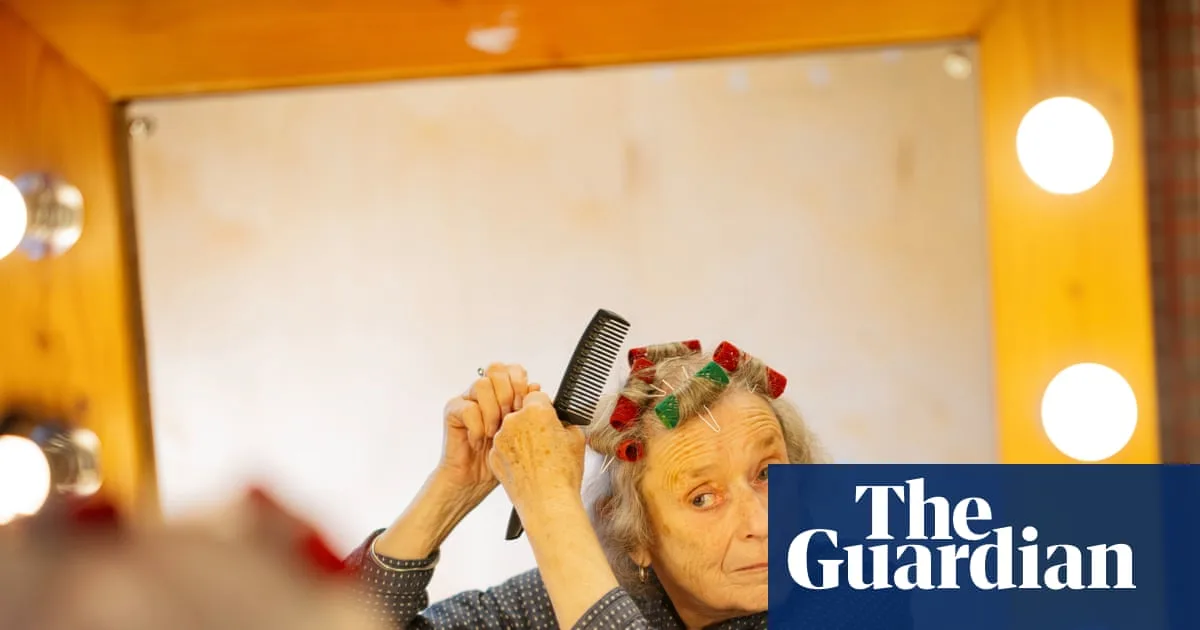
Linda Bassett, the acclaimed actor best known for playing Nurse Phyllis in the BBC's Call the Midwife, is currently starring in Alexander Zeldin's new play Care at the Young Vic in London. In an interview, she reflects on her career, her love for challenging roles, and the personal insights she brings to her portrayal of a woman with dementia.
Every Part Is an Education
Bassett describes acting as a continuous learning process. 'Every part is an education,' she says. 'That's the glory of being an actor. You learn about human feelings and frailty and rottenness. The writer puts their soul on the page, and you inhabit that. I've always felt I was a writer's actor.'
Her understated style has enhanced works by Timberlake Wertenbaker, Wallace Shawn, Ayub Khan Din, and notably Caryl Churchill, for whom she is a peerless interpreter. She recalls her first audition for Churchill's Fen in 1983 as a pivotal moment that launched her career.
Working with Caryl Churchill
Bassett praises Churchill's collaborative approach in rehearsals, describing her as 'wonderful, completely non-invasive, but very generous.' Churchill's plays, known for minimal stage directions, offer actors a multiverse of choices. 'It's so distilled, no excess baggage,' Bassett notes. 'But there's only one way to play them, and you've just got to find the way.'
Her performance in Churchill's apocalyptic Escaped Alone, where she repeats the phrase 'terrible rage' 25 times, became iconic. 'It was the only thing to say at that point. The words fed the feeling, and it was the audience who felt it, not me, which is ideal,' she explains.
Early Influences and Unconventional Path
Theatre wasn't an obvious path for Bassett, but a childhood Easter play sparked her passion. At four years old, she stepped in for an older girl and 'went down a storm because I was only little. I was in bliss.' As a teenager, she ushed at the Old Vic during Laurence Olivier's tenure, witnessing landmark productions like Peter Brook's Oedipus. 'Ronald Pickup's messenger speech – people fainted every night. You didn't see anything, his voice was enough. That's the power of theatre, isn't it?' she recalls.
After a year studying English at Leeds University, she left to pursue devised theatre in Leeds and Coventry, which she says 'made me a bit gobby.' She admits that while working on new plays, she sometimes makes suggestions that aren't always welcome.
A Career Free of Crap
Bassett's CV is notably free of disappointing roles, a result of turning down many offers. 'I don't think I make conventional choices,' she says. Despite notable film roles in East Is East and Calendar Girls, she is widely recognized for her decade-long stint on Call the Midwife. 'Complete strangers come up and say, I love you. My wife loves you, my mother loves you. It's extraordinary,' she shares. Though she considered leaving the show multiple times, she found ongoing depth in her character, who she describes as more matter-of-fact and practical than herself.
Care: A Shakespearean Exploration of Dementia
In Care, Bassett plays Joan, a woman showing signs of dementia after helping her family. 'She's convinced, as many people are, that she's just in for respite. She never loses the idea that she's going home,' Bassett explains. Zeldin's play, she insists, is 'on the Shakespearean scale, because she's raging against the world. If you're sat in a chair, you're living with whatever's in your head, and that can be epic.'
Bassett drew on personal experience after a heart attack left her recuperating in a care home. 'It gave me an insight into what it's like when you become helpless,' she says. Rehearsing in London also makes her 'familiar with what it's like to be uprooted. It's really hard leaving my home.'
Working with Zeldin, who directs his own play, requires 'absolute truthfulness, which suits me down to the ground,' she says. 'Every new part you're starting again. It's a bit scary, but I think we'll be all right.'
Care runs at the Young Vic until 11 July.