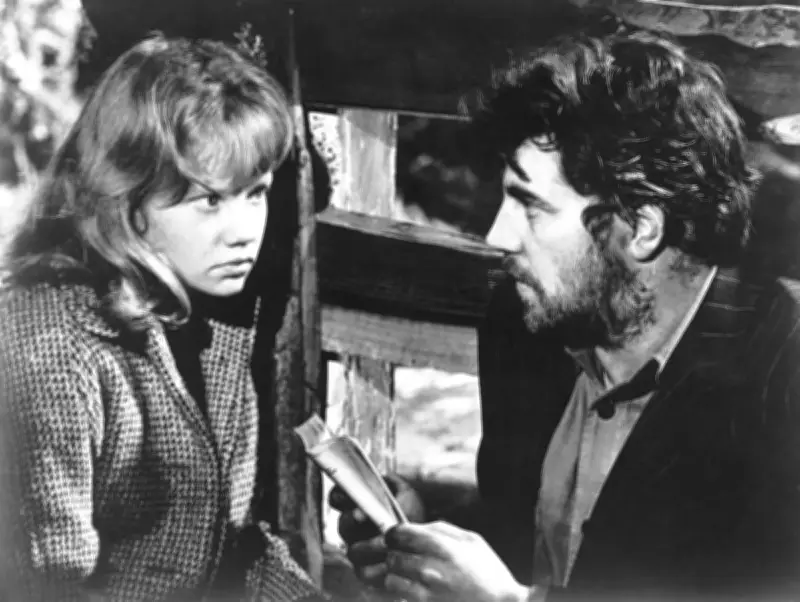
Hayley Mills and Diane Poole have shared their memories of making the 1961 film Whistle Down the Wind, from the muddy Lancashire farm to the last-minute directorial debut of Bryan Forbes.
A story born on the farm
The film was based on a novel by Mills's mother, Mary Hayley Bell, about three children who find a man in their barn and, believing he is Jesus, hide him from adults. The children were loosely based on Mills and her siblings, Juliet and Jonathan.
Richard Attenborough championed the story and persuaded Mills's parents to let the production company he had set up with Bryan Forbes make it into a film. When the original director, Guy Green, withdrew, Forbes took over at the last moment, despite never having directed before. Asked if he could do it, he reportedly said: "I've no idea. We'll soon find out!"

Writers Keith Waterhouse and Willis Hall moved the story to a remote part of Lancashire, and the village of Downham, at the foot of Pendle Hill, was chosen as the location. Nearly all the child actors were local, apart from Roy Holder and Mills, who was 14 and taller than most of the other children.
Mud, duckboards and dripping butties
Mills had just made two films for Disney in America. Filming on a Lancashire farm in winter was very different, with mud everywhere and duckboards to walk on carefully. She said she always loved filming in England, and the cast would eat dripping, jam butties and fried eggs in a bun.
Forbes was skilled at communicating with the children without making them parrot him. In the scene where a boy slaps Mills's character, the hand in the closeup was actually Forbes's, and he really hit her. Mills said she did not cry until the cameras stopped rolling, because her character was not meant to show she had been affected.
Arthur Ibbetson's black and white cinematography captured the stark, leafless trees and mist blowing across the hills, giving the film a noir quality that Mills loved, especially the night shoots. Malcolm Arnold's music, including his arrangement of We Three Kings, complemented the children's figures leaping like hares on the hill. Mills confirmed that Attenborough himself whistles on the main theme.
Alan Barnes steals the show
Mills said Alan Barnes, who played her little brother Charles, stole the show. On the first morning, Barnes pointed at Alan Bates's director's chair and said: "Ey up, they've spelled me name wrong." By the next day, the props department had made a tiny chair for him. His line "It isn't Jesus. It's just a fella" became the most quoted from the film.
Diane Poole, who played Nan Bostock, was 10 when Forbes and Attenborough visited her school. She did not know who they were and was told simply that two men would watch the children play. When she told her mother, her mother dismissed it, but Attenborough turned up at the front door the next day, a Wednesday, when the front step was not due to be scrubbed until Friday.
A screen test and a revelation
Poole did a screen test at the farm, where she had to look round a stone wall and say "Is he coming?" without looking at the camera. Having played Snow White in a school play, she found it easy. She described her character as the peacekeeper between the two other children, and said Forbes kept some of the children's mistakes in the film, such as spelling "Bible" wrong and mispronouncing "Christmas".
Poole said she did not know who Hayley Mills was at the time, as children did not go to the cinema then, but Mills was like a real big sister. It was only when they went to Pinewood to film scenes inside the farmhouse that they saw the footage, which was a revelation. The real back door from the farmhouse was borrowed for the set, and Poole's father, who ran a haulage firm, had one of his drivers deliver it.
Alan Bates was pleasant and softly spoken, so when his character suddenly shouts at the "disciples", the children were taken aback. At the London premiere, Bates swung Poole around, and she did not recognise him until he spoke, because he had shaved his beard. She was sent to Harrods to choose a dress for the premiere but insisted on wearing the one her grandmother had bought her.

Poole said the scene she is most proud of is when Kathy first tells Nan about Jesus being in the barn, while they are in bed together. It was the last thing she did at Pinewood, and by then she had got used to it all. Looking at it now, she thinks: "Yeah, you did all right there, kid."
A new 35mm print of Whistle Down the Wind screens at the BFI Southbank in London on 4 September, with a Q&A with Hayley Mills, Diane Poole and Alan Barnes. A BFI Film Classic book, Whistle Down the Wind, is published on 3 September.