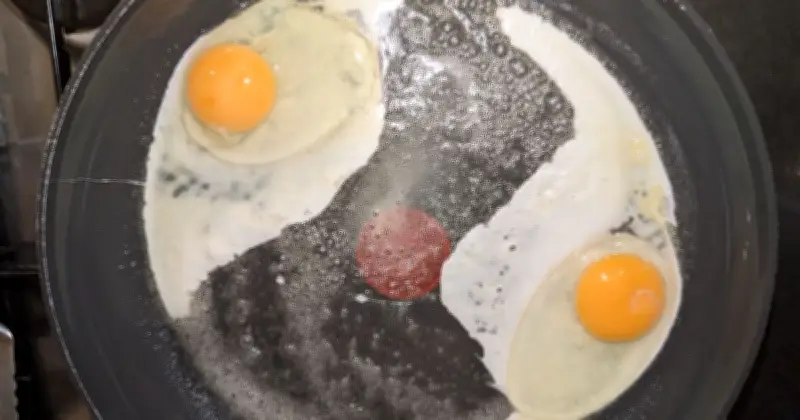
A fried egg taste test found that cooking with butter produces the crispiest edges and the silkiest yolk, beating both oil and water methods. The water method produced eggs that were slimy, rubbery and bland, while oil-cooked eggs came in second place.
Fried eggs are a breakfast staple, whether served in a fry-up, on toast or with bacon. With just a little heat and some cooking fat or liquid, cooks can achieve crispy edges, tender whites and a silky yolk. But the cooking method can make a big difference to the final texture. To find out which method makes the best fried eggs, three eggs were cooked using oil, butter and water.
Water method produces bland results
For the first method, an egg was fried in just water, without any added fat or oil. Half a cup of water was poured into a non-stick pan and left to simmer on a medium heat. Once the water started to boil and bubble, the egg was cracked into the pan. After about a minute, a pan lid was placed on top to generate steam and speed up cooking. The egg cooked for another minute before the lid was removed.

The water had fully evaporated, but the egg whites were thick and a little bit crispy, and the yolk was jammy. Overall, this egg tasted the worst; it was slimy, rubbery and bland, and was immediately binned after tasting.
Oil method cooks quickly but not crisply
Unexpectedly, cooking eggs in oil was the second-best method, but not the winner. A non-stick pan coated with extra-virgin olive oil was heated until sizzling, then the egg was cracked on top. These eggs cooked pretty quickly, needing less than two minutes. The worst part about this method was the oil popping and hitting the skin.
Visually, these eggs looked nice, but they could have been a little crisper as they looked a little pale. However, if cooked for any longer, the yolk inside would turn solid instead of jammy and silky. These eggs tasted nice, but could have been better and therefore ranked second place.
Butter eggs are the clear winner
Lastly, the butter eggs did not look the best, but they were absolutely perfect. Two teaspoons of butter were placed in the same pan on a medium heat. Once the butter melted completely and sizzled, the egg was cracked into the pan. This took about two minutes to cook and turned out so tasty.
The whites were perfectly crispy and buttery, while the yolk was silky, velvety and jammy. The fewer words spoken and the more bites taken, the more this was the winner.