The BBC's long wave radio service, which carried the Shipping Forecast, Test Match Special, and served as a Cold War survival check for submarine commanders, broadcast for the final time on June 30, 2025. The transmitters at Droitwich, Westerglen, and Burghead fell silent after 92 years, ending a technology that once united the nation.
Final Broadcasts Mark End of an Era
Listeners tuned in for the last time this week to hear the familiar crackle of long wave (LW) frequency. The final Shipping Forecast aired in the early hours of June 27, and the service closed at 1am on June 30. The Droitwich transmitter, which had been broadcasting since 1934, fell silent just after midday.
Dr Graham Majin, a media specialist at Bournemouth University and former BBC broadcaster, said: "It marks the fading of a philosophy that sought to unite a nation through shared listening. It's not just nostalgia for some old museum pieces. It represents something that's passed."

History of Long Wave Radio
Developed by Guglielmo Marconi around 1900, long wave signals cling to the earth and cover vast distances. The BBC, founded in 1922, first experimented with the technology in 1925, the same year as the first Shipping Forecast. A dedicated high-power site opened at Droitwich in 1934, followed by Burghead in 1936.
Long wave initially carried the National Programme, which became the Home Service. Its first broadcast on September 1, 1939, coincided with Hitler's invasion of Poland. During World War II, Winston Churchill's speeches on the Home Service drew over 20 million listeners.
Dr Majin recalled: "When I was a kid, my brother and I would listen to the old Radio 2 on 1500m long wave. David Hamilton, Terry Wogan, Jimmy Young. It does have a nostalgic childhood thing to it."
Uniting the Nation
When the BBC built the Droitwich transmitter, it was "incredible new technology," according to Dr Majin. "The ambition was one service that would cover the whole country, so everyone could hear the same thing at the same time." The first announcement declared: "This is the National Programme from London, radiated by the new long wave transmitter at Droitwich."
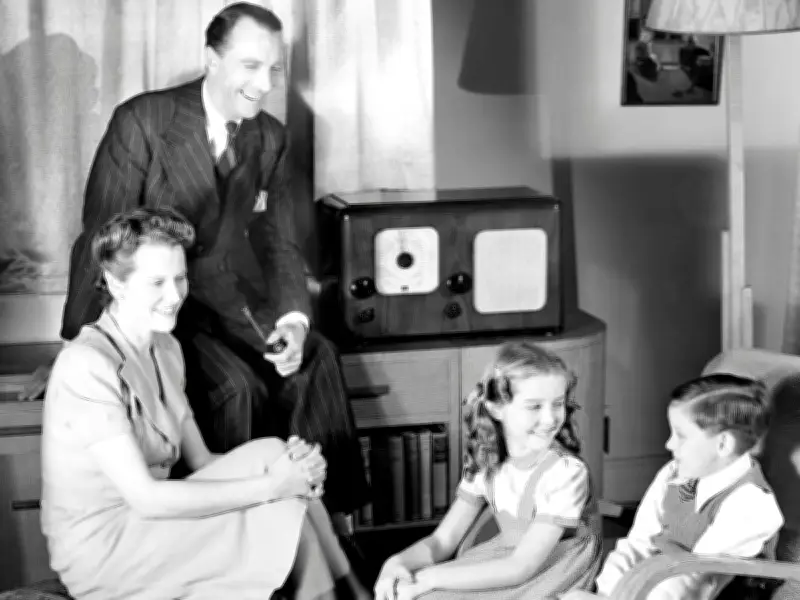
Families gathered around the wireless, listening together. Dr Majin noted that it forced tolerance: "It taught tolerance for views which are not familiar, tolerance for strange voices. And it was built on the idea that Reith had about 'nation shall speak peace unto nation.'"
Lifeline for Travelers and Submariners
Long wave's reach made it essential for long-distance lorry drivers and holidaymakers in Europe, who could pick up Radio 4 across France, Spain, and Italy. Leisure sailors relied on the Shipping Forecast to judge weather windows home. Even nuclear submarine commanders reportedly checked Radio 4 on LW to confirm Britain had survived a nuclear strike, though Dr Majin called this "probably a bit of an urban myth."
Campaign to Save Long Wave Fails
Radio enthusiasts and Age UK campaigned to keep long wave, calling it "a vital piece of national infrastructure." Caroline Abrahams, Age UK's charity director, said older listeners "will no doubt mourn the closure." However, the BBC proceeded on cost grounds, stating the technology was "coming to the end of its life" and required heavy investment for a dwindling audience.
Dr Majin explained: "You can't stop technology... If only a handful of people are listening, it makes no sense to keep it going. The valves are hardly being made anymore and they are very expensive."
Digital Future and Nostalgia
The BBC assured listeners that no programmes would be lost, as Radio 4 remains available on FM (reaching 99.5% of homes), DAB, BBC Sounds, smart speakers, and TV platforms. Dr Majin reflected: "We have unlimited choice, but there's a downside... we're all just in our bubbles. Algorithms serve us more of what we want, breeding tribalism."
Efforts may yet preserve the Droitwich masts as heritage-listed structures. Dr Majin compared the loss to vinyl records: "After vinyl we were told that was obsolete... but vinyl has made a huge resurgence. Media archaeology is a thing."