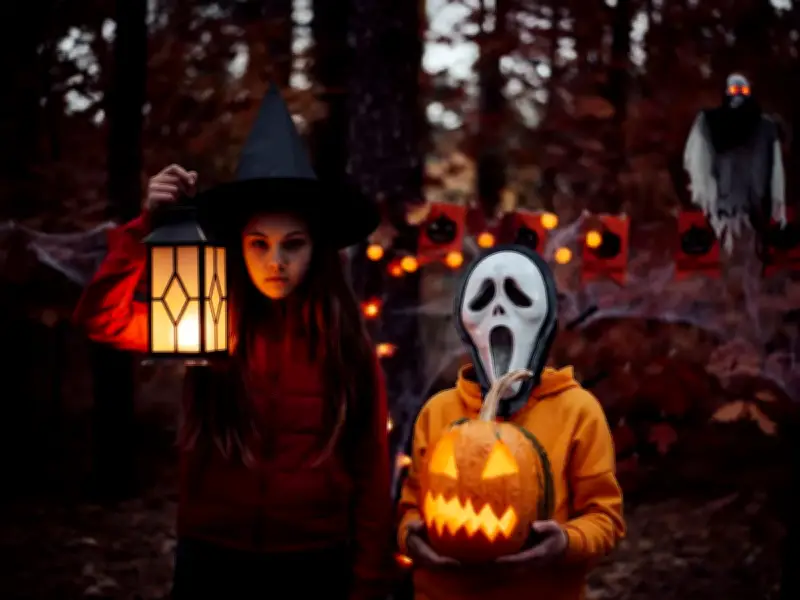
Several ancient Halloween traditions that originated in Scotland are slowly disappearing as modern celebrations take over, according to a new report.
The roots of Halloween lie in the ancient Celtic festival of Samhain, which dates back more than 2,000 years and translates to "summer's end." Traditionally held on October 31, the last day of the harvest, Samhain marked the transition from summer to winter. The Celts believed that on this day the gap between the human world and the spirit world was blurred, allowing the spirits of the dead to return.
To celebrate, the Celts would build huge bonfires, wear costumes, and tell stories. Halloween has always held a special place in Scotland due to a sense of folklore and superstition that sets it apart from other places. Edinburgh is widely recognised as one of the most haunted cities in Europe, with 'ghost-infested' locations including the underground streets of Mary King's Close.
Guising: The Origin of Trick-or-Treating
The custom of youngsters wearing scary outfits and visiting homes for sugary treats has its origins in Scotland. Scottish children would go "guising" around their neighbourhoods while dressed in eerie costumes, believing that disguising themselves as wicked spirits would keep them undetected by other malicious ghosts.
Their sweets had to be earned, however. In return for performing tricks or singing songs, guisers received offerings to ward off evil forces. Today, this practice has transformed into trick-or-treating, where children are given treats simply for turning up after dark.
Dooking for Apples and Neep Lanterns
Dooking for apples, also known as bobbing for apples, was once a firm favourite at Halloween gatherings. Players must retrieve an apple from a bowl of water using nothing but their teeth. The game started to decline during the pandemic, when it was deemed unhygienic due to Covid-19 precautions.
In times past, enormous bonfires were ignited to drive away wicked spirits. Scots would carve threatening faces into neeps, or turnips, transforming them into lanterns designed to frighten off ghosts. Thanks to American influence, this tradition has since developed into pumpkin carving, which is now just as common as turnips once were. Pumpkins are available in nearly every supermarket in the run-up to Halloween, though many people now prefer to select theirs from a pumpkin patch.