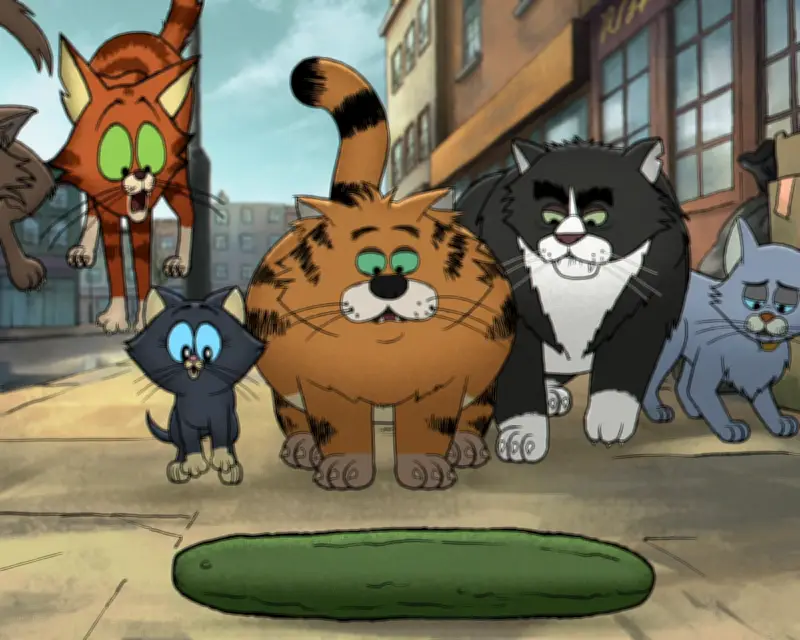
According to multiverse theory, there are parallel realities where the announcement of a new Ricky Gervais project is greeted with anticipation rather than dread. This is not one of them. In Alley Cats (Netflix, from Friday 7 August), a gang of stray cats spends its days on a sofa in a derelict house, watching television. Gervais voices Gus, a fat ginger tom who bellows ignorant and misanthropic opinions over everyone else. Tom Basden voices Ponce, a pampered, middle-class pedigree who talks sense but is undermined by his lack of testicles. David Earl voices Puke, a mangy pervert with a penchant for inter-species sex, who announces at one point: "I gave a hedgehog anal once."
The show is determined to shock, but the reviewer—a former fan—didn't laugh once. Jokes about fat people, blind cats, intellectual disabilities and sexual acts with animals recur in every episode. Gus swears in every line, with a habitual fondness for the profanity that gives American audiences conniptions. The series is lazy and pleased with itself; the more determined it was to shock, the more the reviewer checked his watch. Episodes run 15 minutes, but each feels much longer.
Jokes that have aged like milk
The weight-bearing comic idea—that cats are arseholes—feels at least three decades old. Animal sex, bum stuff and a residual sense that gay is funny are jokes the reviewer remembers from school; they didn't amuse him then, and they have aged like milk. Predictability kills humour, and Alley Cats trades in predictability. Each episode's lad banter eventually gives way to sentiment, delivered with the finesse of a chop shop, after which Cat Stevens plays.

Gervais's diehard defenders might say "woke happened" and point to a shifting Overton window on jokes about dwarves, disabled people and trans people. They lament that you can't say anything any more, even as they defend a wealthy, highly platformed man who proves the opposite. The reviewer concedes they're not wrong—politics plays a part. But the picture is more complicated. While writing, he stepped outside to ask a queer friend what she made of Gervais. "He's defunct. We don't need him any more," she said, as if describing DVDs by post. His work didn't make her laugh now, she added, but this was a relief: if he were both problematic and funny, she'd have to suffer a contradiction within herself. He'd let her off the hook; but, she noted, a comedian's politics and craft are still different things.
The reviewer likes contradictions and dislikes safe comedy. He agrees much culture is risk-averse and boring, and claims nothing makes him laugh harder than a well-made transgressive joke. But "good" is as important as "transgressive", and Alley Cats leans on one at the expense of the other, which is why it limps.
A career that hit a dead end
Despite this misfire, the reviewer still places Gervais high in the canon of British comedy—"only a rung below Tony Hancock, Monty Python and Richard Curtis" in importance. The Office and Extras were, respectively, the most influential and funniest sitcoms of the 00s, and his podcast helped define the medium. Every beer-slopping geezer the reviewer knows has borrowed Gervais's comic rhythms, biting their lower lip with guitar-hero sensuality and dominating conversations with glib comebacks that expose a squirrelly self-loathing. Gervais has done sophisticated character work and written love and friendship stories that once made the reviewer's heart bigger. Now, he writes, it is contracting again, "like a universe imploding on itself. We're a long way from Slough, and this alley feels like a dead end."