Royal Sibling Rivalry: Can William Truly Protect Charlotte and Louis from 'Spare' Status?
Royal stalwarts are adamant: the Waleses' children will be different. Their parents, Prince William and Catherine, Princess of Wales, are rightly keen to ensure George, Charlotte, and Louis do not succumb to the pitfalls of sibling rivalry and the stigmatised "spare" status that has scarred so many of the Windsors' second sons and daughters. William is often cited as the exemplar father, a man determined that his second and third-born children are well-prepared and well-financed for independent lives. It is all very noble, and naturally, one hopes for the best, but as most parents know, children have a way of defying expectations.
The Historical Burden of Hereditary Systems
Royal biographer Tom Bower insists that the late Queen treated Prince Harry differently because she recognised his weaknesses. According to Bower, the fault lay with Harry's personality, not the hereditary system into which he was born. It could equally be argued that the Duke of Sussex's easy charm made him the perfect fit for kingship, no matter that he was destined to be the spare. Prince William, never as relaxed in front of the camera as his younger brother, and someone whose disdain for the press long preceded Harry's, was always destined for the big job. In accordance, the late Queen gave William special treatment, found time for instructive teas when he was at Eton College, and posed for several exclusive line-of-succession photographs with Charles, William, and first-born George. She played to William's hereditary strengths.
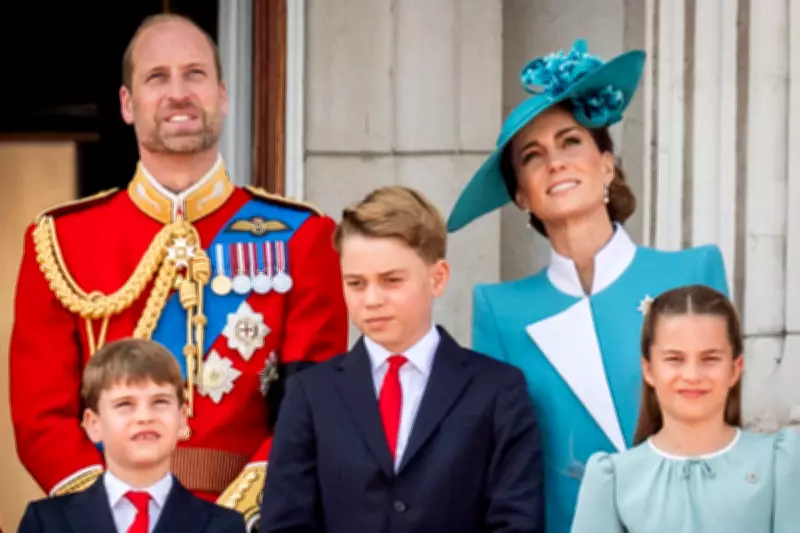
Parents can do and say what they like, but children are individuals who occupy their own juvenile jungle where they thrash out a pecking order that sets them up for later life. What makes the royals exceptional is not their illustrious gene pool, but rather the predestined order of things to come, irrespective of their children's suitability. I often think back to the time I fleetingly caught a glimpse of the Wales brood. The sun beamed down in relentless approval. It was a real Disney Princess moment. The then Duchess of Cambridge and her delectable trio of children had just shot by in a horse-drawn carriage; it was Trooping the Colour in the late Queen's Platinum Jubilee year. The crowd roared as the Landau swept through the arches of Horse Guards Parade onto Whitehall, arms reached out to the Cambridge siblings, tantalisingly almost in touching distance.

The Personalities of the Younger Royals
The euphoria was palpable, the smiles abundant – Charlotte perfect in forget-me-not blue, Louis his usual cheeky-chappie self, and then, for just one nanosecond, eye contact with Prince George. He looked thoroughly non-plussed, almost scared. 'Who were these people?' said his puckered brow. 'What are they doing here?' His bemused nine-year-old face will stay with me for life. Subsequently, those close to the royal family wonder if Charlotte's easy and sunny disposition might not be better suited to the monarchy's public mantle. Most have already clocked Louis's wide-eyed charisma. But as we know all too well, hereditary monarchy does not work like that. The first-born child of the future sovereign is destined for the throne, and no matter how much love is thrown at younger siblings, that rigid order is the lightning rod which will define the rest of their lives.
Veteran royal author Tina Brown insists that the Prince of Wales is keen that Charlotte and Louis do not fall victim to the built-in risk of primogenitor's cruelty. This curious statement begs the question – if the risk of cruelty is built-in, how easily can it be overridden? Similarly, royal commentator Robert Hardman has disclosed that both Kate and William want to ensure their two younger children don't feel less loved or relevant despite their inferior positions in the Windsor pecking order. Neither is destined for the throne, so by royal standards, they are less relevant. And lest we forget, Diana publicly and privately festooned both her boys with love, but it did not change the disastrous outcome – captured best of all in the title of embittered Harry's biography.

Lessons from Past Royal Failures
History suggests too much compensatory love can also be part of the problem. Disgraced second son Andrew has been held up as the late Queen's favourite. Born in 1960, when Elizabeth had firmly established herself as Britain's postwar monarch and was feeling more secure in both her marriage and as a mother, baby Andrew was the recipient of maternal attention otherwise lacking in Charles and Anne's early lives. The Queen relished nanny Mabel's night out, when she could bathe and bed her two younger sons, and it was Elizabeth, not a governess, who taught the little brothers their alphabet. That Andrew enjoyed boyish good looks and subsequently joined the Royal Navy helped his allure in front of mummy. But no amount of maternal adoration could affect the line of succession. Rather, the Queen overcompensated in other ways – she was Andrew's primary facilitator and his most reliable source of income. Bountiful gestures that did the entitled ex-prince no favours.
William, who, it is said, intends to model his kingship on the late Queen's reign, might look to the Andrew catastrophe as a cautionary tale. When the Prince of Wales talks of his second and third children being well-financed for independent lives, what exactly does he mean? How rich does a royal have to be to feel independent? By most standards, Andrew, with his ski lodge and giant Royal Lodge, was better off than most, but that did not stop an overweening urge to always have more. No matter that he was a prince and a once-upon-a-time dashing war veteran, Andrew was trapped in a doom-loop of chasing the impossible – a distant big brother who would one day be King.
The Broader Context of Modern Parenting
Most parents are victims of objective bias. We believe we can do it better than all the others. Why else take the leap of faith? Presumably, the late Queen's larger family model and more hands-off approach was partly informed by her own claustrophobic upbringing as part of The Firm – an intense quartet consisting of a nervous King, a reluctant Queen, and two identikit sisters. But despite their matching bobs and unbearable cotton frocks, Elizabeth and Margaret were not identical. Quite the reverse – Elizabeth, the sensible older sister, benefited from constitutional lessons at Eton College, a close working relationship with her father, and a clear goal. The Princess had no time for unnecessary frivolity; she was destined to be Queen. Not so Margaret, a pretty little thing overindulged by her father and mother and overpraised by society for her aesthetic attributes – neither of which helped ameliorate the pointlessness of her later existence. Small wonder she turned to drink.
If it had not been quite so messy, Harry and Meghan's recent departure to America and attempt to establish their own brand might have offered a modern alternative to Spare purgatory. But with the Sussex project very much a work-in-progress, and extensive collateral damage prohibiting a reunion in the foreseeable future, few can claim the House of Montecito has the answers. In the meantime, William and Kate are right to be concerned. Today, most parents have an uncomfortable sense of foreboding about their children's future in an unpredictable, overheating, AI-riddled world led by questionable strongmen. But while most of us don't enjoy the Royal family's extraordinary levels of wealth, at least we can reassure ourselves that any mistakes are ours alone and not thanks to an arbitrary system of hereditary privilege that even the House of Lords has banished.
Well may young George look bemused: going forward, he not only has an increasingly restive demos to contend with, but also the built-in cruelty of an anachronistic system designed to pit his siblings against him from the get-go. Tessa Dunlop is the author of 'Elizabeth and Philip, the Story of Young Love, Marriage and Monarchy'.