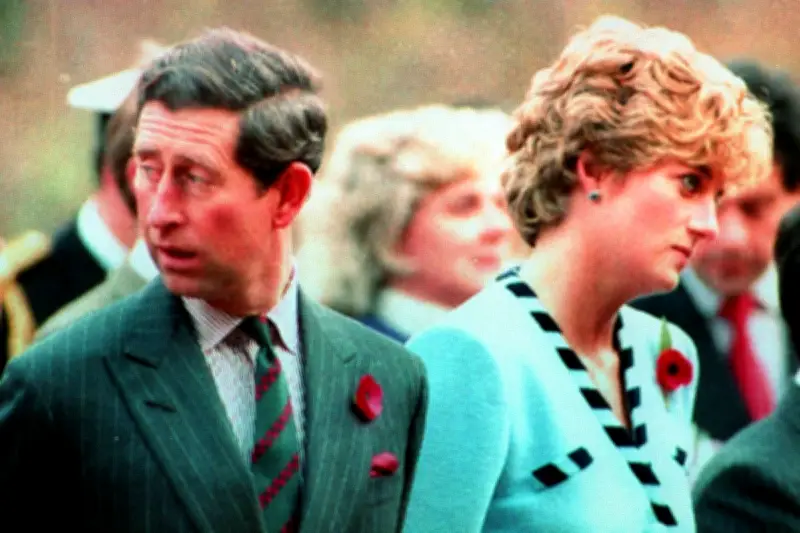
Allegations about King Charles' behaviour after Princess Diana's death have continued to emerge following the publication of her brother's new memoir. Earl Spencer has alleged that the King sounded "giddily elated… like a lottery winner" during a phone call after his ex-wife's death, and another claim suggests that he said: "We'll forget her soon enough."
The bombshell book, titled Swan Song: Diana, My Sister, was released on Tuesday, and is also being serialised in the Daily Mail.
Palace response and Earl's reaction
In a rare public statement, a palace spokesman said on Wednesday: "While we do not comment on books as a matter of principle, His Majesty is mindful that the pain of fraternal grief can cloud reason, affect judgment and colour memory in ways others do not recognise, even many years after such a loss." The Earl has hit back at the statement, accusing the King of gaslighting him.
He said: "It is not every day you wake up to find you've been gaslit by the King. It was astonishingly provocative and below the belt because it was essentially trying to say I'd lied without the King being able to deny what I'd said."
Key allegations from the memoir
Earl Spencer has claimed that the late Queen's reaction to news of Diana's crash was one of irritation rather than concern, before the gravity of the situation emerged. In his memoir, he writes: "When the Queen had heard the first news of Diana being in a traffic accident, she had asked tetchily, 'What is she up to now?' This, before the seriousness of it all became clear."
In one of the most shocking allegations, the Earl said that Charles sounded "giddily elated" when they spoke just hours after Diana's death. The Earl alleges that he was flooded with calls when the news broke, with many callers barely able to articulate their condolences and offers of help. Charles' reaction, however, is alleged to have been somewhat different.
The Earl wrote: "He sounded giddily elated – like a lottery winner, I remember thinking at the time. He let me know he had informed William and Harry of their mother's death, first thing that morning, in their bedrooms at Balmoral. It all sounded strangely matter-of-fact, given the enormity of the disaster. Looking back now, I suspect the prince's first reaction must have been to think more of how this event might free him to marry the woman he loved, rather than appreciating the loss of one he did not."
The Earl claims that, the day before Charles and Diana's wedding, his sister had confided to a close friend that her husband-to-be had told her that "he was very happy to marry her, but he was not actually in love with her." He added that, just two months after becoming engaged, she had become so concerned about their relationship that she tried to break it off - but that her father said it was impossible to pull out of such an enormous commitment.
The Earl alleges that Diana told him that, on the day of her wedding, she had been "in the throes" of an eating disorder for five months. He claims that Diana "recoiled" from the photographs taken following her engagement, feeling that her 5ft 10in frame looked heavier than she wanted. He also claims that Prince Charles had squeezed her waist a few days after the engagement, saying, "Oh, a bit chubby here, aren't we?" Diana would later share with the Earl that her waist shrank from 29 to 22.5 inches between her engagement and her marriage, he says.
The Earl claims that Diana's issues were exacerbated when her care was handed over to Dr John Batten, a 58-year-old who had been the Queen's physician since 1974, rather than long-term family GP, Mike Bloomer, a close family friend.
Suicide contemplation and other claims
The Earl claims that Diana considered suicide on a number of occasions in the years before her death. He wrote: "It is a sad fact that, in her later years, Diana drove herself more than once to Beachy Head, the highest chalk sea cliff in England, while contemplating ending it all. Her love for her sons stopped her from going further."
Earl Spencer claims that Princess Diana had suspected King Charles of having a secret tryst with Camilla Parker-Bowles on the royal train, just months before their wedding. The Earl recalls Charles being accused of smuggling a blonde woman onto the train for a "rendezvous" in 1980, in what became known as the "Royal Train Scandal." The Sunday Mirror claimed it had been tipped off by a source that the Royal Train had pulled into sidings in Wiltshire for a secret assignation. But the Earl claims that Diana expressed being "shocked" by the article given that she was not the woman in question. He wrote: "As it was not Diana, then who was the blonde? After her marriage took the direction it did, Diana became convinced that she must have been Camilla Parker-Bowles - particularly as the railway siding was just 19 miles from Camilla's home."
The Earl recalled Diana telling him over lunch that she intended to divorce Charles, telling him "Carlos, my husband is in love with his valet" when he questioned the decision. He added: "She did not name the member of staff, and I never asked her who it was, or why she would believe such an improbable thing. It was not important: the end of her marriage, and of her dreams, was."
The Earl details the build-up to Diana's funeral, for which he was the chosen point of contact for the Spencer family when it came to arrangements. He mentions "very serious tensions" between the Queen and then-Prince Charles's teams ahead of the ceremony. This led to no one from the Royal Family talking to the Earl directly about the funeral arrangements - with such matters "farmed out" to a courtier instead. According to the Earl, these were caused by "the heir to the throne's growing frustrations at being a middle-aged man still waiting to reign."
In the memoir, Earl Spencer is full of praise for Lieutenant Colonel Malcolm Ross, who was in charge of all ceremonial and official events that the Queen was to attend. He says that Lt Col Ross always treated him with extreme courtesy - unlike others in the Palace. Speaking of Diana, he wrote: "There were others in the Palace, I already knew, who were relieved – indeed, pleased – that she had gone."
Earl Spencer also claims that Queen Elizabeth offered to restore Diana's royal title on the day of her funeral. According to his memoir, Diana was "dreadfully hurt" by the "petty and vindictive" removal of her HRH title when she divorced Charles. He said that just hours after his eulogy at Diana's funeral, the late Queen's private secretary Robert Fellowes made the posthumous offer, which he declined, calling it a "consolation prize." Despite saying the gesture was "well-meaning," he claims that he told Fellowes: "What's the point, Robert? Now? I mean - Diana's dead." The Earl later wondered if he was right to reject the award, feeling "the title should never have been removed during her life, in which case it would not have been necessary to offer it to her in death."
Earl Spencer spoke of his concern for Prince Harry in the memoir. He wrote: "My chief memory of that train journey is of being concerned at the lack of obvious care for Harry, as he decompressed from the ghastliness of the morning. He needed Diana's hugs, of course, and they would forever be denied him. But instead of calm and nurture, he was allowed to spin out of control. I have often looked back, reckoning that a more caring hand at such points as this would have helped him enormously in the future. Instead, he seemed so very alone in his despair and torment."
The Earl says he insisted to the then-Prince of Wales that Diana would not have wanted Prince William and Prince Harry, then aged 15 and 12, to have made the difficult public walk in her funeral procession. According to an excerpt, the Earl told one of Queen Elizabeth II's senior aides "that's not going to happen." Charles called minutes later and told him that 18 years earlier he had walked in the funeral procession of his great-uncle, Lord Mountbatten - to which the Earl pointed out that Charles had been 30 at the time of Lord Mountbatten's funeral in 1979.
The Earl claims: "Prince Charles continued his stream of anger, without me interrupting. Then he stopped. I assumed the pause signalled an effort to bring himself under control, but then he unleashed down the phone what I have always taken to be his pent-up contempt for Diana, and his horror that the world was so bowled over by her death. 'Rest assured', he hissed, 'we'll forget her soon enough!'" The Earl says he then hung up the phone.
For help and support on eating disorders contact Beat Eating Disorders on 0808 801 0677. When life is difficult, Samaritans are available day or night, 365 days a year. You can call them for free on 116 123 or visit samaritans.org.