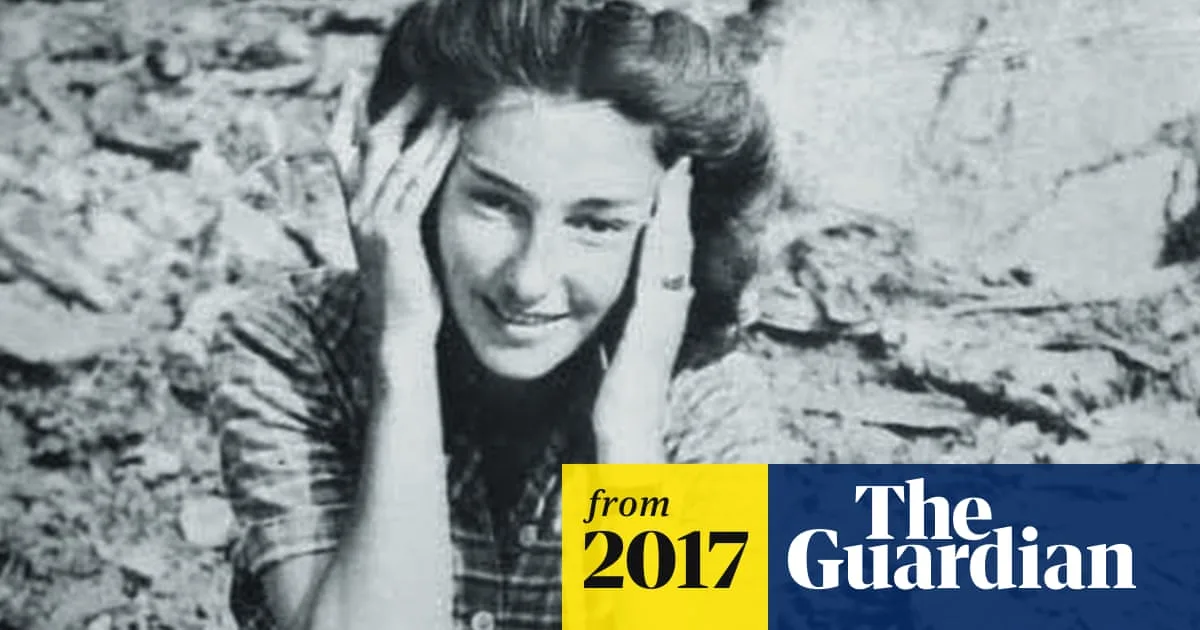
Krystyna Skarbek, the Polish countess who became Britain's first and longest-serving female special agent of the Second World War, is to be honoured with a bronze bust at the Polish Hearth Club in London. Her wartime career included skiing out of Nazi-occupied Poland with evidence of Operation Barbarossa, the planned German invasion of the Soviet Union, and later single-handedly securing the defection of a strategically important German garrison.
The bust was made by Ian Wolter, husband of Clare Mulley, author of Skarbek's biography The Spy Who Loved, and incorporates soil from Poland and from a park in London where Polish special forces were trained. Mulley said: 'She is literally cast in the soil of her native country and the country she adopted after war, countries she fought so hard and courageously for.'
Skarbek, who later used the name Christine Granville, was so incensed by the Nazi invasion of Poland that she demanded to be taken on by the Secret Service. Among her achievements was obtaining microfilm that provided the first evidence of Operation Barbarossa. She skied out of Poland with the material hidden in her leather gloves, and it reached Winston Churchill, who called her his 'favourite spy'.
In 1944 she was parachuted into France as part of a Special Operations Executive team preparing for liberation. She made the first contact between the French Resistance and the Italian Partisans and, acting alone, secured the defection of an entire German garrison in an Alpine pass. She later learned of the arrest of a senior SOE colleague and two French Resistance officers, who were due to be shot. She cycled 25 miles to the German camp and pressured the senior Gestapo officer into keeping them alive. According to Mulley, 'she basically terrified him with exaggerated claims of how soon the allies would be there'.
After the war Skarbek was treated poorly by the British authorities, who initially refused her citizenship even though she could not return to Soviet-controlled Poland. One file note quoted by Mulley stated 'she is no longer wanted'. She eventually shamed the authorities into granting her citizenship, but times were hard and she worked as a bathroom steward on passenger liners, wearing her medals, including an OBE, the George Medal and the French Croix de Guerre.
In 1952 she was murdered in London by Dennis Muldowney, a fellow steward who had grown obsessive after she rejected him. He stabbed her at the Shellbourne hotel. The idea for the bust came from Mulley, and it will stand in the Polish Hearth Club, where Skarbek used to dance and tell her stories after the war.