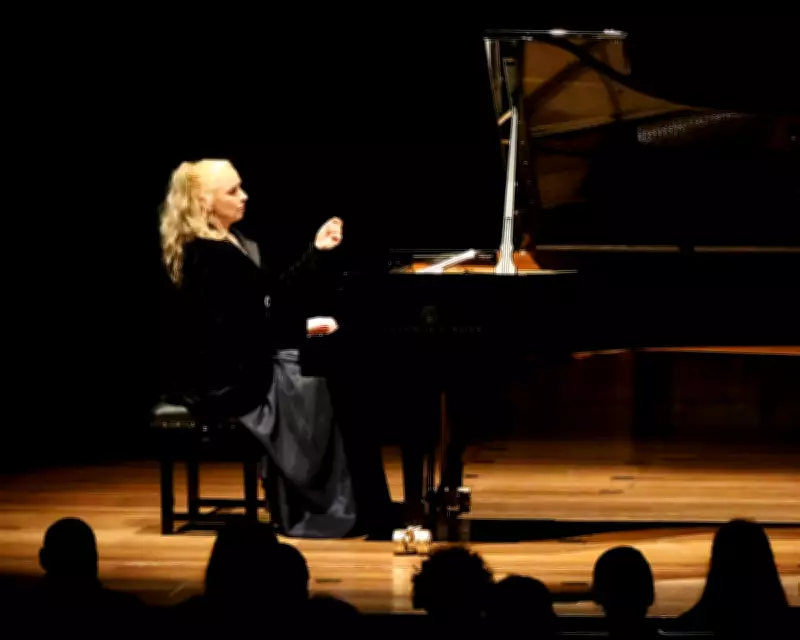
Tamara Stefanovich's Labyrinth: A Masterful Tribute to Kurtág at 100
Pianist Tamara Stefanovich presented a recital titled Labyrinth at Milton Court in London, offering a profound celebration of Hungarian composer György Kurtág's 100th birthday. Instead of focusing on Kurtág's large-scale works, such as the elegy Stele or the opera Fin de partie, Stefanovich highlighted his genius as "the master of the miniature," crafting a 90-minute cycle performed without pause that blurred the lines between pieces and styles.
An Inspired Programme of Musical Weaving
The recital intricately wove Kurtág's short piano works, many from his ongoing series Játékok, with compositions by Claude Debussy, Franz Liszt, and Johann Sebastian Bach. This approach created an essay in sound, where each piece flowed seamlessly into the next, smudging edges and exposing musical palimpsests. Stefanovich's performance paid homage to Kurtág's sound world, which is rich with echoes and ghosts of past music.
For instance, Bach's early Capriccio for the departure of a beloved brother was mirrored against Kurtág's mercurial Eight Piano Pieces, with No. 3's interplay of voices reflecting Bach's counterpoint while reaching toward Debussy's impressionism. In another highlight, Apple Blossom from Játékok transitioned deftly into Liszt's Nuages gris, leaving listeners questioning temporal boundaries as storm clouds seemed to bridge centuries.

Blurring Styles and Embracing Impermanence
Stefanovich did not stop at blurring repertoire; she also smeared stylistic boundaries. Kurtág's works were presented with theatrical, almost Romantic gestures, while Debussy's pieces emphasised negative space and modernity. Her interpretation of Bach, heavily pedalled and often strident, might not appeal to all, but it served as an earth wire or thread through the maze of musical aphorism and impermanence.
The recital concluded with an inspired choice: the final Contrapunctus from Bach's The Art of Fugue, abruptly broken off at the point where Bach left it unfinished. This jagged fragment, ripped from the book in real time, was followed by Kurtág's Pantomime, where Stefanovich's hands approached the keyboard in a coda only to dart away without striking a sound. This interplay of wit and silence stood as a fitting tribute to Kurtág's singular musical voice.
Overall, Stefanovich's performance was a masterful exploration of economy and brevity, showcasing Kurtág's legacy through a lens of insight and innovation. The event underscored the power of miniature forms in classical music, leaving audiences with a renewed appreciation for provisionality and echo.