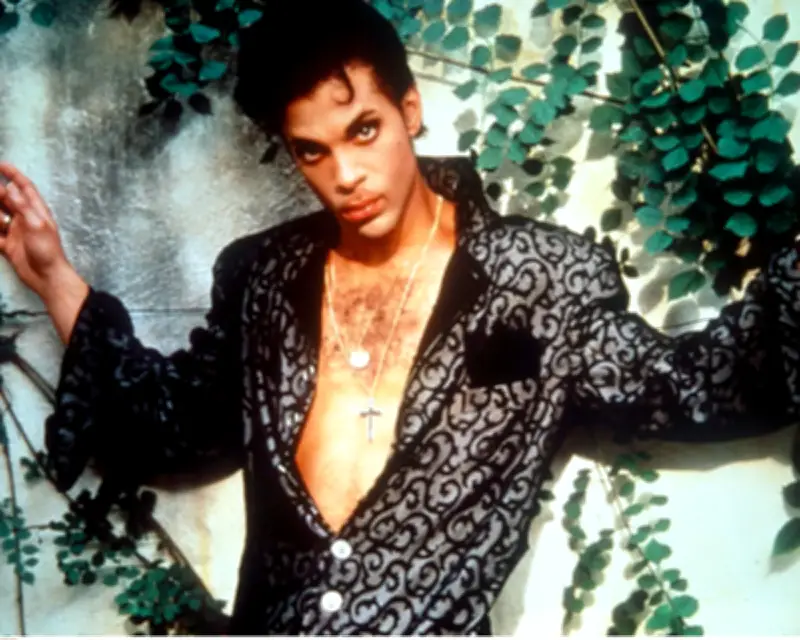
Prince's 1987 double album Sign o' the Times stands as a genre-defying monument in his discography, capturing the artist at his creative peak. A new book, Prince: A Sign o' the Times by John McKie, explores how this album emerged from a period of intense personal and professional transition for the pop legend.
From Pop Stardom to Creative Restlessness
By the early 1980s, Prince had cemented his place as a pop heavyweight with the phenomenal success of his 1999 album, as well as becoming a movie star thanks to Purple Rain. Even when his second film, the old Hollywood throwback Under the Cherry Moon, bombed worldwide in 1986, he notched another massive hit off its soundtrack with Kiss. It didn't matter if audiences didn't understand; Prince kept moving forward.
That restless spirit propelled Prince's final masterpiece, 1987's Sign o' the Times, as he dabbled with different directions. Anything seemed on the table: maybe he would drop another album with his backing band, The Revolution, or he would explore his feminine alter-ego Camille with a self-titled album. He even, at one point, wanted to put out a triple album, a reasonable response to the vast collection of music that Prince was creating.
"Sometimes when people are in a place of transition, they're distracted," said John McKie. "For Prince, he focused on his music."
Behind the Music: Label Pushback and Personal Turmoil
His record label pushed back on the triple album, so instead Prince put out the kaleidoscopic Sign o' the Times – which clocked in at 80 minutes across two LPs – and eventually decided against touring the album in the United States. The Purple One's imperial period can be difficult to nail down, as he rarely gave interviews or even kept collaborators up to date about what he had planned. Even as McKie interviewed more than 100 people about the gestation behind Sign o' the Times, it wasn't always easy to understand the headspace Prince was in when he fired his band the Revolution and split up with his fiancee, Susannah Melvoin.
"Prince probably would have been a very good poker player because he didn't give that much away," said McKie. "If you listen to his music, there are lots of clues. He said it himself: 'If you want to know me, listen to my music.'"
Sign o' the Times, which turns 40 in March, remains a genre-defying monument in Prince's discography with a thick layer of funk at the center. It's the LP where Prince happily dipped into Christian rock with The Cross, built Starfish and Coffee around a jazz chord progression, and casually shared the best power pop song of all time with I Could Never Take the Place of Your Man. But it's also one of Prince's most thematically disparate projects: "I want to do it baby all the time," he sings libidinously, only a few songs before heralding the return of Christ.
Few people, it seemed, were as good at compartmentalizing as Prince. "He would be dating two very different women at the same time," McKie said. "He would record two very different songs on the same day."
Musical Innovations and Personal Relationships
The first hit from Sign o' the Times was the title track, where Prince seems to be reciting from the newspaper, touching upon gang violence, the HIV/Aids epidemic, and the possibility of nuclear war, all over an uneasy groove built almost entirely with the Fairlight CMI sampler and synthesizer. He had heard Peter Gabriel and Kate Bush use the instrument and wanted in on the fun. Elsewhere, the Linn LM-1 drum machine dictated much of the album's blocky percussion – Prince reportedly described the party-starting Housequake as having the greatest-sounding kick drum of all time – while he slipped into Camille territory with a zany, high-pitched delivery on a handful of songs. One of them, If I Was Your Girlfriend, McKie believes is in the running for the best song that Prince ever wrote.
"Keith Richards once said of Mick Jagger, he once described him as a nice bunch of guys – I don't think it was entirely complimentary," said McKie. "One of the things that you take from Sign o' the Times is it's a nice bunch of Princes."
Part of Prince wanted to settle down. Nowhere is that clearer than on the tender Forever in My Life. But he also dated voraciously, even before he broke things off with Melvoin, who also spent a brief spell as a vocalist in the Revolution. Their romance guided the omnivorous feelings of Sign o' the Times, especially on the all-timer slow jam Adore and the hot-and-cold Strange Relationship. "I believe the phrase 'The one that got away' could apply here," said McKie. "Lots of people that loved Prince loved Susannah, and lots of people that loved Prince that I spoke to were quite explicit in saying they wished he'd married her."
Prince's Legacy and the Album's Enduring Impact
Prince had a reputation for being demanding – or difficult, if you are less charitable. Disputes over songwriting credits and payments for his backing band take up a chunk of McKie's book, while one tour manager describes him as "a very autocratic ruler". And while his rivalry with Michael Jackson has always received ample attention, it seemed that Prince didn't know how to deal with his contemporaries: his stock answer for meeting someone new was saying: "I know who you are." At one point, Prince even bristled at collaborating with Miles Davis because he couldn't control what the jazz giant played. (The trumpeter joined Prince onstage at Paisley Park on New Year's Eve in 1987, only a few months after Sign o' the Times arrived in stores.)
The penultimate track, It's Gonna Be a Beautiful Night, with its call-and-response grooves, made McKie think of "Prince as a jazz band leader brought up to the modern age." On this double album, Prince applied a dash of Davis's spirit, especially when he faced issues in the studio. His hardworking but fast-moving attitude is clearest on a song like The Ballad of Dorothy Parker, where the song's high frequencies are muted because engineer Susan Rogers made a mistake with a new mixing console. It wasn't fixed, as Prince believed that many errors were meant to be.
Those coincidences reminded McKie of how Davis worked with his bandmates: "He was looking for something different, and sometimes he was known to say 'play it again' if someone played a wrong note," McKie recalled. "Prince was smart enough to acknowledge so-called mistakes and turn them into something." Prince: A Sign o' the Times is out now in the UK via Blink Publishing and will be released 13 October in the US by Division Books.