Andy Taylor, the guitarist whose rock edge was integral to Duran Duran's success, has died aged 65, the band confirmed. Taylor was part of the world-beating five-man line-up that achieved global fame in the 1980s.
Rock leanings and early days
Taylor, who had made what he later called "that fateful journey down to Birmingham" from his home on Tyneside after spotting an ad in the Melody Maker, had tastes that tended towards rock music of a more traditional stripe, as evidenced by the artists he covered on his second solo album, 1990's Dangerous: Thin Lizzy, Bad Company, AC/DC, Montrose.
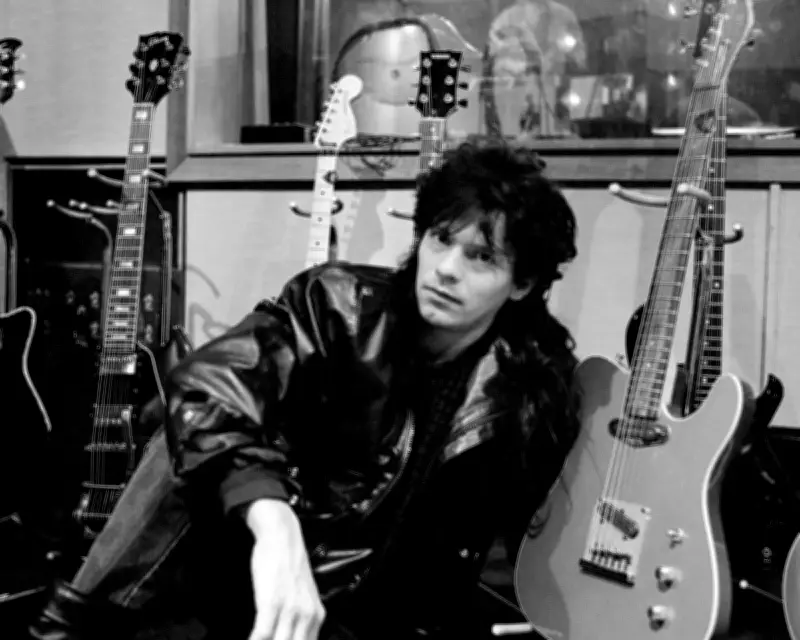
Happy enough initially to apply the hair dye and make-up that gave Duran Duran their hip post-punk New Romantic image, by the mid-80s he looked like he'd joined the wrong band entirely. In photos taken at the Sanremo pop festival in 1985, his bandmates sported baggy, spendy designer gear common to British pop stars of the era who've done exceptionally well for themselves. By contrast, Andy Taylor looked like he could have been parachuted in from a heavy metal band: his hair long, his ripped vest accessorised with scarves, his belt studded, his eyes hidden behind a pair of sunglasses.
Integral to success
For all he appeared in retrospect to stick out, Andy Taylor was absolutely integral to the success of Duran Duran, and not merely because he was by far the most straightforwardly talented musician in the band. As soon as he arrived in Birmingham he set about transforming what one writer called their "rough, undisciplined" blend of electronics, disco-influenced rhythms and punk-y energy into cohesive songs.
His leaning towards rock music gave Duran Duran a peculiar commercial edge, particularly in the US, a country that had failed to really take to punk or glam rock, and viewed disco as an aberration best forgotten. Taylor's distorted guitar – very audible on Girls On Film, or Hungry Like The Wolf, a song on which Taylor translated Nick Rhodes' synth lines into something more appropriate for guitar – gave traditionally conservative radio programmers something they could understand.
Commercial success and departure
The sales figures were wildly impressive – both 1982's Rio and its follow-up Seven And The Ragged Tiger went double-platinum in the US – but commercial success wasn't enough to paper over the obvious fault-lines emerging within the band. Sessions for the latter album were fraught: Andy Taylor subsequently described them as "a laborious plod", not much helped by his increasing dependence on cocaine; Rhodes tellingly noted that "everybody was pulling and tugging in different directions".
Duran Duran went on hiatus after completing an arena tour in 1984, its members indulging in side projects. John and Andy Taylor formed The Power Station with vocalist Robert Palmer. Despite a distinctly funky undertow provided by Chic drummer Tony Thompson, their eponymous debut album leaned into the guitarist's love of Led Zeppelin. The album was successful enough to revitalise Palmer's career: he swiftly left, tapping Andy Taylor to play on his huge solo hit Addicted To Love. Taylor jumped ship from Duran Duran the following year.
Later career and legacy
Taylor's solo career never really took off in a comparable manner to that of the band he'd left, although it offered an intriguing index of his influences: he co-produced and wrote an album for Rod Stewart, and worked with British hard rockers Thunder, Reef and The Almighty.
Duran Duran went on to have further commercial success, not least with the 1993 single Ordinary World, but they were never quite the same band without him. The surviving members' statement praised the "indelible fire and swagger he brought to our music", suggested he "drove the songs that took [them] around the world", and hymned the brief early 2000s moment when he rejoined the band, resulting in the album Astronaut and its accompanying hit single Reach Up For The Sunrise: "That time together, both onstage and in the studio, meant a tremendous amount to us all."
"There's a massive Andy Taylor-shaped hole in my heart," added singer Simon Le Bon. "It'll never close up."