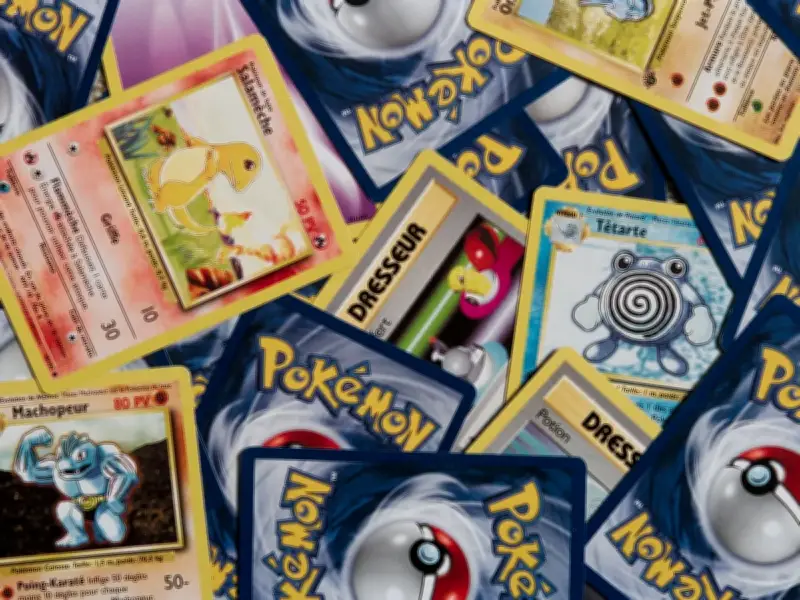
Pokémon TCG is more popular than ever at 30 years old, with The Pokémon Company printing 10 billion cards between March 2025 and March 2026, yet demand still outstrips supply, as revealed at London Comic Con 2026.
The Pokémon Company printed 10 billion Pokémon TCG cards in a 12-month period between March 2025 and March 2026, enough to give every person on the planet one card each, with 1.7 billion left over. Since 1996, over 85 billion Pokémon TCG cards have been printed, and still, this hasn't been enough to meet the insane demand.
Why Pokémon TCG remains a phenomenon
Pokémon is the world's most valuable franchise, generating an estimated global revenue of over $147 billion since its launch. Almost 30 years after the release of the first set in Japan, the new set is the aptly named "30th Anniversary" expansion, featuring over 150 cards, including 30 Pikachu rare cards to collect, 30 iconic Classic Collection cards and over 20 new illustration rare and special illustration rare cards.
Michael Loizou, Director at The Brotherhood Games, a family-run hobby store and cafe based in London that's been in business since 2012, believes that despite the current economic landscape, Pokémon's incredible popularity stems from its continued role in people's lives. "There's not a lot of things that give you euphoria in life, and I think Pokémon is doing that for a lot of people at the moment, where maybe a lot of things are not so great, but they've got a sense of belonging," he said.
The industry shift and business impact
Michael also revealed that the surge in Pokémon TCG's popularity recently has changed the entire industry, especially from a business perspective. "On the high street, more and more of (businesses like) The Brotherhood Games are actually opening up now. We are surviving on the high streets and thriving on the high streets, and that is not just necessarily because of Pokémon, but because of TCG in general."
"If we went back five years pre-COVID, we wouldn't have the possibility of this stuff being profitable. You did this because you were passionate about it. You used to walk into work thinking, 'If I earn minimum wage today, that is pretty good.' Now you walk into work, and you're like, 'Well, I need to pay 20 members of staff, make sure the kitchen is running well, making sure every bum in a seat is being done'. TCG is not only about passion now; it is now, in my personal opinion, an industry. We are not retail workers anymore; we are specialists."
Even The Brotherhood Games had a 40% increase on its allocation, but 40% compared to always selling out day one, you can understand that all that's going to do is fill the itch for maybe more people further down the line, not necessarily people on a daily basis. "The printing is there, I can tell you that, but the demand is just still that much crazier."
eBay data confirms global demand
Adam Ireland, Vice President and General Manager of Global Collectibles at eBay, said, "Thirty years on, Pokémon continues to resonate with collectors of all ages thanks to a combination of nostalgia and new releases, keeping the franchise culturally relevant." He added, "We're seeing Pokémon’s enduring popularity reflected on eBay, where Pokémon was the most-searched term in our collectibles category on eBay.com during the first half of 2026 – a testament to how Pokémon has evolved from a childhood favourite into a global collecting phenomenon."
In July alone, there were more than six million searches for Pokémon on eBay.co.uk, while globally, collectors searched for Pokémon more than 500 times per minute during the first half of 2026. "But we're also seeing strong demand across a range of trading card games, from established favourites like Magic: The Gathering to newer franchises like One Piece and Riftbound, demonstrating both the health and diversity of the trading card community," Ireland said.
The investment side and scalping challenge
This boom in popularity means that the collecting economy isn't as pure as it once was. Due to the rarity and demand for rare cards, Pokémon TCG is now seen as an investment vehicle, particularly when it comes to sealed items such as classic booster packs and Elite Training Boxes, as well as the exceptional demand for newer sets. This trend has incentivised scalping, meaning that if you're in a queue to buy Pokémon TCG, it's likely that at least some of the people ahead of you are only buying the product to flip and make a profit.
Michael Loizou has seen the hobby changing firsthand, with a shift from casual buying to more obsessive collecting habits. "Previously, when you used to collect Pokémon and buy a couple of packs, you felt that itch was there. But now you walk in, and the itch is not just a couple of packs anymore; it's: I need to collect this whole thing, because everyone's seeing maybe the financial gain to it," he said. "There's a monetary value to it. There is an investment side to it. Even my portfolio has increased 400% in the last two years. But at the same time, I'm referring to it as a portfolio now rather than my collection."
On scalping, Michael said, "This question of scalping and all this type of stuff, you're just kind of used to it now. It's just the norm. I think the responsibility is on the stores themselves to make sure they're looking after the product." He explained that his store has two separate lines, releasing product for adults in the morning and saving about 20% of product for a separate kids' queue in the afternoon. "There is no clear solution. This is the problem," he admitted.
Authenticity and the future of the hobby
On authenticity, Adam Ireland said, "The first step is understanding what similar cards have actually sold for, rather than relying on asking prices. Factors such as a card's condition, rarity and grading can all influence its value, so having access to reliable information is really important." He highlighted eBay's Price Guide, which gives collectors access to two years of confirmed sales data, and the Authenticity Guarantee, now available for eligible trading cards priced at £250 and above.
Michael thinks grading is already the future of Pokémon TCG authenticity. "When you know something is guaranteed, when you know something is mint condition, you're going to want to pay more for it as a consumer," he said. "It doesn't matter if it decreases or increases; I just like looking at cards. But even I got them authenticated because, one, it's a good way to insure them."
Looking to the future, Adam said, "The continued passion we're seeing across the trading card community is incredibly encouraging. Pokémon has demonstrated its ability to remain relevant across generations, and with new releases and emerging trading card games attracting fresh audiences, there's plenty to be excited about." Michael noted that the market can change quickly, mentioning cards that were selling for £250,000 have now sold for £86,000 a week later. "You can already see that Pokémon always corrects itself," he said. He also pointed to the announcement of the first Pokémon Centre outside of Asia for 2029 in London, saying, "I have complete faith in this company (The Pokemon Company) because I've had complete faith in them for 30 years. I think they're going to get it right. I think I'm going to be an old man sitting in the corner, still opening up my booster packs in 20 years."