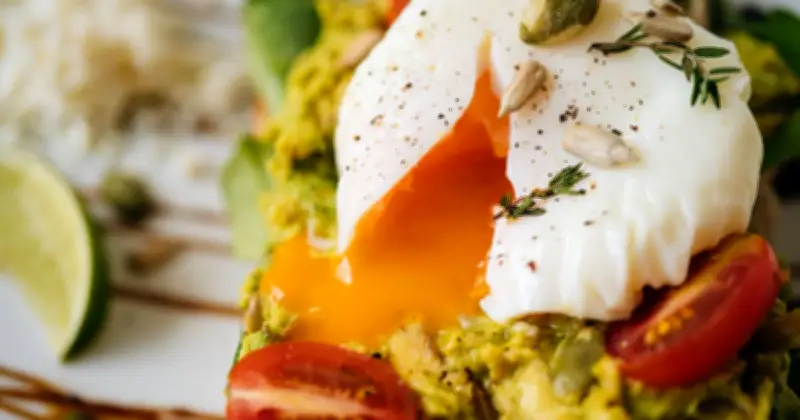
Food writer Cindy, founder of Salt and Serenity, has shared a microwave method for poached eggs that takes about two minutes overall and requires no frying pan. The technique produces soft, springy eggs that hold their shape, offering a simpler alternative to traditional stovetop poaching.
Why the microwave works
Cindy admitted she avoided making poached eggs at home until recently, saying: "Poached eggs are not something I ever made at home until a few weeks ago. They always seemed so complicated to make." She added: "Swirling the simmering water into a vortex and then gently lowering the egg into this seemed like a recipe for disaster."
After seeing people make poached eggs in the microwave on Instagram, she experimented with over a dozen eggs before perfecting the method. The egg is cooked in a mug or bowl so it maintains its form, while the microwave gently warms it through.
Ingredients and step-by-step method
To make the egg, you need one large egg, 180ml of boiling hot water, and one teaspoon of vinegar. Start by boiling a kettle, then pour the boiling water into a heatproof bowl or mug. Add a teaspoon of vinegar, which helps the egg proteins bind together and keep their shape during cooking.
Crack the egg by tapping it sharply with a spoon and place it into the mug or bowl. Cover the top with a plate and microwave at around 80% power for a 30-second burst. Cooking time may vary depending on the microwave, so experimentation may be needed. Avoid full power, as this could set the yolk too quickly while leaving the whites undercooked.
Finishing touches
After the initial 30 seconds, remove the egg and gently turn it over with a spoon so the yolk is encased by the whites. Give it another 10 seconds of cooking time, and if it remains runny, continue heating in five-second increments until cooked to your liking.
Once done, drain off the water and place the egg on kitchen paper to absorb excess liquid. The result is a firm, perfectly shaped poached egg that is simple to prepare without the risk of falling apart.