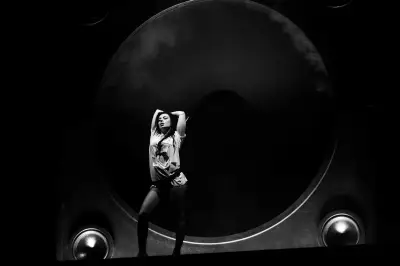
San Francisco Ballet, the US's oldest professional ballet company, has brought a spectacular and gloriously maddening piece of dance to the Edinburgh Playhouse. The show is as much a visual extravaganza as it is a concert, and as it is dance, with dancers as impressive as expected from the company.
A bold concept with AI at its core
Artistic director Tamara Rojo commissioned choreographer Aszure Barton, composer Sam Shepherd (also known as electronic producer Floating Points) and multidisciplinary artists Hamill Industries for this project. Their starting point was the myth of Pandora's box, transposed to the current world of AI technology and the unknowns that might be unleashed.
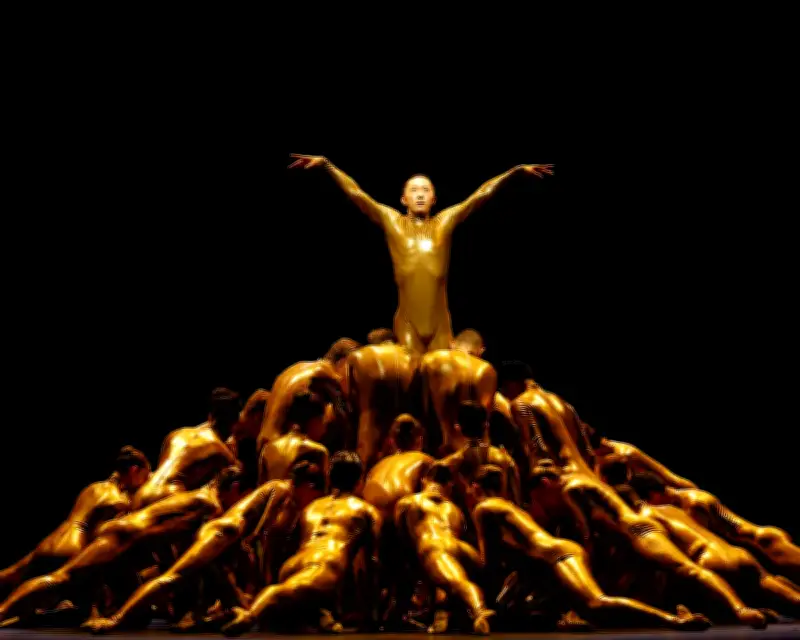
Hamill Industries, who used some AI in their creation process, unleash something transfixing on a giant screen above the stage: morphing, pulsating pixels that look like lava or the surface of the sun. It is intoxicating, easily dragging attention away from the dancers' bodies. The dancers appear en masse in strict manoeuvres at driving tempo, moulded into large-scale moving images by Barton just as Pandora is moulded from clay in the best bit of integration between the digital and physical worlds.

Choreography and performances
Barton is a magpie of a choreographer, always unpredictable, with classical virtuosity sewn in among countless other ideas in unstoppable phrases. Jennifer Stahl as Pandora is an impressive creation, and Wei Wang is great: supple, sprightly, puckish. He represents Hope, although you would not know that without doing a bit of research.
There are a few scenes where humans come to the fore, with black-clad dancers just about visible against a black backdrop: Prometheus (Joseph Walsh) and Epimetheus (Harrison James) being competitive brothers who hug and shove in one motion; a pas de deux for Pandora and her husband in which Barton's unconventional choreography steers clear of romantic tropes.
Music and the non-ending
Shepherd's score is really impressive, a hybrid of electronics and orchestra, played live by the Royal Scottish National Orchestra. It is full of drama and contrast, tension, propulsive urgency (hints of Stravinsky) and fascinating textures: slippery strings, woozily lurching or ricocheting arpeggios.
At the moment that presumably represents the opening of the box (or the AI floodgates), the screens go into hyperdrive, vomiting up dazzling imagery. Then they go dark and we are left with only bodies, a new world – black catsuits swapped for fabulous, shining gold. What the dancers do does not really change between the two worlds. There is no choreographic revelation, no judgment, it seems. Perhaps an exhortation to stop being distracted by the sparkly baubles of the AI gods and notice the real people in front of you. Or perhaps no moral at all, just a wild sensory experience, and the strangest non-ending, with the most human thing of all – feeling – frustratingly absent.
At Edinburgh Playhouse until 30 August, then Sadler's Wells, London, 9-12 September.