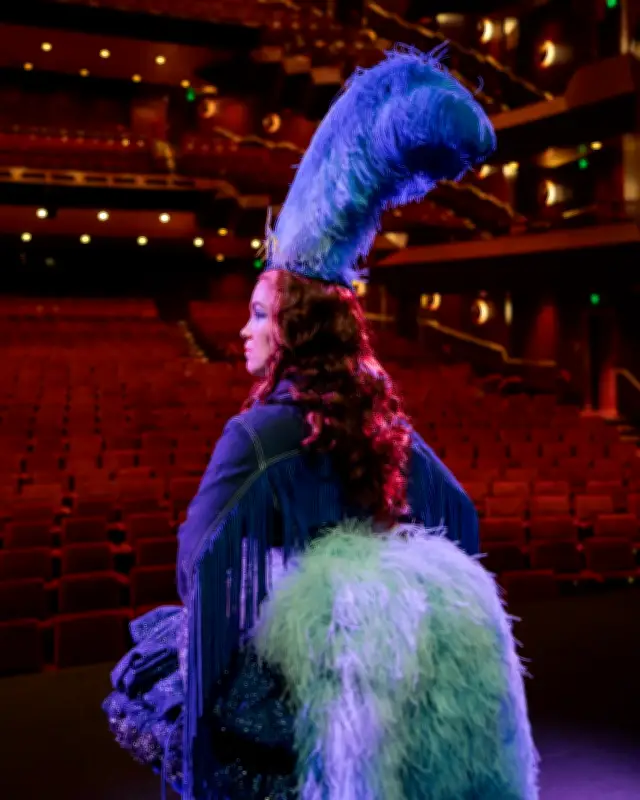
Two and a half years after closing its doors, Melbourne's renamed Ian Potter State Theatre is back. The venue, which is the largest stage in the southern hemisphere and bigger than four tennis courts, reopened following the first stage of the $1.7bn redevelopment of Arts Centre Melbourne.
Standing on the vast, empty stage days before the official reopening, the focus was not on what would be performed but on the auditorium itself — the centrepiece of this stage of the redevelopment.
Subtle changes, significant impact
Upon the curtain rising, a hushed bemusement followed as little seemed different. The layout is largely the same, the brass and burgundy colour scheme unchanged, with most improvements subtle or out of sight.
“Everything you see here might look the same,” said Chris King, director of the Arts Centre Melbourne Reimagining Project, “but there are ever so slight differences that make all the difference.”
The 2,000-seat State Theatre was designed by Australian actor and designer John Truscott and opened in 1984. Forty years later, it was looking tired and unfit for purpose due to structural limitations and contemporary code violations. Its closure had placed pressure on other performance spaces, notably the Regent, and it is home to major companies such as the Australian Ballet and Opera Australia.
Name change and accessibility upgrades
The theatre is now officially the Ian Potter State Theatre, a decision announced without public consultation in 2024 that has rankled many, including Eddie Perfect, who called it “a big fat mistake”. Hamish Lyon, director of NH Architecture, the company overseeing the project, acknowledged the public is unlikely to embrace the full title, saying, “People know it as the State. What [the name change does] is recognise the largest single philanthropic gift to a performing arts centre in the country in history. But for most punters, they’re going to see a show in the State theatre like they have for 40 years.”
A universally welcomed improvement is in disability access: excellent seats across all three levels can be easily reached by wheelchair, supported by two new lifts. These additions feel plush and welcoming rather than utilitarian.
Two generous new aisles in the stalls now meet a central walkway, forming an apron to improve audience flow. Air flow has also greatly improved, with audience comfort being “a major factor in everything we tried to achieve,” King said. “Previously, the air conditioning used to come from above. About 12 or 15 minutes into every show, there would be this cold air dump, the system’s way of dealing with 2,000 bodies.” Now the air comes from below.
Technical upgrades and opening celebrations
Carpets have been replaced with blackbutt timber, elevating the auditorium and helping with acoustics. Sound quality, notoriously patchy, has been significantly improved, with seat backs designed by Italian furniture manufacturer Poltrona Frau playing a role in augmenting sound. “It’s an amazing art, acoustics,” Lyon said. “A mix of high science and black magic art.”
Most improvements are technical and invisible, from a complete redesign of the sound system — which King says “used to be stuck on the wall” — to a new performance lighting system. Notable visible alterations include the added front two rows in the balcony and exquisite gold leafing on the ceilings.
This stage of the redevelopment included a state government injection of $241m. The grand opening to the public will coincide with a First Nations-led concert called Gugu Dindi Gunyah (Many Rivers, One Home) and a three-day series of performances featuring over 100 Victorian artists titled Housewarming, all free. The acoustics will be fully tested by Opera Australia’s Wagner Gala in mid-October, with the Australian Ballet returning with The Nutcracker before Opera Australia’s My Fair Lady takes over for summer.