Paul Simon's groundbreaking album Graceland, which turns 40 this year, fused American folk rock with South African township music to create a completely new sound. It sold more than 16 million copies worldwide, won the 1987 Grammy for Album of the Year, and is widely seen as the birth of World Music.
The album incorporates multiple genres, including South African styles, a cappella, and the Louisiana dance genre zydeco. It featured Simon's bestselling solo single, You Can Call Me Al, and introduced global audiences to artists such as Ladysmith Black Mambazo, Youssou N'Dour, Ray Phiri, Bakithi Kumalo, The Boyoyo Boys, and Stimela.
Why the album still resonates
Cultural critic Hermione Hoby says Graceland is "the type of music that requires you to dance, and to dance like a child." Simon himself explains, "The magic happened in the collision of cultures. When you put South African grooves together with American country or pop melodies, it created a fresh vocabulary that felt brand new to people."
He wrote and produced the album after falling record sales and a traumatic split from his wife, Star Wars star Carrie Fisher. "I was going through a period of feeling broken. Graceland became this metaphor for a place of healing," he says.
Political controversy and vindication
When released, the album was criticised by many politicians because Simon defied the United Nations cultural boycott of the apartheid regime in South Africa. The ANC wanted to forbid him from entering the country, and he was placed on the UN blacklist.
James Victor Gbeho, then Ghanaian ambassador to the UN, condemned the decision: "When he goes to South Africa, Paul Simon bows to apartheid. The money he spends goes to look after white society, not the townships." South African jazz musician Jonas Gwangwa added, "So, it has taken another white man to discover my people?"
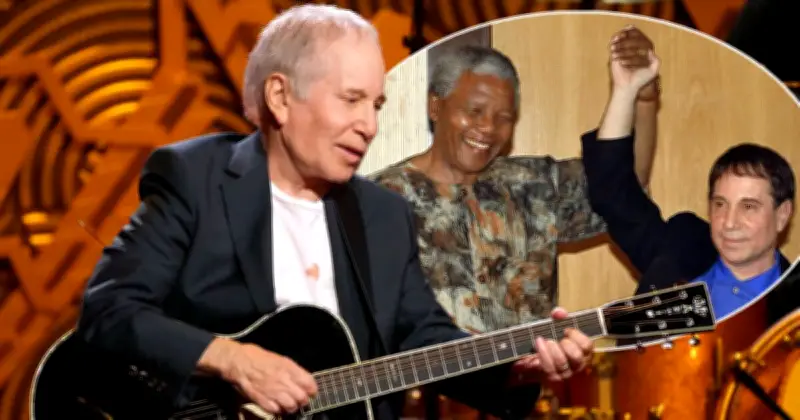
Simon was vindicated when he played five concerts in South Africa in 1992 at the behest of ANC leader and future president Nelson Mandela. Music critic Jim White says, "Politics did its best to suppress the album, but it actually gave black South African music a universal platform, and the record is still there, as wonderful as ever."
A lasting legacy of unity
Crystal Kassi, founder of the London African Gospel Choir, says the blend of South African and American music made Graceland a positive example of harmony. "It was showing all those different countries working together successfully. It was a statement about unity."
Simon reflects, "What it represented was the essence of anti-apartheid in that it was a collaboration between blacks and whites to make music that people everywhere enjoyed. It was completely the opposite of what the apartheid regime said."
He calls Graceland "my favourite record. This is the best I ever did." Asked why it has endured, he says, "It's just about joy." The nationwide London African Gospel Choir tour of Graceland runs until March 4.