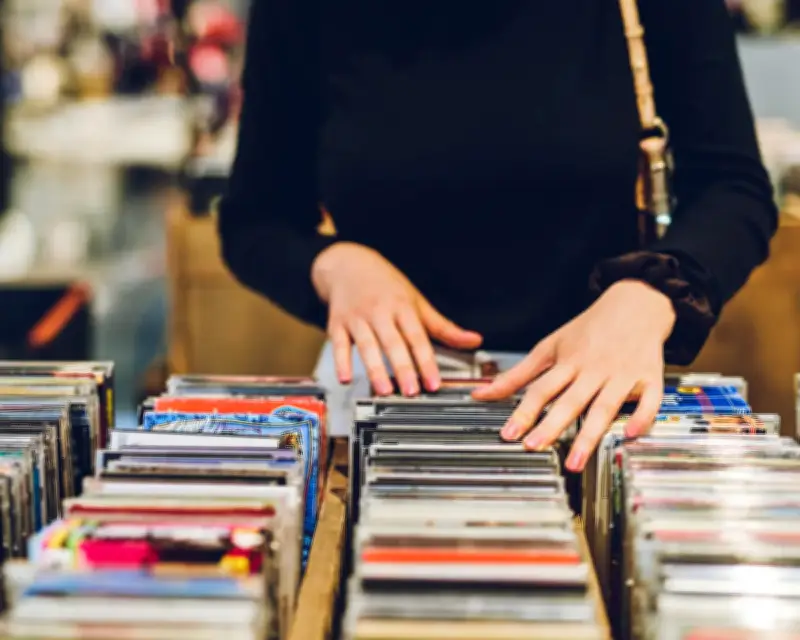
People are increasingly turning to secondhand CDs, DVDs and vinyl to escape algorithmically curated content, according to readers who shared their experiences. Motivations range from protecting data and supporting artists to retaining control over media choices.
Why readers are making the switch
Ash, 52, a university lecturer from Cornwall, says he initially embraced streaming but has since tempered that enthusiasm. “Algorithms make great suggestions, but it feels like you catch a lot of small fish (OK, bands),” he says. “Reading music magazines and artist recommendations and discovering new music for yourself requires more work and effort … it feels like catching the bigger fish.”
He has returned to buying and listening to physical media, amassing more than 5,000 records and CDs from 1990 to 2009. “Technology and streaming felt liberating for a person who has a deep and wide music collection and a bad back. I stopped buying and streamed,” he says, but adds: “I spent more time making playlists than listening to music; I lost the ability to listen to a whole album and missed the physical connection with music.”
Ownership and data concerns
CJ, 55, a compliance manager from Atlanta, decided to return to physical media when shows she liked began disappearing from streaming services. “HBO removed about 200 episodes of Sesame Street in 2022, so we realised any media we wanted to continue to watch or listen to could be gone, and we’d have no way to get it back,” she says. “As the saying goes, if you can’t hold it, you don’t own it, and we firmly agree with this.”
Ruth, 67, a retired professor from Michigan, says Spotify quickly “bored” her, but there were other reasons behind her move to CDs and DVDs. “Most of all, I wanted to own my music and support the musicians, so I own 5,300 CDs; they have their own walk-in closet,” she says. “Owning my own books, music, and photos (no iCloud) has always seemed normal to me, and, increasingly, prudent.”
Supporting artists and reducing data sharing
Antonio, 40, a software engineer from Reading, began buying secondhand CDs from a charity shop this summer to get off music subscription services. “I have a ritual now,” he says. “Twice a month I buy between one and 10 CDs – depending on what is available.” He adds: “I decided I didn’t want to rely on a subscription any more and have to deal with price rises, and now I don’t have to share my data – both personal information such as my name, bank account details, location, and my listening history – with a company.”
Quinn, 26, who works in food delivery and lives in Washington, began collecting cassette tapes last year and “quickly fell in love with it”. He says: “Buying tapes from bands gave me a way to engage with and support them, despite not being able to see their shows.” He appreciates the format’s restrictions, including “the routine of interacting with the tape and equipment to play it, the quirks that come with analogue tech and, of course, being able to share music with people by handing them a tape rather than a Spotify link”.
Embracing the slower experience
Tim, 61, an academic from Stockholm, says his young and adult children all enjoy watching films on older formats. “The biggest luxury for my small kids is when the cables are rigged, the choice of DVD made, and they sit through five minutes of ‘coming soon on Disney’ before we press play on Shrek or whatever the film is.” He says the “aged DVDs” often need a clean, as sticky fingers over the years have left their mark. “I love this middle stage between the digital and the analogue, and the slowness of the setup to see the films.”
Sophie, 32, a librarian from Los Angeles, streams music but “mostly listens to CDS” and often watches DVDs from her own collection or checks them out from the library. She is “not a fan” of algorithms, something that informed her move to CDs and DVDs. “I enjoy watching DVDs and listening to CDs because nobody sees what I’m doing and they’re not analysing it. It feels less overwhelming to browse physical versions. I also feel less controlled.”