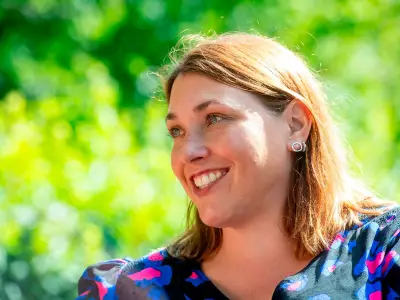
After struggling with infertility and eight unsuccessful rounds of IVF, Narzny McKinney had two precious embryos left – her last chance to have biological children. After considering her options, she made the decision to find a surrogate to carry her child for her.
“We were eight years down the line at this point and I just didn’t want to risk anything going wrong,” she said. “It was a tough decision but it was absolutely the right thing to do.”
She and her husband, Roy, signed up to two UK surrogacy agencies, and began attending social events, where prospective parents get the chance to meet potential surrogates.

But soaring demand – due to a rise in infertility as well as older people and gay couples seeking to be parents – meant McKinney and her partner had little luck meeting anyone other than parents in the same position as themselves.
“It’s quite emotionally draining, because obviously you go with high hopes each time. You can probably go to a social most weekends; it takes up a big part of your life,” she said. They also considered going abroad – as a growing number of people in the UK are doing, with agencies reporting bumper demand – but knew it would be logistically difficult.
Finding a surrogate
After two years of waiting, they got a call from the agency, Nappy Endings, to say a surrogate had come up – Sarah Turner, a mother of three and former midwife in London, who had always wanted to be a surrogate.
Turner said: “I’d always felt very lucky that I was able to have low-risk pregnancies and have babies without any issue. So I thought I would always really like to help somebody that couldn’t do it as easily as I could. I was very up for it. I did a lot of research. I know myself and I was quite relaxed about it.”
The two couples hit it off instantly, and a short while later, Turner, then aged 41, became pregnant with one of the last two embryos.
From the beginning, Turner tried hard to ensure that McKinney was as involved in the pregnancy as she could be – she bought her a bracelet that would vibrate every time the baby kicked.
“Having had three of my own babies, I can’t even imagine how difficult it must have been for Narzny, trusting another woman to carry her baby for her and not being able to do it herself,” Turner said. “That really got me in the guts, and I just used to sit and think, how must she feel? She has to trust me to do everything right for her.
“So I thought it would be so nice if she could feel the baby move and have that reassurance.”
McKinney said the strong relationship between mother and surrogate was crucial in ensuring the process went well and was comfortable for everyone involved: “We went to all the appointments together. I was really connected.”
The birth and legal challenges
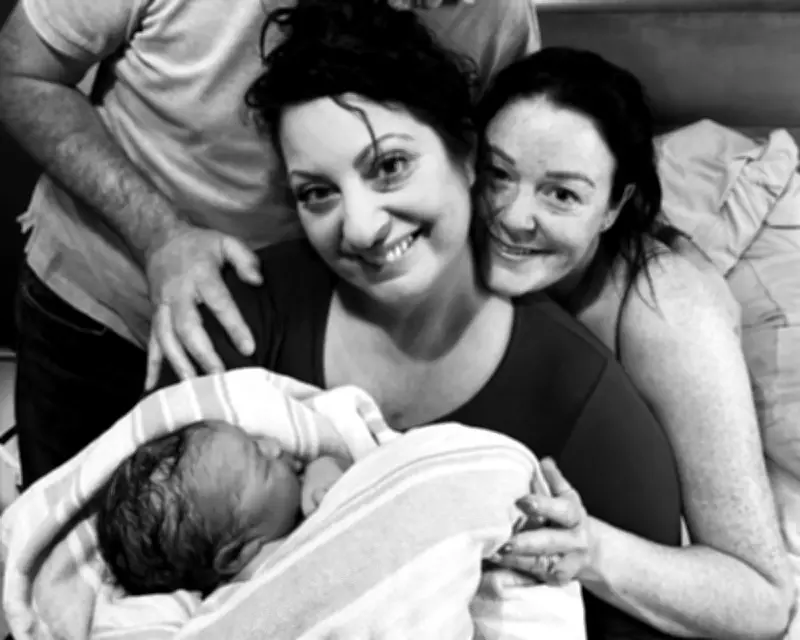
After meticulous planning for the birth itself, their best-laid plans went out the window when Sarah gave birth at home so quickly that McKinney and her husband – who lived a 40-minute drive away – weren’t able to make it in time.
“People would say, ‘Oh my God, how do you feel about missing it?’ But I imagine we would have been so stressed and anxious, so it was nice turning up and being told, ‘it’s all done, he’s safe and he’s perfect’,” she said.
Turner admitted the immediate aftermath of the birth was the most difficult part of the whole process for her. “The hormones come into play and you can’t do anything about that. So it was challenging,” she said.
“Your mind knows there shouldn’t be a baby but your body doesn’t. But Narzny McKinney and Roy were perfect; they didn’t just abandon me as soon as they had their baby. They checked in, they sent photos, we visited them. They were really mindful of how I was feeling.”
Now McKinney is enjoying motherhood with one-year-old Zak, and is still regularly meeting up with Turner and her family for catch-ups.
They both agree that some legal reform – along with better education and awareness around how surrogacy works – would have helped their experience run more smoothly. Under current UK laws, the surrogate and their spouse must be listed as the baby’s legal parents until a parental order is completed after birth.

McKinney said she had to visit three different courts to get the parental order to transfer legal parenthood to her and Roy, something which campaigners say should be the case from birth. They also said it took months to get Zak a passport.
“It’s a shame because he’s obviously been ours since day one, but the legal documentation to show that is quite far behind,” she said.
Misconceptions and acceptance
McKinney also said she had come across people who assumed she had deliberately chosen surrogacy due to a reluctance to give birth, or questioned whether she would have the “same bond” with her child.
“You don’t say that to fathers, do you? You wouldn’t say that if we’d adopted our child. You would not find that an acceptable thing to say,” she said.
Turner agreed that more education and acceptance was needed. “Because then people wouldn’t feel like it has to be done behind closed doors or that it’s something to be ashamed of,” she said. “Families can be made in all different ways, and actually it’s lovely that we can all help each other.”
The pair said they didn’t face any negativity about the surrogacy, but they’re aware of some people’s preconceptions and criticisms of the practice.
“I know there are a lot more celebrities doing it now, but for us, it was down to her fertility. It wasn’t just like, ‘Oh I can’t be bothered to carry a pregnancy, I’m going to get someone else to do it’. It was a purely medical thing,” said Sarah. “So nobody had anything negative to say to us about it.”
Turner added that while people have hailed her decision to be a surrogate as an incredible selfless act, she doesn’t think of it in such grandiose terms.
“I’m quite chill about it,” she said. “Everyone says it’s this amazing thing you’ve done. I don’t necessarily even think like that. I’m glad I did it, I’m glad they’ve got their baby and I’m glad they’re a happy family – it’s really lovely to watch them grow.”