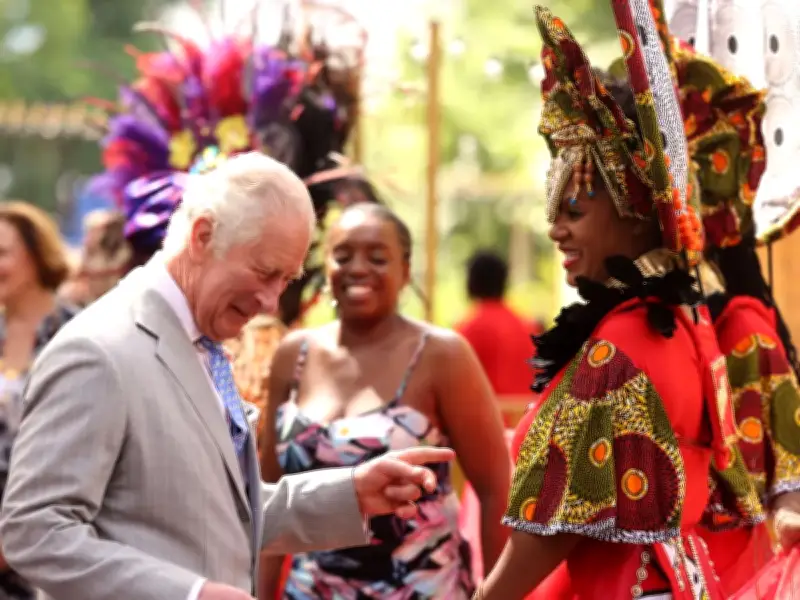
The Notting Hill Carnival marks its 60th anniversary this weekend, celebrating six decades since the festivities first took to the streets of west London. The event now drives £400 million into the London economy. But before it became one of the world’s biggest street parties, its roots stretched back years earlier to a period of racism, discrimination and violence faced by Britain’s Caribbean community.
From racial violence and tragedy, a carnival was born
Ten years after HMT Empire Windrush carried hundreds of Caribbean passengers to Tilbury Docks, racial tensions had reached boiling point in areas including Notting Hill, which was home to a growing Caribbean community as well as supporters of Oswald Mosley’s far-right movement and Teddy Boy gangs. In August 1958, an altercation involving Jamaican man Raymond Morrison and his Swedish wife Majbritt became a catalyst for days of racially motivated violence. Hundreds of white men took to the streets attacking Black residents and their homes, with the violence continuing for several days.
Police initially played down the racial element, but files released decades later showed mobs of hundreds of white people chanting racist abuse, with some armed with iron bars, knives and weighted leather belts. Against this backdrop, and with many of the Windrush generation barred from pubs and dance halls, Trinidadian-born journalist Claudia Jones and others organised a Caribbean carnival at St Pancras Town Hall in January 1959.

Months later, Antiguan carpenter Kelso Cochrane was fatally stabbed in an unprovoked racist attack in Notting Hill. His murder remains unsolved, but his death brought parts of the community together, with more than 1,200 people of different backgrounds lining the streets on the day of his funeral.
The indoor carnival returned in 1960 and continued until 1964. Then in 1966, local community activist Rhaune Laslett organised a children’s street fayre in Notting Hill, bringing Caribbean residents into the event as part of an effort to unite the community. Steel bands travelled along Portobello Road as locals gathered and danced to the sound of pan, and the small community event would grow into the Notting Hill Carnival known today.
From community flashpoint to a global celebration of music and culture
Among those involved in the early Carnival was Vernon “Fellows” Williams, who later founded Genesis Mas with his wife Allyson in 1980. Vernon has since died, but his legacy continues through the mas band. Their son Kevin Williams told the Mirror: “It started with a melting pot of Caribbean immigrants who never intended to make history but to celebrate their shared culture in the UK.” Allyson added: “People don’t know the history, the legacy we inherited, or the significance of Carnival. Once you know, it’s not just a party.”
Carnival continued to evolve over the following decades, including amid tensions between the Black community and police. In 1979, promoter Wilf Walker brought a live stage to Carnival after seeing an opportunity to transform an area under the Westway which had become a flashpoint. He told the Mirror: “That very year in 1979, there was no real confrontation between us and the police - it truly felt like it made peace in a way.” “I will always love Carnival. It’s bigger than us, even today.”
Since then, music stars including Jay-Z, Busta Rhymes, Stormzy and Craig David have performed on Notting Hill Carnival live stages. But six decades of Carnival have also created generations of families for whom taking part has become a tradition.
'Carnival is in my blood'
Andrew Facey has been with Mangrove Steel Band since he was a child in 1987 and is now its band leader. The group has won the UK National Steelband Panorama competition 13 times. He said: “I absolutely love it, the best part of it is when we’re on All Saints Road performing to our local community, we get thousands out there supporting and once they’re happy, we’re happy.” “It’s a lot of hard work, and a lot of effort, but also very very rewarding when you win, and still rewarding when you don’t win. For me, it’s a happy place, it’s kind of like a getaway.”

Mother and daughter Nadine and Kaia are both involved with Hot Wax, a family-run mas band, after being introduced to Carnival from an early age. Kaia said: “Carnival is in my blood, I was on the road before I could even walk, I’ve been doing it since I was [my mum’s] bell.” Nadine said her own experience began in much the same way. She added: “When I was younger, I’d go with my mum, and on Monday I’d have to stay in Grenada Corner with my nan while she went off and played mas. As soon as I was old enough to go on my own, I was always with Hot Wax on Sunday, then ventured out on the Monday”.
A tradition passed down generations
Daina Davidson-Shaw is the daughter of George “DJ PoppaShaw” Shaw, owner of family-run Killawatt Sound System, which has been part of Notting Hill Carnival for more than 40 years. Describing her dad’s love for the music and the event, she said: “Music libraries become a sacred treasure and that’s what makes the sound systems sound so special. My dad now has it all in his digital format, every song he knows by heart, because it’s touched his heart.”
This year, Carnival has expanded from only covering the usual bank holiday weekend, and introduced a six-month programme of events telling the history of the street party. The events started in May and will conclude in October.