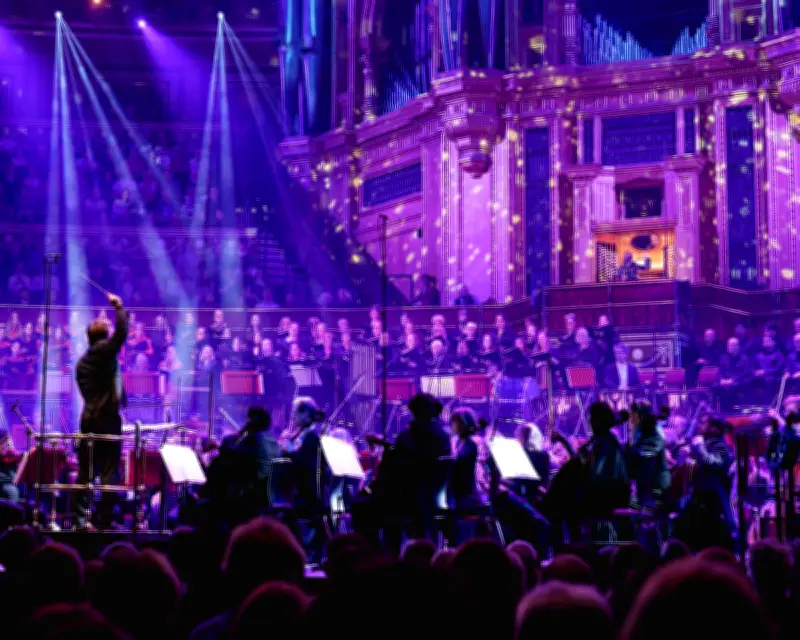
The Willis organ at the Royal Albert Hall has 9,999 pipes, is 155 years old, and 21m high. It takes centre stage this Sunday morning with a recital by French organist Olivier Latry, featuring a mostly Bach programme.
Organ Music Beyond Bach
Latry's recital represents the core of the organ's repertoire, but there are many organ-sceptics. The world of organists can feel cloistered, but that's changing thanks to players like Latry and Anna Lapwood, and a generation of experimental musicians using the pipe organ as their medium.
The organ has a millennia-long history, from water-organs in ancient Greece to the Wanamaker organ in Philadelphia with 28,762 pipes. Pipe organs can be ear-shatteringly loud but also capable of great sonic variety. Buildings like the Royal Albert Hall were designed as resonating chambers for their organs.
Experimental Organ Pioneers
In Halberstadt, Germany, John Cage's Organ²/ASLSP is planned to last 639 years, with a note change on 5 August this year. Jonny Greenwood's X Years of Reverb is an eight-hour piece for two organists, written to agitate and reanimate all the music and voices that have filled the air. James McVinnie and Eliza McCarthy will play it at Manchester Cathedral in January.
Composer-organists like Kali Malone, Ellen Arkbro, Anna von Hausswolff, and Claire M Singer are pushing experimental bounds. Singer's albums, often titled after Scottish landscapes, are organ-scapes of slow drones and radiant horizons.
Igor Levit's Cancelled Performance
In Germany, pianist Igor Levit teamed up with rapper Danger Dan on anti-fascist single Keine Angst (No Fear). Their scheduled performance on ZDF's Die Anstalt was cancelled at the last minute, replaced by a minute-long shot of an empty piano and mic stand. The hosts said it wasn't a technical problem but a political one. ZDF said the lyrics went against programme guidelines. The song expresses sympathy for left-wing activists convicted for violent actions against the far right. Levit and Danger Dan organised their own concert and livestream, and the single has racked up a million views on YouTube and Spotify.
Levit's collaboration is the latest example of his activism, refusing to separate music from its political contexts. In Germany, the debate about censorship and combating the rise of the right-wing continues.