The Enduring Appeal and Growing Rejection of Fake Tanning
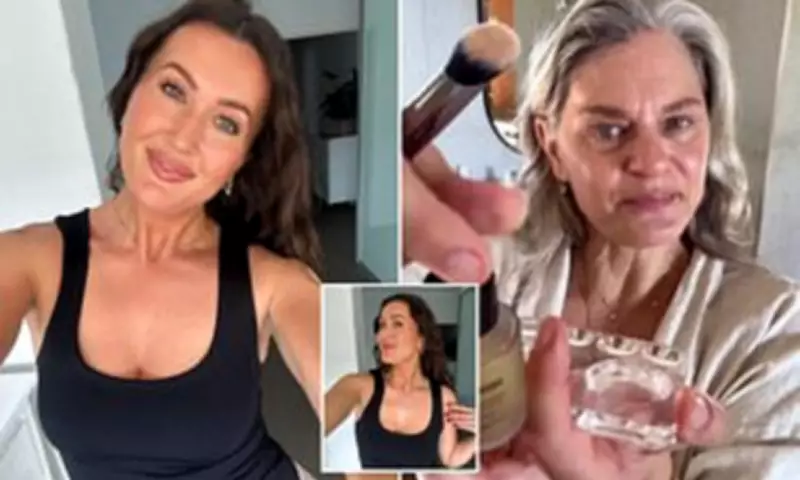
Welcome to Polished with Elise Wilson, where Daily Mail's qualified makeup artist and hair stylist answers your questions, shares advice, and trials the up-and-coming beauty and skincare trends so you don't have to. I'll admit without hesitation that I am what you would call a die-hard fake tan devotee. Not in a casual, once-in-a-while sense, but in a committed, ritualistic way that has followed me from adolescence into adulthood.
While a growing number of women are now consciously stepping away from self-tanning altogether, proudly embracing their natural skin tone, I find myself, for now at least, firmly on the other side of the debate. Because while the conversation around tanning is undoubtedly shifting, and perhaps rightly so, the product itself has undergone such a significant evolution that giving it up entirely feels, to me, slightly premature.
The Psychological Component of Tanning
To understand why fake tan has endured for decades, you only need to look beyond the surface. For many women, it is not simply about appearance, but about how it makes them feel. Comedian Nikki Glaser captured this sentiment perfectly during a recent stand-up set, where she described her spray tan as giving her a sense of 'job security' and making her feel as though she had her life together.

It was a throwaway line, but one that resonated deeply with me, and I now know there is, undeniably, a psychological component to tanning. Research supports this too, with psychologist Carolyn J. Heckman telling Harper's Bazaar that women often report feeling 'healthier, more attractive, more fit, and sexier' after tanning, whether achieved in the sun or from a bottle.
The Growing Movement to Opt Out
And yet, alongside its enduring popularity, there is a parallel movement gaining momentum that questions not only the upkeep of fake tanning, but the beauty standard it perpetuates. Influencer and qualified skin expert Hannah Collingwood-English is among those leading this shift. Speaking on the You Beauty podcast in March, she revealed her decision to stop using fake tan, prompted in part by conversations with the Cancer Council.
'They said they had data that fake tan still contributes to that beauty standard that for Australia, you know, "blonde and tan,"' she explained. What struck me most, however, was her reflection on the mindset many of us have internalised. 'The mindset of like, "oh, I look ugly, I need to fake tan… how tiring,"' she said.
It is a confronting thought when something as seemingly harmless as self-tan could be quietly reinforcing the idea that our natural skin tone is somehow not enough. 'I can't be saying, "I'm ugly without a tan" and then telling people tanning is bad for you,' she added. 'So it's nice to embrace your skin tone, no matter what it is,' she ended, which is a very valid and refreshing perspective, and one that has clearly resonated with others.
A Cultural Shift Driven by Fatigue
In fact, the more I delved into it, especially across social media, women have begun documenting their decision to abandon fake tan more than I realised, often citing not only the philosophical reasons, but the sheer effort involved in maintaining it. One creator, Kylei Halbakken, described the relief she felt after quitting, explaining that she no longer dreaded her weekly tanning routine.
Another, Emma Brausen, shared that she wanted to 'feel more natural' and 'embrace' her pale skin, particularly as she prepared for motherhood. There is, undeniably, a sense of liberation in stepping away from the cycle of application, maintenance and inevitable patchiness. Fake tanning, for all its beauty 'benefits', requires time, precision and a certain level of commitment - not to mention a tolerance for the occasional mishap.
Letting go of that process can feel, for some, like shedding an unnecessary layer of pressure, and a few extra precious minutes in our already-extensive routines.
Why I'm Still Not Ready to Give It Up
Despite understanding, and even admiring, this shift, I find myself reluctant to follow suit. Part of that is undoubtedly personal. I grew up in the UK, where a slightly overzealous approach to fake tan was almost a rite of passage, and I think that early exposure has, in many ways, shaped my relationship with tanning.

But more importantly, fake tan today is simply not what it once was. The once muddy formulas have undergone a complete transformation, and what was once synonymous with streaks, orange undertones and that unmistakable 'biscuity' scent have now evolved into something far more sophisticated and, dare I say, elegant.
'Fake tan has come a long way and had a complete glow up,' Bali Body co-founder Laura Oosterloo told me, and added that those rather questionable formulas are firmly now 'a thing of the past.' As she pointed to a new generation of products that blur the line between skincare and tanning.
'We're seeing a big shift towards lightweight, hydrating and buildable products… things like face mists, tanning milks and customisable drops instead.' I also think this is where the experience has changed most dramatically for me. Tanning is no longer a laborious, once-a-week event, but something that can be seamlessly integrated into a daily routine.
A few drops mixed into moisturiser here, a gradual lotion there - it is controlled, customisable and, crucially, far more forgiving. I’ll admit, I was genuinely taken aback when I first trialled the new Loving Tan 10 MIN Express Self-Tanning Smoothing Mask at a Sephora showcase back in February. The professional-strength formula develops in just 10 minutes, delivering what might be the quickest, most effortless route to a convincingly natural-looking tan I’ve ever experienced.
A Shift Towards 'Skin-First' Tanning
Equally significant is the evolution of ingredients. The hero molecule, DHA (dihydroxyacetone), has been refined to deliver more natural, golden tones that develop evenly and fade without the telltale patchiness of earlier formulas. At the same time, brands are increasingly incorporating hydrating and skin-supportive ingredients, positioning tanning products as an extension of skincare rather than a separate category altogether.
There has also been a notable rise in organic alternatives with Corbin Halliday, founder of Three Warriors, pioneering it in Australia. You may have also noticed it gaining traction among high-profile names, from Sonia Kruger to Margot Robbie's makeup artist, Pati Dubroff - a testament to just how impressive it truly is.
Corbin began formulating his own products after experiencing severe health issues that heightened his sensitivity to conventional ingredients. 'I looked at all the ingredients… and was horrified. There are artificial pigments like heavy metals… things that can contribute to autoimmune problems.' So, in response, he developed a plant-derived, certified organic tanning solution.
'The main ingredient in our tans is a sugar… but other brands synthetically derive this natural ingredient, which is a massive no-no.' While the science and regulation around these claims continue to evolve, the broader shift towards transparency and ingredient awareness is undeniable.
The Sun-Safe Argument
Ultimately, however, my loyalty to fake tan is rooted in something far more pragmatic: sun safety. I am, by nature, pale, and increasingly conscious of protecting my skin from UV damage, so the risks associated with sun exposure - everything from premature ageing to skin cancer - are well established.
Within that context, fake tan becomes less of a cosmetic indulgence and more of a 'safer' alternative. It offers the aesthetic of a tan without the long-term consequences, which, as a trade-off, for me feels entirely justified.
The growing movement to embrace natural skin tones is both refreshing and necessary, challenging outdated beauty ideals and encouraging a more inclusive definition of what it means to look and feel good. At the same time, the evolution of fake tan - in both formulation and philosophy - means it is no longer about masking our natural complexion, but subtly enhancing it.
For me, it has become less about chasing a particular look and more about enjoying the process itself: the small rituals, a moment of self-care, and a reliable confidence boost. Will I ever give it up entirely? Perhaps. But for now, I remain unapologetically a fan of faking it.
Disclaimer: The views and opinions expressed in this article are solely my own and do not reflect those of any brands or companies mentioned. This content is not sponsored or endorsed.