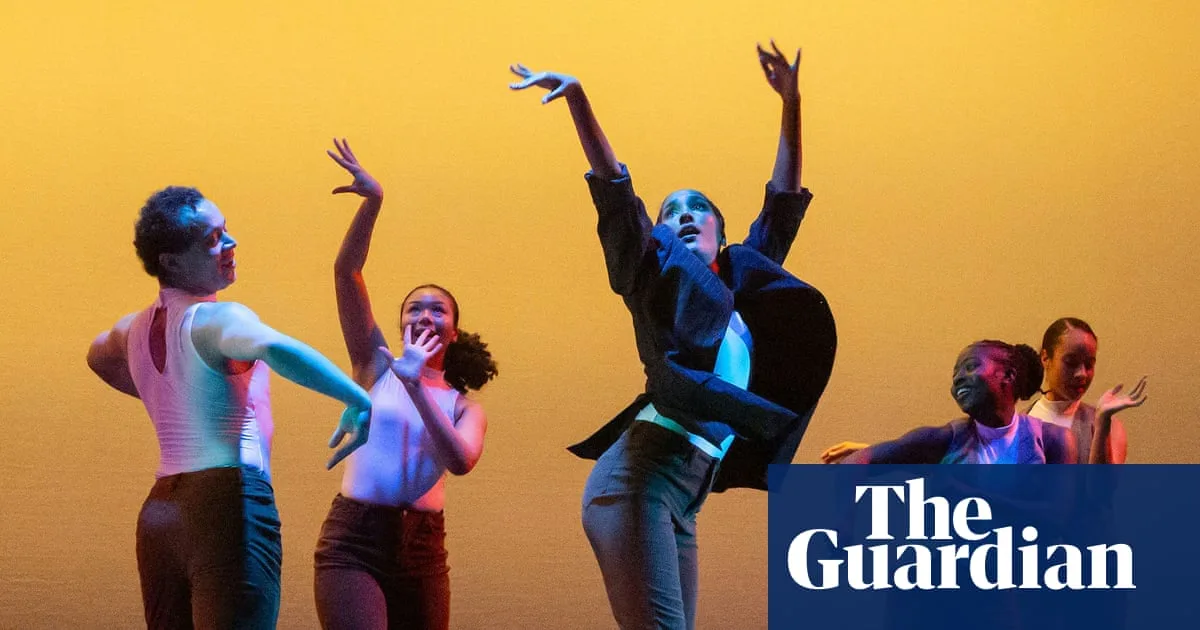
In an industry obsessed with 'perfect' feet, fallen arches can be seen as a barrier to success. But that’s a damaging myth that has excluded many from the joy of ballet, according to dancers and educators.
Picking up my ballet shoes again after six years has been bittersweet. I have felt joy in returning to a childhood hobby yet discomfort, too, knowing that I originally stopped ballet because of my incredibly flat feet. There is no doubt that ballet challenges your feet immensely – the tips of your toes support the entire weight of your body when dancing with pointe shoes. Struggling to go on pointe left me feeling that my body was not built for ballet, which is far from true, as flat-footed ballet professionals are out there and thriving.
Alex Maureen and Ruth Essel are Black ballerinas from different sides of the Atlantic. Maureen is a performer and dance instructor at New York University; Essel is the founder of Pointe Black, a London-based ballet school. They both have flat feet but reject the suggestion that it is an obstacle to success. 'A teacher told me I wouldn’t make it because of my flat feet,' says Maureen. In her teens, Essel was told: 'You don’t need to worry about it too much. Black people usually have flat feet. That’s just the way you are. It just means that you’re always going to find certain things really difficult.'
Studies do show that Black people are more prone to having flat feet, but it is not a foregone conclusion. Maureen and Essel deconstructed the discouraging beliefs through research and conversations. With a background in psychology, Essel started learning more about anatomy and exercises to strengthen her ankles and improve foot mobility. She soon realised that performance on pointe 'is not just about your arches. It’s a mixture of foot flexibility, foot strength, ankle mobility, ankle strength, calf strength and core strength.'
Injury prevention is crucial for flat-footed dancers, who tend to land on their heels. Maureen and Essel stress the need for educators to do their part. 'To this day, I’ve never met a Black pointe shoe fitter in the UK. I’m thankful to have Black physiotherapists that we work with who come in and have a look at our students to check posture and feet before we then go for a pointe shoe fitting,' Essel says.
Maureen and Essel have checklists for their students before they’re able to start using pointe shoes. 'I would go to the store with them and say, “No, no, no, that’s not going to work. They need a different shoe,”' says Maureen, who cuts the shank – the stiff section between the insole and outsole – to fit her arch. 'It is not that flat feet are not made for pointe work. You just need your shoe to work for you, not against you,' she adds.