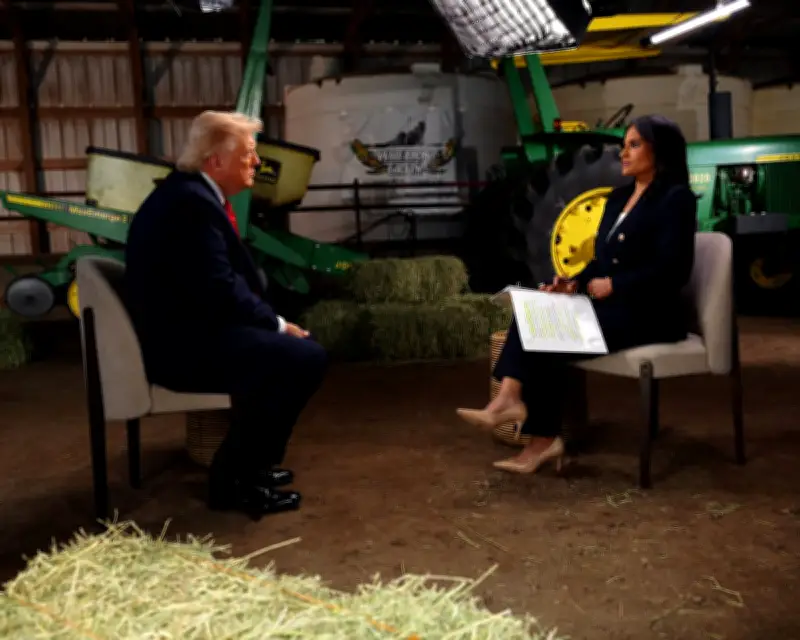
For many years, Donald Trump has directed vile remarks at female journalists who dare to question him or challenge his falsehoods. In a press gaggle last year, he told Bloomberg reporter Catherine Lucey, “Quiet, Piggy,” when she pressed him about the Epstein files. He called CNN’s Kaitlan Collins “a corrupt reporter” with “hatred in her eyes.” Last weekend on NBC’s Meet the Press, he lashed out at Kristen Welker, saying “You’re either crooked or stupid,” before storming off. In 2015, he infamously said Fox News host Megyn Kelly had “blood coming out of her eyes, blood coming out of her wherever” after she questioned him in a debate.
Trump also insults male journalists, but his animosity toward women—especially those with regular on-air roles—seems particularly intense. He has repeatedly referred to New York Times reporter Maggie Haberman as “maggot” on social media. She has remained undaunted, but that does not make such behavior acceptable.
Whether driven by misogyny, performative defensiveness, or a tactic to distract and deny, the insults and lies continue. Female journalists and their bosses seem to have no response other than to tolerate the abuse in the name of professionalism. This must change, not only for the journalists but also for the American public, which deserves honest answers.
Welker earned praise for persisting in pressing Trump for evidence on rigged elections and other facts, but it was painful to see her repeatedly imploring him with “sir” while he boorishly talked over her and lied. A better approach is possible.
Strategies for Journalists
First, have “receipts” ready. Confront Trump with audio or video of his past statements to counter his bluster. For example, when Welker brought up Trump’s 2024 campaign promise not to start wars, he denied it—despite his misguided war with Iran. Producing the tape would have demonstrated his lie.
Second, use direct confrontation. Instead of normalizing Trump’s falsehoods, journalists should say, “Why do you keep lying about rigged elections when there’s absolutely no evidence?” or “You keep lying about January 6 when we all know what happened.” This may invite more attacks about “fake news,” but it is a stronger stance.
Third, cut off the interview if Trump continues lying or insulting. Be transparent: “We’re ending this interview rather than let you make false statements to the public.”
The downside is less access. A journalist or outlet could be barred from future interviews or events. In a competitive media environment, access is prized, and ratings drive decisions. Reporters rarely stand up for each other in solidarity, which could make a difference over time.
But the current approach—polite persistence with “but, sir” protests—does no good. Trump does not stop lying or admitting wrongdoing, and he continues insulting with terms like “piggy,” “darling,” “fake,” and “corrupt.”
It is past time for journalists and their bosses to deem this unacceptable and take action.