The recent appraisal of Francisco de Zurbarán's paintings by Charlotte Higgins has sparked thoughtful responses from readers, who delve into the nuances of his work, from the physical realities of crucifixion to the historical context of his pieces.
The Weight of the Crucified Christ
Paul McGilchrist from Cromer, Norfolk, praises Higgins's insightful article but raises a compelling point about Zurbarán's The Crucified Christ. He notes that many depictions of the crucifixion, regardless of style or artist, fail to convey the intolerable heaviness of a body hanging by nails. McGilchrist argues that the sheer weight would distort the frame, causing distensions of the arms and contortions of the shoulders and ribcage, which are often absent. He cites Peter Paul Rubens as a rare exception. This observation invites viewers to reconsider the physical realism in religious art.
Zurbarán's Jacob and His 12 Sons at Auckland Palace
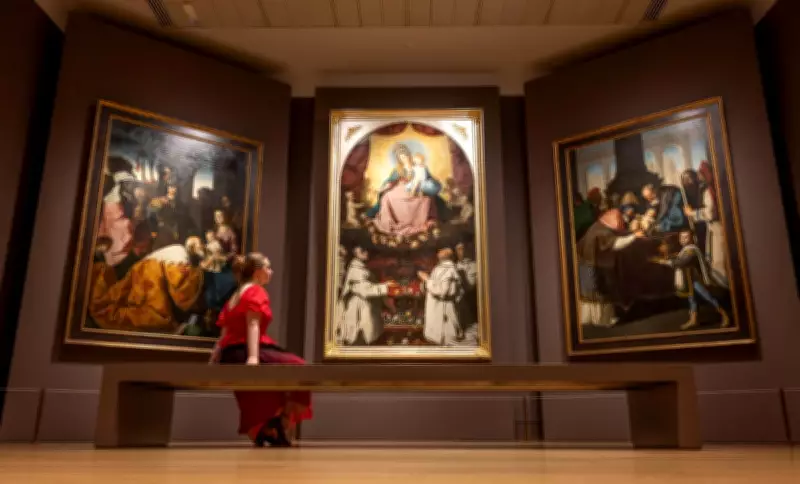
Jean Wilson from Carshalton, Surrey, highlights the collection of Zurbarán's Jacob and his 12 Sons at Auckland Palace in Bishop Auckland, County Durham. These paintings have been housed there since 1756, purchased by Bishop Trevor. When the palace opened to the public in 2019 after extensive renovations, the collection went on display. Bishop Trevor, who supported a bill for equal rights for the Jewish community, was outbid on one portrait and commissioned a copy by Arthur Pond. Wilson notes that the 12 sons of Jacob represent the 12 tribes of Israel, underscoring Bishop Trevor's religious tolerance.

The Living Lamb: A Different Interpretation
Chris Keil from Porto, Portugal, responds to the review of Zurbarán's paintings, specifically the Agnus Dei. He disagrees with the suggestion that the lamb may already be dead. Keil argues that the image is closely and naturalistically observed, showing how a live lamb is hobbled to immobilise it. The haunting quality, he says, stems from the lamb having gone beyond despair or acceptance—it has simply given up. This interpretation adds depth to the viewer's understanding of Zurbarán's ability to capture both physical and emotional states.
These letters enrich the conversation around Zurbarán's work, highlighting the enduring power of his art to provoke thought and debate.