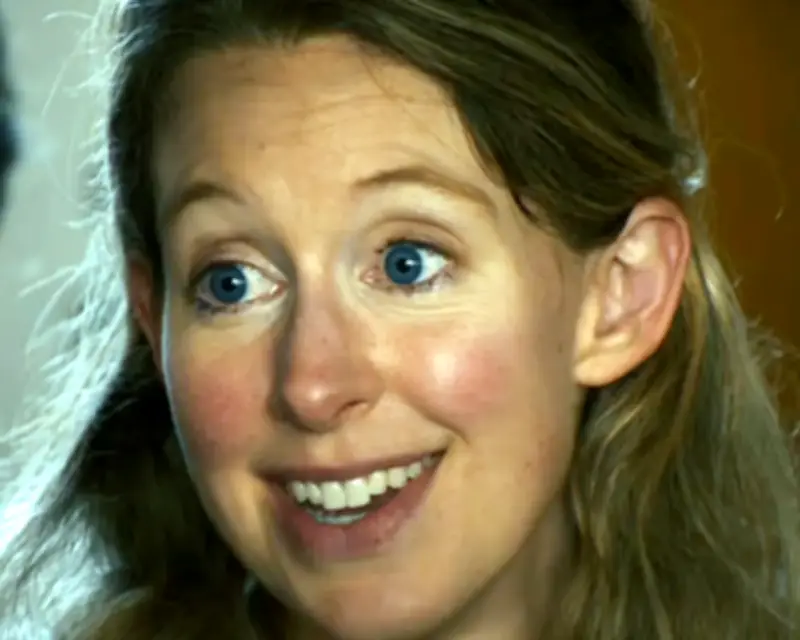
For weeks, a single clip has dominated conversations in documentary, comedy, and medical fraud circles: Nathan Fielder, the absurdist comedian known for HBO's The Rehearsal, staring into the eyes of Elizabeth Holmes, the disgraced Theranos founder. Unblinking, faces inches apart, Fielder asks, "Are you being real right now?" The clip teased a secret documentary years in the making with one of Silicon Valley's most notorious figures.
A collision of director and subject
The buzz for You Can See Everything, co-directed with Lance Oppenheim, was such that tickets to its New York film festival premiere on Wednesday became the hottest in town. Those who attended confirm the hype is deserved. The film is more shocking, twistier, thornier, and revealing than billed—a stupefying hall of psychological mirrors, a once-in-a-lifetime collision of director and subject.
From the minute Billy Evans, Holmes's husband and business partner, claims on a playroom floor that "the best way for people to see who she is … is to give as much access as possible into our daily lives," the ride is wild. One half of the three-hour runtime left this reviewer's mouth agape.
Why Holmes chose Fielder
In 2023, convicted of wire fraud and conspiracy and awaiting her 11-year prison sentence, Holmes and Evans sought a film crew to document their life with two young children, aiming to protest her innocence and possibly rebrand for Theranos 2.0. They chose Oppenheim, whose hyper-saturated, tight-frame style exposes the eerie in the mundane, and Fielder, whose extreme cringe leaves no question off the table. As Fielder notes on camera, it is an odd choice to let a comedian famous for business scams make a documentary to clear your name of the 2010s' most famous fraud scandal.
A real-time unraveling of certainty
The result is a three-hour documentary filmed like a thriller, playing as an unraveling of certainty in real time. Oppenheim's house style—shots hugging then boring into faces—suits the material perfectly. Fielder's sharp angles and needling questions tangle with Holmes's guileless warmth, building a strange chemistry within a reality distortion field. If Fielder's earlier work punched down, he has finally met his match.
Things devolve into a very Fielderian spiral, dissecting the form unlike anything seen before. Questions viewers hoped to ask Holmes or her husband—like whether he had reservations meeting her at a 2017 party—get asked, and then some. The film reveals more than imagined about Holmes, yet may get no closer to discerning the truth—and it will all be worth it. You Can See Everything screened at the New York film festival and will be released in the US on 16 October, with UK and Australian release dates to be announced.