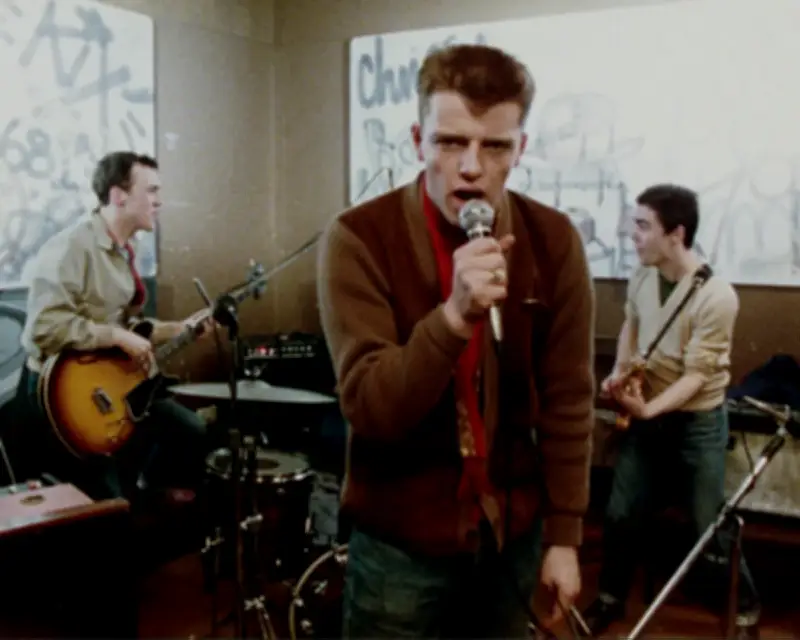
Take It Or Leave It, a docufictional comedy from 1981, offers an unexpectedly revealing and vividly atmospheric look at the rise of the ska-pop band Madness. The film follows the group from their beginnings in 1976 to their chart breakthrough, capturing the gormless, penniless musicians as they obsess over music and roam north London's gritty districts of Camden Town, Stoke Newington and Crouch End. The dialogue is droll, with lines like, “They’re all the same, these streets” … “That’s why they put signs on them.”
A Loachian Exercise in Social Realism
The band's early days are portrayed with an almost Loachian authenticity. They play people's parties, sign on the dole, and take mortifying odd jobs, getting told off by site foremen and office supervisors. They drive to gigs in Arthur Daley vans, almost get into fights with skinheads, and have calamitous arguments with the drummer during rehearsals. The first half, with a long section in austere black-and-white, is a near-social realist exercise, with the band improvising their mopey, mumbling dialogue.
The arrival of Graham “Suggs” McPherson as singer is presented as the mysterious ingredient around which everything coalesces. His voice miraculously ups the band's game, apparently curing their worrying propensity for playing flat. His vocals mesh with the reggae thump of the keyboards and sax and the rest of the band's goofy jogging-on-the-spot stage energy.
Comedy and Stunt Gags
The comedy moments are gripping in their gonzo way. In one scene, Mike Barson and his pal Simon Birdsall, stumbling along the platform of a London tube station, pick up a couple of discarded phosphorescent neon light tubes and have a very dangerous-looking Star Wars-style lightsaber contest. There is also a hair-raising visual stunt gag showing what happens when you attempt to drive a van loaded with scaffolding poles under a bridge that is too low.
Given the wacky flying-sax videos for which Madness were once renowned, directed by Dave Robinson, the Stiff Records co-founder who also directed this feature, you might expect Take It Or Leave It to have been a zany lark along the lines of A Hard Day's Night. But no. The film doesn't give you much in the way of context, musical or otherwise, although the band's contemporaries the Specials are name-checked at one point. If a feature film were to be made about Madness, then the starting point in 1976 would be drenched with background references to punk and the Pistols, the long hot summer, Margaret Thatcher being Tory leader. Not here. It's just about Madness, and interestingly that feels more authentic than a film with lots of archival references.
Take It Or Leave It is insouciant and unassuming, and amazingly innocent. It is in UK and Irish cinemas from 2 October.