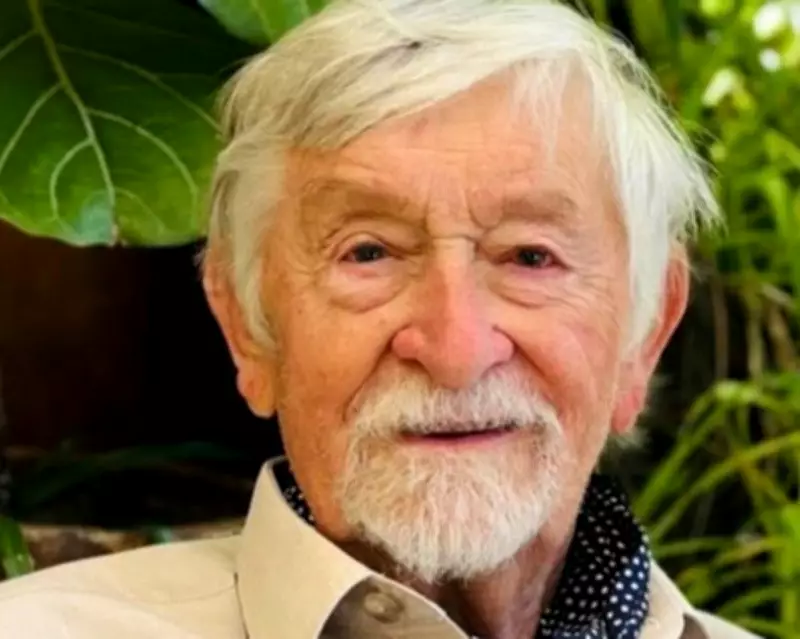
Reg Austin, a pioneering engineer and environmentalist whose work spanned from the earliest hovercraft to renewable energy, has died aged 89. His family announced his passing on Thursday, May 7, 2026, in a statement that highlighted his lifelong commitment to innovation and sustainability.
Early Life and Career
Born in 1937 in London, Austin studied engineering at the University of Cambridge. He joined Saunders-Roe in 1958, where he became a key figure in the development of the SR.N1, the world's first practical hovercraft. His contributions to the project were instrumental in the successful demonstration of the craft in 1959.
Hovercraft Innovations
Austin later worked on the SR.N2 and SR.N3 models, helping to refine the design and performance of hovercraft for commercial and military use. He was known for his hands-on approach and his ability to solve complex engineering problems. His work laid the foundation for the hovercraft industry, which would later see widespread use in ferries, rescue services, and military operations.

Shift to Environmentalism
In the 1970s, Austin turned his attention to renewable energy. He founded a company that developed small-scale wind turbines for rural communities, particularly in developing countries. His designs were simple, robust, and affordable, allowing off-grid communities to access electricity. He also advocated for sustainable living and wrote extensively on the need to reduce carbon emissions.
Later Years and Legacy
Austin remained active in engineering and environmental causes well into his 80s. He received numerous awards, including the Royal Academy of Engineering's Prince Philip Medal in 2015. His obituary in The Guardian notes that he was a modest man who shunned publicity but was deeply respected by colleagues and friends.
He is survived by his wife, two children, and four grandchildren. A private funeral will be held, with a memorial service planned for later in the year.