Personal Grudges and On-Set Tensions: Reassessing Alfred Hitchcock's Reputation
Alfred Hitchcock, the master of suspense, was known for creating tension on-set to elicit powerful performances from his actors. However, recent discoveries suggest that stories about his psychological tricks may have been exaggerated over time, influenced by personal grudges and selective retellings.
Unearthing Historical Accounts
In 1978, biographer Donald Spoto met Hitchcock for the last time, an encounter marked by odd incidents. Spoto recalled Hitchcock falling asleep mid-conversation and being bitten by the director's West Highland terrier, Sarah, which left a bruise. Notably, Hitchcock only addressed Spoto by name when scolding the dog, hinting at an uneasy relationship from the start.
These details emerged from a previously forgotten 1980 interview transcript between Spoto and actress Tippi Hedren, conducted six months after Hitchcock's death. The transcript underscores a dynamic shaped by misreading, distrust, and personal grievances, rather than objective historical record.

The Role of Biographical Interpretation
Spoto never enjoyed the camaraderie Hitchcock shared with his authorised biographer, John Russell Taylor. In researching Hitchcock's darker reputation, Spoto often leaned towards interpretations that sharpened or extended available evidence, leading to amplified details over time.
For instance, Hedren's recovery after the attic attack scene in The Birds was described as lasting ten days, but internal memos confirm it was only three. Similarly, Spoto's story about Hitchcock daring a prop man to stay handcuffed overnight during The 39 Steps (1935) is contradicted by camera assistant Dudley Lovell, who recalled Hitchcock allowing the man to go home still cuffed—an uncomfortable episode, but less severe than later retellings suggested.
Even claims about Hitchcock's final days have been revised; Spoto stated a priest was turned away, but Father Mark Henninger later testified he was welcomed. These discrepancies highlight how anecdote and repetition have sometimes distorted the original facts.
Impact on Hitchcock's Legacy
Spoto's later biographies, such as The Dark Side of Genius and Spellbound by Beauty, significantly shaped the dominant narrative around Hitchcock for decades. When examining primary materials, a more nuanced picture emerges. Hitchcock's modern reputation relies on layered voices, many partial and retrospective, influenced by personal grievances that have become public narrative.
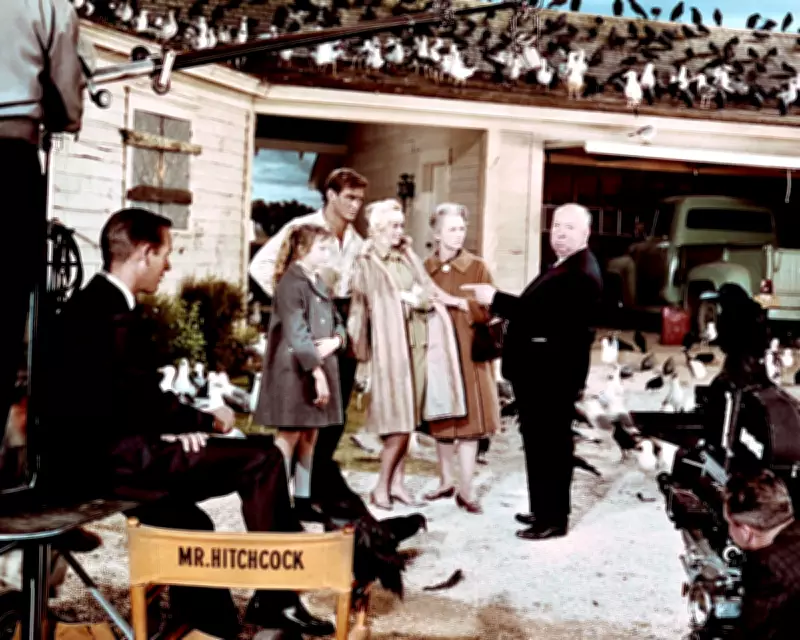
This complexity is evident in the making of The Birds in 1962. The production was far from harmonious, with tensions between Hitchcock and Australian actor Rod Taylor. Hitchcock was irritated by Taylor's perceived lack of discipline, while Taylor resisted Hitchcock's authority. One incident involved Hitchcock publicly castigating Taylor for not offering his chair to ladies, nearly leading to a physical altercation.
Additionally, Taylor was arrested for driving under the influence during filming, an event that could have derailed the production. Hitchcock later admitted to François Truffaut that he had trouble with the leading man, reflecting the strained dynamics.
Psychological Tactics and Performance
Hitchcock also maintained tight control around Tippi Hedren, limiting visits from boyfriends to minimise distractions, which created further tension. His methods included deliberate provocations to draw out stronger performances. For example, with Diane Baker in Marnie (1964), Hitchcock staged psychological provocations, such as speaking about her within earshot or refusing to look at her before a take, to foster unease.
Similar tactics were used with actors like Carole Lombard and Joan Fontaine. Lombard noted after Mr and Mrs Smith (1941) that Hitchcock would deliberately stir up the emotions of his players to extract something extra for the camera. During Rebecca (1940), Fontaine was told her co-star Laurence Olivier intensely disliked her, aiming to destabilise her emotions for the scene.

These techniques, while uncomfortable, were part of Hitchcock's precision in shaping performances, feeding into the psychological intensity that defines his films. However, over time, these complex on-set dynamics have been streamlined into a narrative of Hitchcock as a controlling or abusive figure, losing much of their original nuance.
Reevaluating Hitchcock's Legacy
The centenary of Hitchcock's first film, The Pleasure Garden, offers an opportunity to revisit the evidence, recognise contradictions, and question assumptions. The truth about Hitchcock's reputation is often more complicated than the stories we prefer to tell, involving a mix of professional pressures, personal relationships, and retrospective interpretations.
In this light, Hitchcock's legacy extends beyond his films to how they, and the man behind them, have been interpreted over time. Works like Tony Lee Moral's A Century of Hitchcock: The Man, the Myths, the Legacy encourage a deeper examination, reminding us that history is rarely black and white.