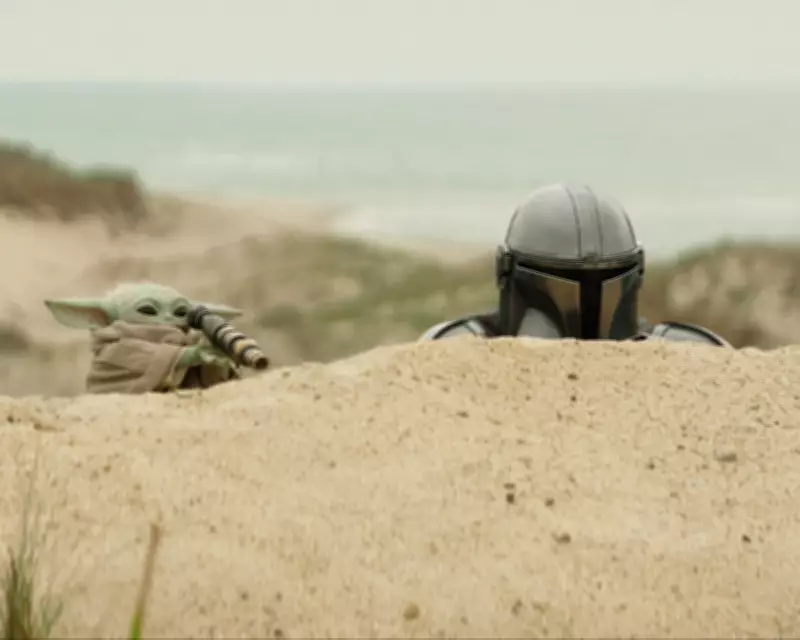
The long-suffering Star Wars saga has been kept alive this decade by television alone, but even that will perish if the new movie fails to extend its universe. Heavy lifting lies ahead for The Mandalorian and Grogu, which must deliver a proper cinematic experience or risk the franchise's end.
A Six-Year Gap Since the Last Star Wars Film
Star Wars has always been big on prophecy. Yoda peers into the future like Nostradamus with messed-up syntax, the Emperor cackles that everything is proceeding exactly as he has foreseen, and Darth Vader breathes doom through the front grille of his shiny death helmet. Yet not even the most omniscient of Jedi could have predicted that the franchise responsible for practically inventing the modern Hollywood blockbuster would end up as a TV-centric operation with only occasional forays onto the big screen. This makes it a genuine shock to realise that, ahead of the release of The Mandalorian and Grogu later this month, more than six years have passed since Star Wars last hit the multiplex.
Then again, perhaps the real surprise is that it hasn't been longer. The most recent Disney Star Wars film, JJ Abrams' The Rise of Skywalker, did not so much conclude the long-running space saga as destroy several decades of perfectly serviceable mythology and ruin all sense of congruence with previous films. It was frantic, weirdly apologetic about the previous instalment The Last Jedi, and overstuffed with dodgy fan service. Essentially, it was a $590 million act of narrative panic.

The Heavy Lifting Required of The Mandalorian and Grogu
All of this means that Jon Favreau's big-screen outing for the masked bounty hunter and his perky little Force goblin sidekick has a lot of heavy lifting to do. The Mandalorian and Grogu needs to convince casual viewers that they do not need to have completed 23 hours of bounty-hunting homework. It must make the galaxy feel big again. And it needs to prove that Baby Yoda is not just Star Wars' cutest merchandising event, but a character capable of opening up new territory for this most venerable of space operas.
The real zinger here would be to finally take us to the mysterious home planet of the species that gave us Yoda and Grogu. We might learn more about Star Wars and the nature of the Force: are our big-eared friends once-in-a-millennium cosmic accidents, or merely the most notable graduates of an entire globe full of miniature swamp Buddhas?
Yet the problem is that, as with most enigmas, the mystery becomes less intriguing the more we dig into it. If there really is a race of Force-sensitive extraterrestrials out there, they would either have conquered the known galaxy or remained bound to their own planet. Why bother to invent the wheel, pulley, lorry, or spaceship when you can use telekinesis to move giant objects over infinite distances? The point is that as much as we think we need to know where Grogu comes from, we really don't. If there is to be a trip to Planet Yoda, it ought to take place in a couple of movies' time, at the end of a trilogy that has revitalised Star Wars on the big screen and shown us that the saga is still capable of genuine wonder, as opposed to just franchise continuity management.

More Than a TV Episode on the Big Screen
Favreau's film also has to do more than just give us season four of The Mandalorian on the big screen. Early viewers who were shown the first 25 minutes this week appear to have emerged broadly positive, praising the scale, sound, and old-school momentum. However, there has also been the slightly awkward suggestion that it still feels a little like a rather expensive television episode. This, really, is the entire problem in miniature. The TV show triumphed despite existing in a period of galactic history bereft of any major dramatic tension. Vader is dead, the Emperor bloody ought to be, and there are only a few vaguely Sithish baddies moping around with the remnants of the Imperial army to help them. It's the perfect setting for an episodic, extended show whose strength is its ability to delve into all the intriguing little corners of Star Wars lore that movies only have time to mention in passing. But is it the right era in which to set an event movie that Star Wars fans will expect to define the next decade of the franchise? Only Yoda and Grogu (as well as quite possibly several billion of their Force-sensitive brethren) can possibly know.